
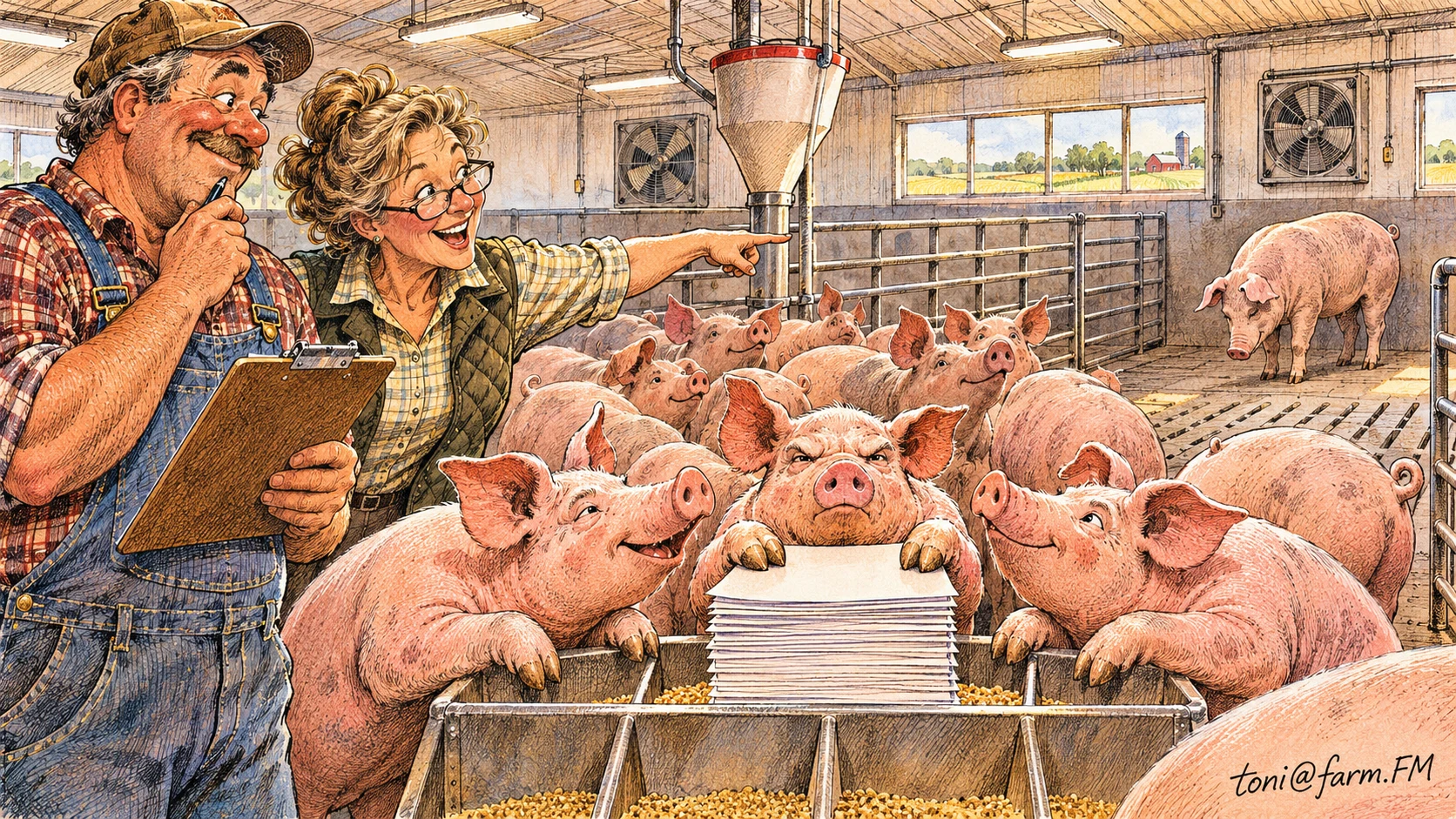
AMES, Iowa — Swine farming passed its annual paperwork review Friday after the pigs filed a competing report accusing management of late breakfast, inadequate mud and “a troubling reliance on clipboards.”
Producer Gary Madsen had prepared records on feed, water, treatments, animal observations, facilities and caretaker training. His wife, Jean, prepared the actual records after finding Gary’s version in a pickup cupholder beneath three seed caps and a fossilized doughnut.
The pigs submitted no documents. They simply stood at the feeder five minutes early and screamed until their position entered the permanent record.
Gary opened the SwineSource pig-production directory to review housing, nutrition, biosecurity, herd records, market hogs and youth projects. The directory recommended practical observation and written information. Gary agreed with both, provided the written information remained Jean’s department.
Jean reassigned agreement to Gary.
Swine Farming Begins With Daily Observation
University of Minnesota Extension says a common swine industry audit reviews four main areas: records, animals, facilities and caretakers. Daily observation, feeding and watering protocols, treatment management, caretaker training and biosecurity are among the documented practices.
Gary entered the barn intending to observe the pigs.
The pigs observed him first.
Pen 4 was active and alert. Pen 5 was resting. One gilt in Pen 6 stood apart, showed less interest in feed and appeared dull. Gary marked the change and contacted the herd veterinarian rather than waiting for the pig to issue a written complaint.
The veterinarian praised the early call.
Gary accepted credit until Jean pointed out that the gilt had been noticed because she was the only pig not shouting at him.
The Water Meter Becomes Management
Jean began tracking water use by room. Consumption followed a predictable pattern until one barn’s number dropped.
Gary proposed three explanations: cooler weather, calmer pigs or improved water efficiency through personal discipline.
Jean checked the drinkers.
One line had restricted flow.

The repair restored water use and ended the pigs’ brief conservation initiative. Gary wrote “equipment problem corrected” in the log. Jean crossed out his first draft, “pigs temporarily less thirsty.”
Water, she explained, was not a decorative ingredient. Changes could signal equipment trouble, stress or health concerns, and the record helped direct attention. Gary nodded while a barrow opened the repaired drinker and sprayed his pant leg with peer-reviewed enthusiasm.
Biosecurity Gets a Guest List
The farm established a clean entry area, visitor log, boot procedure and rules for equipment. Gary’s cousin Earl arrived wearing boots last seen at another hog farm.
“They’re practically clean,” Earl said.
Jean looked at the soles, which contained soil from two counties and what appeared to be a small soybean.
Earl received farm boots and instructions. He objected that family members should be exempt.
The pigs agreed. They preferred that Earl remain outside entirely.
Gary also reviewed rodent control, feed storage and the line separating clean and dirty areas. The barn cat requested management authority over rodent control and a compensation package based on cream. Negotiations stalled when the cat refused to document results.
Records Discover That Memory Is Not a System
Treatment records required dates, animal identification, product, dose, route, reason, withdrawal information and responsible personnel. Gary said he remembered all important events.
Jean asked what he ate for lunch Tuesday.
Gary could not remember.
“But I would definitely remember treating 40 pigs.”
“Which is why the record exists.”
They organized records so another caretaker could understand what happened without consulting Gary’s intuition. This improved animal care and reduced the number of sentences beginning, “I think that was before the rain.”
The audit also examined facilities. Gates latched, feeders worked, emergency plans were accessible and sick animals could be identified and managed promptly. A loose panel was repaired before the pigs converted it into an exit with agricultural zoning implications.
The Pigs Issue Their Final Findings
At the review’s end, the farm had stronger records, working waterers, clearer biosecurity steps and a specific daily-observation routine. Gary admitted the checklist had found problems before those problems became expensive traditions.
The pigs conducted their own closing meeting at the feeder.
Their findings were unanimous:
– Breakfast should begin earlier. – Every water repair requires a celebratory spray. – Earl’s boots remain unacceptable. – The caretaker shows promise but needs continued supervision.
Jean filed the report under “animal observations.”
Gary asked whether that was necessary.
“If we’re keeping records,” she said, “we should include management feedback.”
Disclaimer
No pig was authorized to conduct an audit without a veterinarian, a functioning waterer and an independent feed committee. Suspected illness or welfare concerns require prompt qualified attention. This article is entirely a human collaboration between two sentient beings—the world’s oldest tenured professor and a philosophy major turned dairy farmer.
Last Updated on November 17, 2026 by Alan Nafzger