
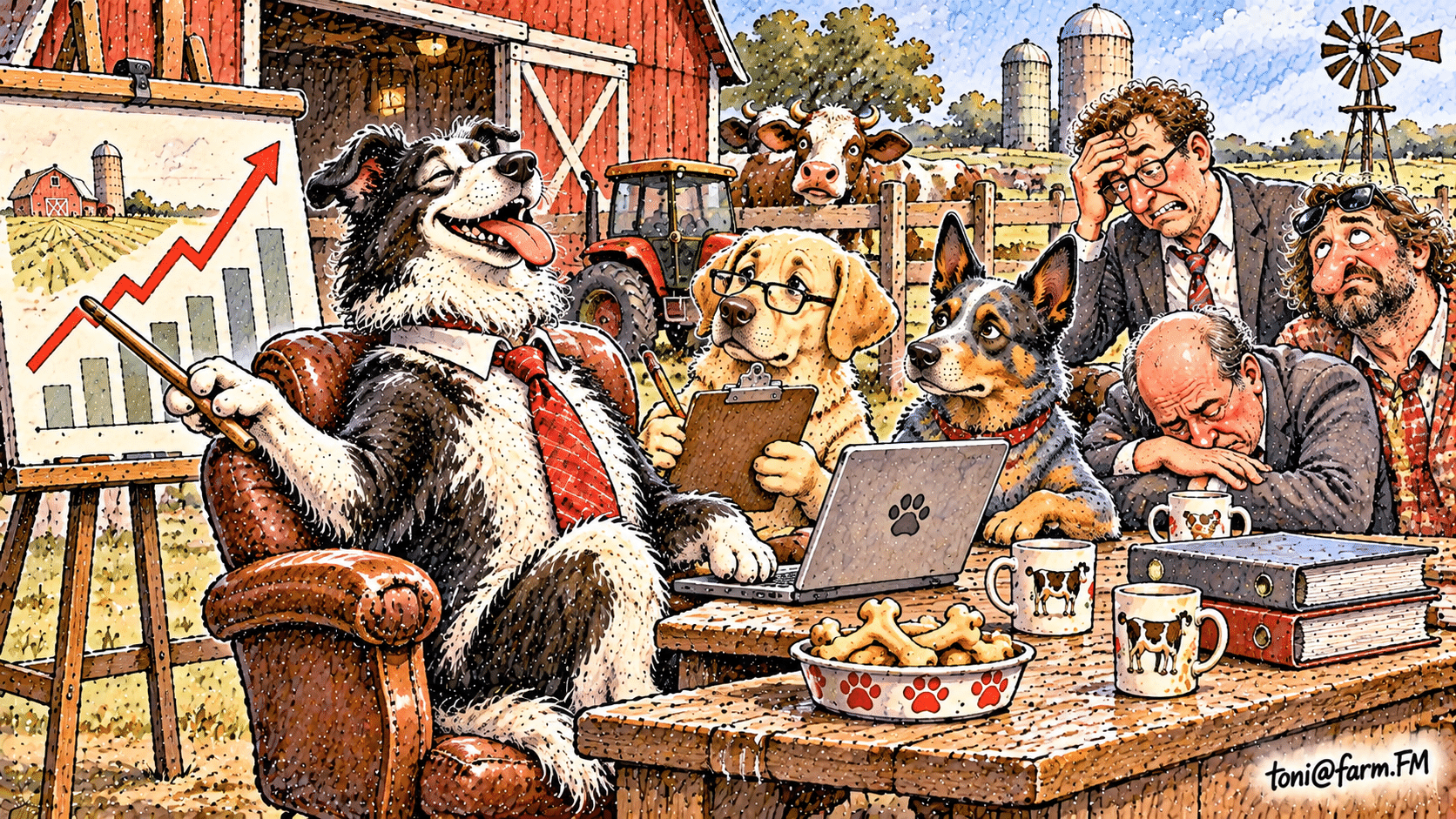
Two Dogs Outsmart Three Consultants and a Retreat
ABILENE, Kansas (Farm.FM) — Two farm dogs were promoted to senior management Tuesday after three agricultural consultants spent $46,000 diagnosing a livestock problem that the dogs had solved before breakfast. The consultants called it a breakthrough in rural operational efficiency. The farmer called it Tuesday.
Biscuit, a border collie, noticed the west gate was open. Rusty, a livestock guardian dog, noticed a strange vehicle near the sheep. Between them, they alerted the humans, kept watch and prevented the flock from wandering onto the county road. Neither dog requested a strategic planning retreat.
The consultants arrived at 10 wearing boots clean enough to eat off, which is the only thing they would have accomplished in the barn.
Farm Dogs Reject the Executive Leadership Retreat

Consultant Trevor Bell unveiled a flowchart titled Integrated Animal Mobility Solution. He explained that sheep were leaving the designated grazing zone because of inadequate alignment between the boundary system and the animal stakeholders.
“Gate’s open,” said owner Margaret Cline.
Bell asked her not to jump to conclusions before the discovery phase.
His team held a listening session. Biscuit listened, heard a latch banging in the wind and ran to investigate. The consultants rated his departure as a failure to engage with collaborative problem-solving.
Rusty took a nap beside the flock. Bell marked him down for poor visibility during core business hours.
“If you want him visible,” Cline said, “invite a coyote to the performance review.”
The firm then recommended installing a $19,000 sensor network that would send an alert to a smartphone whenever the gate opened. Cline pointed out that Biscuit already did that, except he also fetched the person holding the phone.
What Working Farm Dogs Actually Do
Working dogs perform different jobs. Penn State Extension’s guidance on livestock guardian dogs covers the nutrition and care required for animals that protect sheep and goats. Herding dogs, meanwhile, help move livestock under trained human direction. Neither role is adequately described by the corporate title Chief Barking Officer.
Cline said the only technology she wanted was a latch that stayed shut and a water bowl that didn’t freeze. Bell proposed a subscription service for both.
Consultants Discover the Farm Dogs Have No LinkedIn Profiles
A second consultant conducted a salary review. Biscuit earned food, veterinary care, shelter, exercise and the occasional stolen sandwich. Rusty received much the same, plus authority to ignore everybody until something genuinely important happened.
“Your organizational chart is troubling,” she said. “The security director sleeps on company property.”
“So do I,” Cline replied. “It’s a farm.”
The consultants created a twelve-month roadmap calling for improved interspecies communication. Biscuit ate page four. Rusty sat on page seven. Both decisions improved the document.
By noon, the firm had billed another $3,500 to explain that dogs cannot be expected to handle complex matters without management oversight. At that moment, Bell’s rental SUV rolled downhill because he had neglected the parking brake.
Biscuit barked. Rusty moved the sheep away. Cline jumped into the cab and stopped the vehicle.
Bell called it an excellent example of cross-functional crisis response. Cline promoted both farm dogs and reassigned the consultants to a more suitable position: standing quietly outside the gate.
Their final invoice included a charge for canine-led disruption. Biscuit declined to sign it.
Disclaimer: The people, dogs’ promotions, invoices and dialogue are satirical. Working-dog care is a real agricultural practice. This story is entirely a human collaboration between two sentient beings: the world’s oldest tenured professor and a philosophy major turned dairy farmer.