Dairy Farm Regulations Multiply Faster Than the Herd

The Rules Are Multiplying in the Filing Cabinet

LANCASTER, Pa. (Farm.FM) — Dairy farm regulations have been spotted multiplying in a filing cabinet, prompting a local farmer to ask whether compliance documents require their own breeding permits. The discovery came when owner Pete Walsh opened a drawer marked IMPORTANT and found three inspection checklists, two milk-quality reports, a manure plan and a folded receipt from 2009. His veterinarian advised him not to panic. His accountant recommended a second drawer and a depreciation schedule. Pete asked his Holsteins who had authorized all this administration. One cow maintained eye contact while chewing. The rest demonstrated their usual commitment to not attending meetings.

The Cow Doesn’t Know What an Acronym Is

The rules cover different things, and some are vital. Milk sanitation protects consumers. Animal-health procedures help protect herds. Environmental requirements address waste and water. Calling all regulation useless would be as sensible as replacing the bulk-tank thermometer with a lucky horseshoe. The FDA’s Grade A milk model documents include the Pasteurized Milk Ordinance, a framework used by participating state milk-safety programs. Separately, the EPA explains animal-feeding-operation requirements under the Clean Water Act. Different authorities, different questions and, to Pete’s enduring frustration, different folders. At a hastily convened roundtable, a consultant proposed one universal form for all government reporting. Another consultant immediately objected that creating the universal form would require fourteen preliminary forms to determine which form everyone meant. Pete suggested a simpler test: if the milk is safe, the cows are healthy and the creek isn’t full of manure, perhaps someone could stop asking him for the same address. The committee agreed this was a promising first draft and requested it in triplicate.
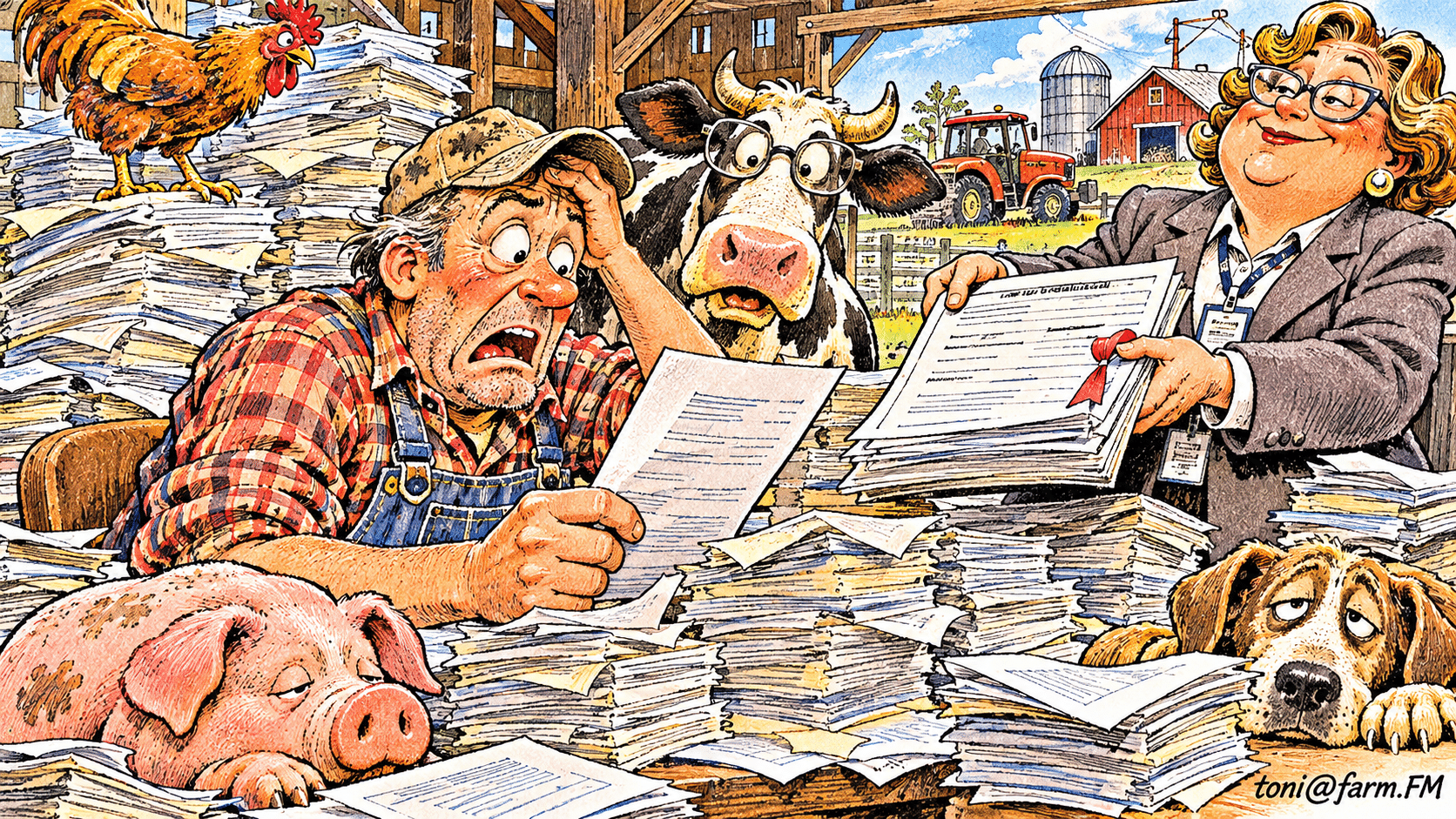
Satirical ink-and-watercolor drawing of a tired dairy farmer and a bespectacled Holstein cow reviewing overflowing compliance forms on a farm laptop.
When even the cow starts reviewing compliance paperwork, the herd may need a legal department.

The Bureaucracy Doesn’t Milk Itself

An unofficial poll of six people working on the farm found that six supported meaningful health and environmental safeguards. Five also wanted fewer duplicate entries. The sixth was trying to remember the password to the compliance portal and refused to speak without legal representation. The distinction matters because a farm may be subject to state dairy licensing, milk inspection, workplace obligations and particular environmental rules depending on its operation. A CAFO designation, for example, is not automatically proof that a farm is illegally discharging anything. The real requirements depend on the facts and the applicable jurisdiction. A practical compliance calendar can list responsible agencies, test schedules, permit renewals, employee training, records and inspection dates. Farm managers can also ask regulators directly when requirements appear to overlap. These measures save time without turning food safety into a guessing game. Pete’s final proposal was to put a cow in charge of paperwork. She promptly ate the inspection checklist. His accountant called it document destruction. Pete called it the first reduction in administrative burden he’d seen all year. The cabinet is now locked, not because the forms are confidential, but because the cows have discovered they are edible. Editorial disclaimer: The farm characters and conversations are satirical; linked agricultural research and program requirements are real. This story is entirely a human collaboration between two sentient beings, the world’s oldest tenured professor and a philosophy major turned dairy farmer.

By Chloe Summers

Chloe Summers covers California produce country for Farm.FM, writing from the Imperial and Central valleys, where the nation's salad bowl meets a brutal water ledger. She studied journalism at UCLA and first learned to report by watching how a harvest day actually starts: before sunrise, and with a lot less romance than the packaging suggests.Summers writes about lettuce, citrus, desert irrigation, labor, and the comedy of trying to grow delicate crops in a climate that does not care about your marketing plan. Her humor is sunny on the surface and specific underneath, the way a field is when you look past the highway.

One thought on “Dairy Farm Regulations Multiply Faster Than the Herd”
  1. A drawer marked IMPORTANT containing three checklists, a manure plan and a receipt from 2009 is the most accurate portrait of American governance I’ve seen this year. Paperwork is the only livestock on the farm that breeds without supervision and never needs feeding. Pete’s cow maintaining eye contact while chewing is also how most of us get through a compliance meeting.

Leave a Reply

Your email address will not be published. Required fields are marked *