

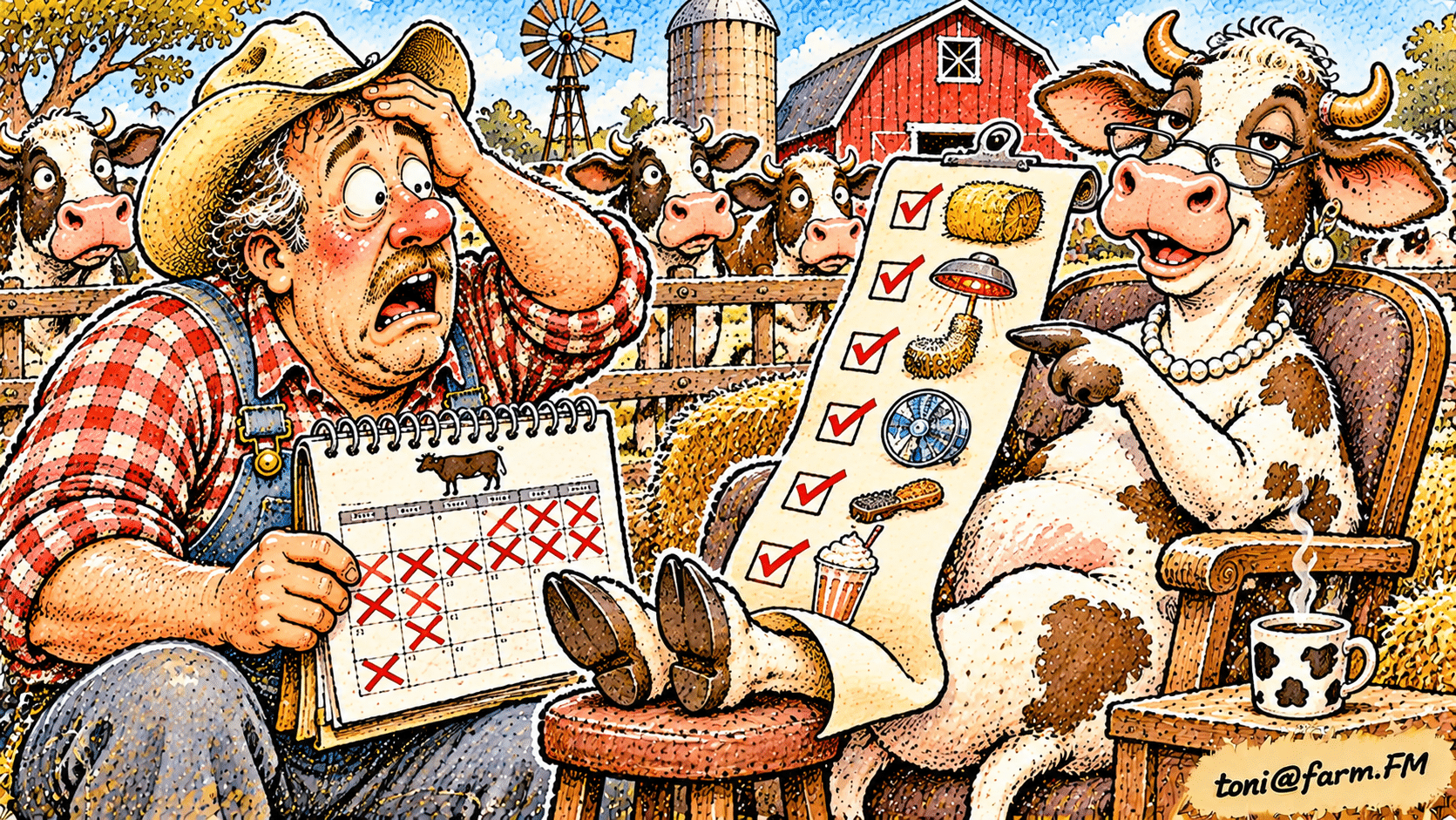
The Holsteins Sleep Better Than the Man Who Pays
ROCHESTER, Minnesota (Farm.FM) — A dairy farm has upgraded its cow bedding after a visiting consultant discovered that 240 Holsteins had superior sleeping arrangements to the man responsible for paying their feed bills.
The cows received clean stalls, carefully managed sand and a thoughtful discussion about lying time. The farmer received a sagging mattress, a leaking roof and an alarm clock with the personal charm of a county tax assessor.
The bedding supplier described his product as premium comfort material. The farmer asked whether the price included breakfast, slippers or a complimentary robe. The supplier said it included delivery and a separate fuel surcharge. The farmer said the cows had apparently joined a resort without his consent.
Cow Comfort Is More Than an Interior Decorating Trend
The science behind bedding is substantial. University of Minnesota Extension explains that comfortable resting spaces can improve cow welfare and affect milk production, hoof health and reproductive performance. In one dataset involving automated-milking farms, deep-bedded sand herds had a reported lameness prevalence of 22.5 percent, versus 40.9 percent for mattress-based stalls. Those figures describe studied herds, not a guarantee that sand magically fixes bad management.
Penn State Extension’s bedding guidance adds that sand can improve cleanliness, comfort and traction, but dirty bedding still creates problems. Sand is not an antibacterial force field. It can also complicate manure handling and wear on equipment, which is why its economic attractions are usually accompanied by a service invoice.
The farm’s management committee interpreted these findings carefully. One cow asked for thicker bedding. Another requested a pillow. A third attempted to move the entire sand pile into her stall, apparently planning a beachfront retirement community.
A Five-Star Stall, a One-Star Checking Account
The consultant recommended comparing bedding costs with herd health, stall maintenance, labor, manure-system compatibility and milk-quality results. That advice was constructive. The accountant recommended comparing the cost of the entire barn with what the farmer might have earned by becoming a plumber.
An unofficial customer survey found that the cows preferred clean, dry stalls to standing in wet manure. The farmer observed that this insight had required considerably less research than the consultancy invoice suggested.
He nevertheless organized a bedding schedule, checked drainage and made sure dirty material was removed promptly. Better stall management can prevent problems that are far more expensive than fresh bedding, a principle familiar to anyone who has ever postponed repairing a roof until the dining room became an indoor pond.
That evening, the farmer went home and found a spring protruding from his mattress. He stared at it, then checked the calendar to see when the next load of premium sand would arrive.
His wife suggested bringing some home. He said the cows might notice, and they were already talking about filing a complaint with management.
Editorial note: The conversations and committee are satirical. The university and extension research is real. This story is entirely a human collaboration between two sentient beings: the world’s oldest tenured professor and a philosophy major turned dairy farmer.
My cows sleep on premium sand while I nap on the feed sacks.
Cows got sand beds, I got a recliner older than the barn.