
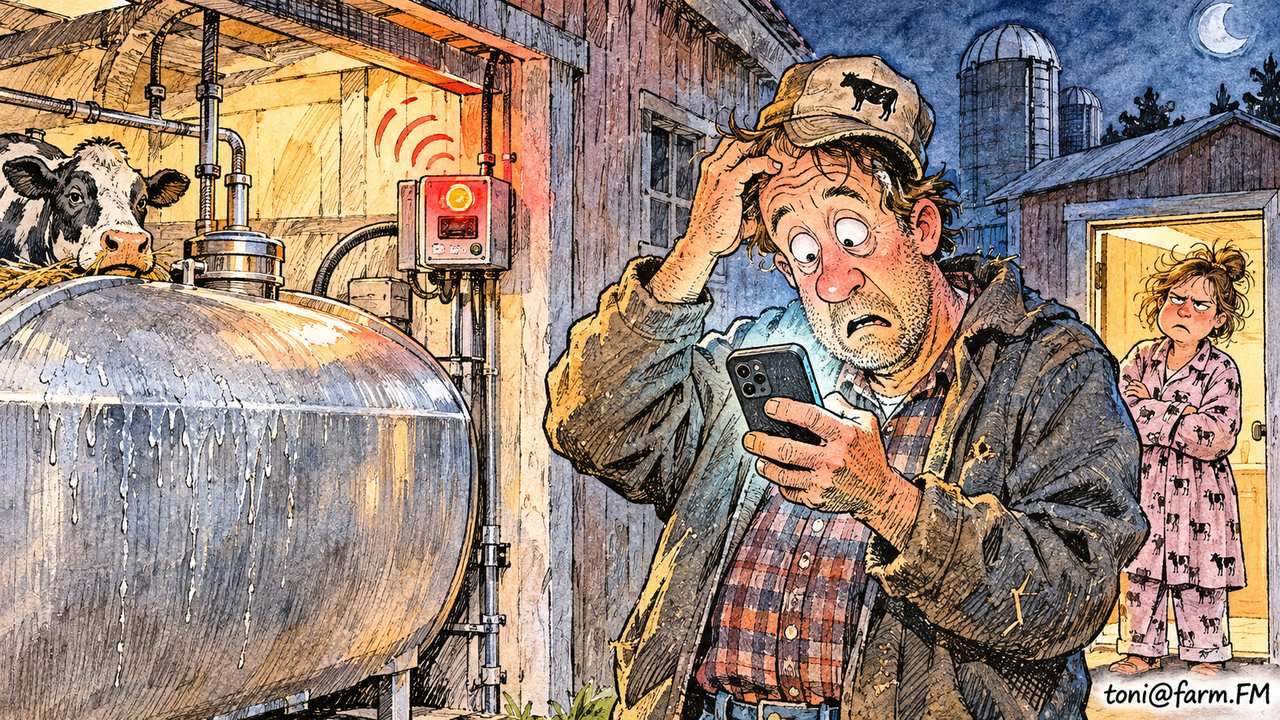
The Cooling Alarm Calls at 2:04 A.M.
WATERTOWN, New York (Farm.FM) — A dairy farm bulk tank cooling alarm has been accused of ruining domestic tranquility after calling its owner at 2:04 a.m. to report that the milk was slightly warmer than expected and urgently needed emotional support.
The farmer answered on the first ring, climbed into his boots and drove to the milkhouse. His wife asked whether the caller was family. He replied that it was 3,000 gallons of milk, which was technically more dependent on him than most of his relatives.
The alarm repeated its warning in a voice that sounded offended by the concept of sleep. The farmer inspected the refrigeration unit, checked the thermometer and resisted the temptation to throw his telephone into the cooling tank. He understood that food safety is important, although his marriage had recently developed concerns about refrigeration’s place in the household hierarchy.
The Milk Needs Cooling. The Farmer Needs a Vacation.
Milk cooling is not optional decoration. The USDA animal-health dairy industry manual describes farm bulk tanks designed to cool fresh milk to 45 degrees Fahrenheit within two hours, with milk often held around 36–40 degrees between milkings. Applicable state rules and the FDA Grade A Pasteurized Milk Ordinance govern the details. Nobody should confuse a satire article with a compliance manual.
The tank’s sensor was eventually cleared of suspicion after a second calibrated thermometer confirmed the reading. Maintenance staff found that a dirty condenser was reducing cooling performance. The farmer was relieved. The accountant was less enthusiastic, since the resulting repair involved parts with prices ordinarily reserved for fine jewelry.
A consultant proposed a customer-service hotline for distressed bulk tanks. The farmer suggested connecting the hotline to the lender, allowing both parties to explain their concerns to each other while he slept.
Cold Milk, Hot Electricity Bills
There are practical ways to manage the problem. The Dairy Conservation Navigator’s plate-cooler guidance explains how precooling milk can reduce refrigeration demand, depending on equipment and water temperatures. Farms still need sanitary installation, calibrated monitoring and regular maintenance. A plate cooler saves energy only if someone actually keeps it working.
The family instituted a simple plan: review recorded tank temperatures, maintain the condenser, verify alarm settings and give every trained employee instructions for responding when cooling performance changes. The objective was to protect milk quality without conducting an emergency family reunion whenever a sensor blinked.
At breakfast, the farmer apologized for leaving the house in the middle of the night. His wife said she understood, then asked when the tank planned to start contributing to the mortgage.
The farmer said it already did, when the milk was sold. The wife replied that the relationship might be healthier if the tank learned to communicate during daylight.
Editorial note: The incident and dialogue are satirical; cooling and energy guidance are real. This story is entirely a human collaboration between two sentient beings: the world’s oldest tenured professor and a philosophy major turned dairy farmer.