
Manure Into Energy, Pending the Lender’s Opinion
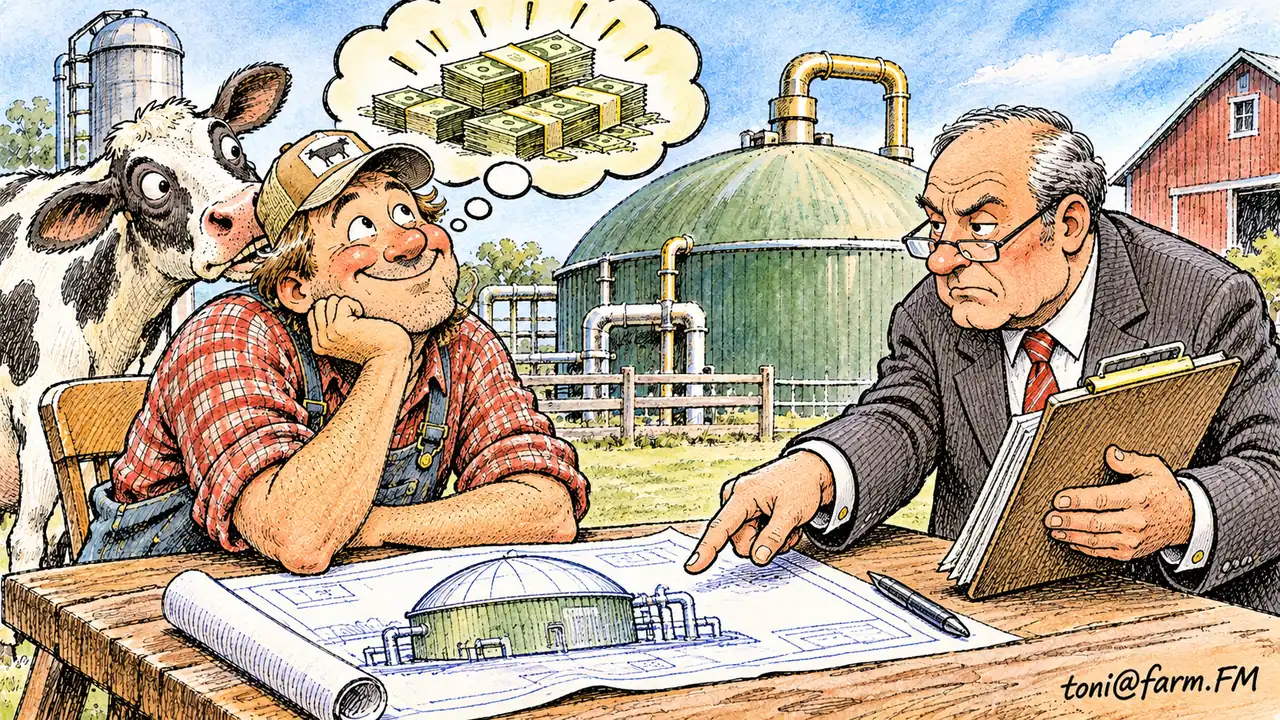
TULARE, California (Farm.FM) — A dairy farm anaerobic digester proposal has promised to convert cow manure into renewable energy, cleaner air and perhaps even a respectable bank balance, although the lender says the bank balance must arrive before any construction begins. The farmer found this arrangement confusing. For years he had been told he was sitting on a mountain of something valuable. Now a consultant wanted a feasibility study, a pipeline plan, financing, permits and a stack of contracts before the mountain would generate so much as a modest dividend. One Holstein regarded the plan with professional pride. She had been manufacturing raw material every day without a paycheck. The consultant offered to put her name on the sustainability presentation. She asked whether that came with better hay.
A Business Plan Powered by What the Cows Leave Behind
An anaerobic digester uses microorganisms to break down organic material without oxygen, producing biogas and a remaining material called digestate. EPA’s AgSTAR explanation of anaerobic digestion on dairy farms describes possible benefits including greenhouse-gas reductions, odor management and renewable energy. It also emphasizes high capital costs, operating expenses and the difficulty of making projects pay on every farm. In other words, manure can produce energy, but not even the world’s most productive cow can produce guaranteed financing. The farm’s financial adviser projected several revenue sources, including potential energy sales and qualifying environmental credits. The farmer asked whether the bank would accept enthusiasm as collateral. The adviser said no, but it would accept a large retainer for further analysis. A neighborhood survey recorded three people supporting cleaner air, two demanding cheaper electricity and one asking whether the digester would stop the smell from the feedlot next door. The farmer reminded everyone that the livestock would remain livestock, even after the PowerPoint slides went green.
The Pipeline to Prosperity Runs Through the Accountant

The EPA notes that some projects use partnerships or third-party developers, while others rely on energy markets, renewable natural gas arrangements or other incentives. Those possibilities vary significantly by location, project size and contracts. A producer needs to evaluate construction costs, permitting, manure handling, digestate management, maintenance, offtake terms and exposure if market incentives change. At the dairy’s planning meeting, one director suggested naming the project the Cow-Powered Economic Miracle. The farmer proposed calling it the Very Expensive Tank Until Proven Otherwise. The accountant recommended the second name because it described the financing schedule more accurately. The farmer ultimately requested an independent engineering assessment and contract review before signing. That decision annoyed the consultant, who had already ordered promotional hats celebrating the farm’s energy revolution. At evening milking, the cows continued producing manure at their usual magnificent pace. The accountant stared at the spreadsheets and admitted that the farm had finally located an abundant renewable resource. Unfortunately, it wasn’t cash. Editorial note: The farm, poll and dialogue are satirical; EPA AgSTAR information is real. This story is entirely a human collaboration between two sentient beings: the world’s oldest tenured professor and a philosophy major turned dairy farmer.