
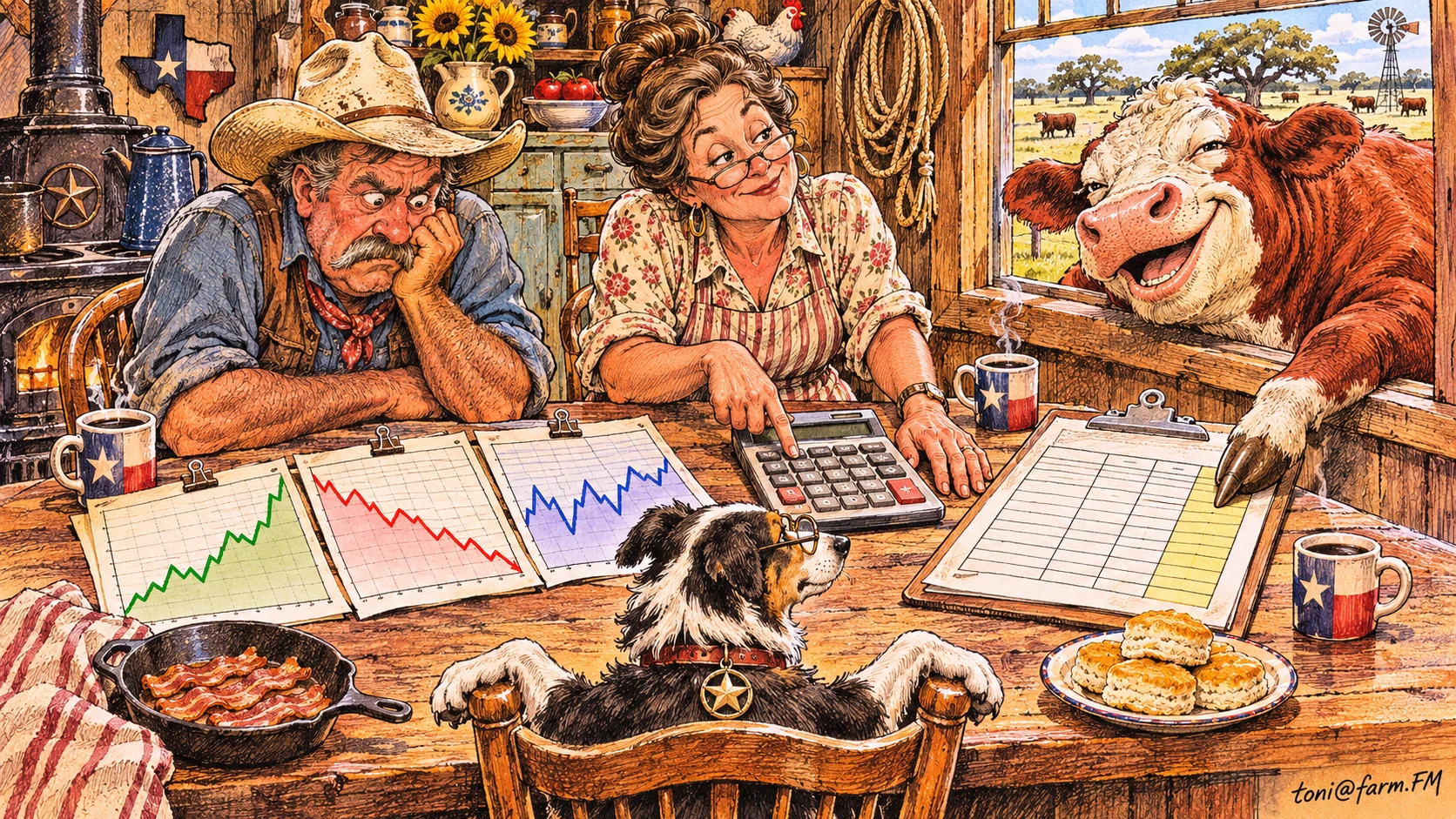
AMARILLO, Texas — Stockyard prices gave Randall Boone three different answers before breakfast, which was impressive because the cattle had not yet left the pasture.
One auction report said 550-pound steers were strong. Another said comparable calves were steady. Randall’s neighbor said they were “bringing a fortune,” a technical livestock-marketing term meaning the neighbor had sold last Tuesday and was now emotionally diversified.
Randall owns 63 cows, two stock trailers and a calculator that has survived three droughts by refusing to display net income. This year he decided to become systematic. He printed sale-barn reports, highlighted weight classes and opened the Stockyard Prices Tracker livestock-auction research directory to compare market reports, transportation costs, commission, shrink and other details previously filed under “things the check will probably explain.”
Stockyard Prices Meet the Ranch Calendar
The first problem was timing. Randall wanted the highest price, lowest freight, smallest commission and a sale date convenient for everybody, including cattle that regard a loading chute as a constitutional crisis.
His wife, Marlene, built a spreadsheet with columns for price per hundredweight, miles hauled, expected shrink and projected proceeds. Randall added one more column labeled “What Earl Heard at the Café.” It immediately became the most frequently updated and least auditable data series.
“Earl has sources,” Randall explained.
Earl’s sources were a man named Peanut, an auctioneer’s cousin and somebody who had driven past the stockyard slowly enough to see the parking lot.
The U.S. Department of Agriculture says its Livestock, Poultry and Grain Market News operation compiles and distributes information to help producers, consumers and distributors buy and sell livestock and related products. This is useful because “cattle were pretty high” does not specify the class, weight, condition, location or whether the speaker was remembering 1978.
The Cattle Demand Their Gross Price
At the kitchen table, Marlene showed Randall that a higher headline price could be defeated by a longer haul, extra shrink and sale expenses.
Randall objected on philosophical grounds. Gross revenue is the American Dream. Net revenue is the fellow from the bank arriving afterward with a yellow pad.
He tested the numbers on 20 steers. The distant barn appeared to pay $6 more per hundredweight. After freight, commission, yardage and estimated shrink, the advantage narrowed to enough money for lunch, provided lunch was purchased before entering a farm-supply store.
The steers overheard the calculation and demanded to be valued at gross. Their spokesman, a red baldy with the confident posture of a county commissioner, said expenses were a management problem.
This argument was persuasive because the cattle had never paid for diesel.

Weight Classes Become Social Classes
Randall sorted calves into weight groups. Immediately, the lighter calves developed a chip on their shoulders, while the heavier calves began behaving as if they had earned their pounds through disciplined portfolio management.
One 498-pound steer stood beside the scale until it read 501, then requested admission to a more prestigious comparison column. Marlene subtracted the mud on his feet. He appealed.
The ranch dog chaired the hearing and ruled that everyone would be sold according to actual weight, not aspirational weight. It was the first livestock decision that day based on evidence, so Randall gave the dog a biscuit and considered placing him on the marketing committee.
A Practical Stockyard Prices Plan
By noon, the Boones had a plan that even the cattle could understand:
1. Compare the same livestock class, sex, weight and condition. 2. Confirm report dates instead of mixing Tuesday’s cattle with last month’s optimism. 3. Estimate freight, commission, yardage and shrink before admiring the top line. 4. Call the barn to verify schedules and special sales. 5. Record the final net proceeds, even if the number injures family morale.
Randall also agreed to use more than one report and fewer than six café witnesses. Earl was retained as an unpaid sentiment indicator because every sound marketing program needs a man who can announce a trend before learning which direction it moved.
At the sale, Randall’s calves brought a respectable price. He checked the report, the settlement sheet and Marlene’s projection. The three numbers were close enough to occupy the same pasture, which qualified as a statistical triumph.
Earl asked what the cattle brought.
“A fortune,” Randall said.
Then he quietly handed Marlene the check before the gross price could escape.
Disclaimer
No cattle were permitted to trade futures while reporting this story. Any steer claiming to understand basis must first explain shrink without blaming the trailer. This article is entirely a human collaboration between two sentient beings—the world’s oldest tenured professor and a philosophy major turned dairy farmer—and should not replace current auction reports, barn confirmation or Marlene’s spreadsheet.
Last Updated on November 17, 2026 by Alan Nafzger
Three stockyard prices before breakfast is not indecision. It is freight, shrink, and the gap between a gross quote and money that actually clears. I tell producers to read those numbers against current livestock auction and market listings for the sale barns and report dates that apply to their cattle, so the spreadsheet is arguing with a real bid and not a rumor from the coffee shop.