
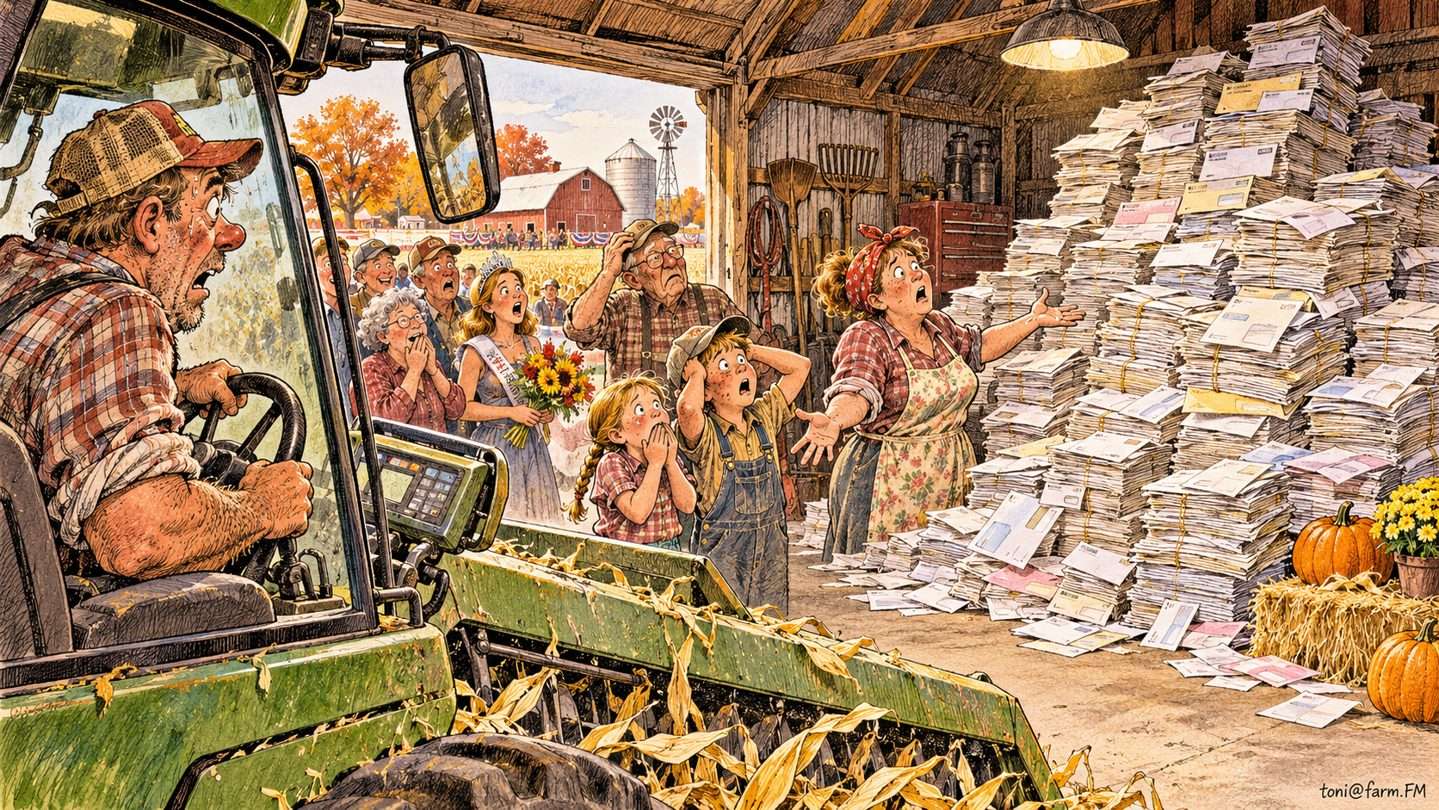
AMES, Iowa — The end of corn and soybean harvest came with one more arrival for Iowa grower Dean Willet. A set of invoices appeared on the kitchen table, laid out by his wife Lorna in the gentle semicircle usually reserved for children singing at church. Willet had expected cake. She said he could have it as soon as he identified which of the parts on page two had been purchased twice.
“I told her harvest was over,” Willet said. “She said the combine had asked for a short time to make some closing remarks.”
The End of Corn and Soybean Harvest Starts Another Count
DTN’s farm outlook noted that corn and soybean harvest was winding down and that crop markets were watching export commitments and USDA estimates. Willet watches those numbers too. On the night he parked the combine, the number he wanted was the total on a parts receipt that had once been white but now closely resembled a thin piece of topsoil.
Lorna provided evidence of the family’s optimism in the form of the grocery list from their first week of harvest. It included three meals they expected to eat at home. The receipts from the following six weeks showed a considerable market share for food that could survive a fall between the seat and the passenger door.
Farmer Jessa Tran actually keeps a harvest log, including field dates, fuel and machine delays. Until recently she also kept a list of remarks her father made during delays, but reached the limit of the notebook before reaching the limit of his position on imported bearings.
“I logged six hours of downtime one Tuesday,” Tran said. “My dad came by for ten minutes. According to him we lost the whole day while he was standing there.”

Separate the Yield From What It Cost to Bring In
The USDA Economic Research Service’s farm business income overview explains how cash receipts and cash expenses combine in net cash farm income. For his own harvest review Willet starts with delivered and stored grain records, then collects the receipts for fuel, repairs, trucking and drying. Putting a cost beside the job gives the family more information than settling the argument over which field looked prettiest on the way past.
Farmer Darryl Nash reviews repairs by machine before making his winter work list. He allows one extra line on his list for any noise that went away as soon as the mechanic arrived.
“The dealer said I should trade it while it still had value,” Nash said. “I told him that was the same thing my wife said about the lawn mower, and now we’re on our third season sharing the neighbor’s goat.”
The Willets have scheduled an actual harvest dinner for the family. Lorna asked Dean what they should serve. He suggested corn, figuring that it was one thing he could bring to the table without another person sending an invoice. She asked which bin he planned to take it from so she could subtract it from inventory.
Farm.FM satire disclaimer. The combine paid for its own dinner in corn, at the nearest price it could find in the glove box.
Last Updated on November 16, 2026 by Alan Nafzger