
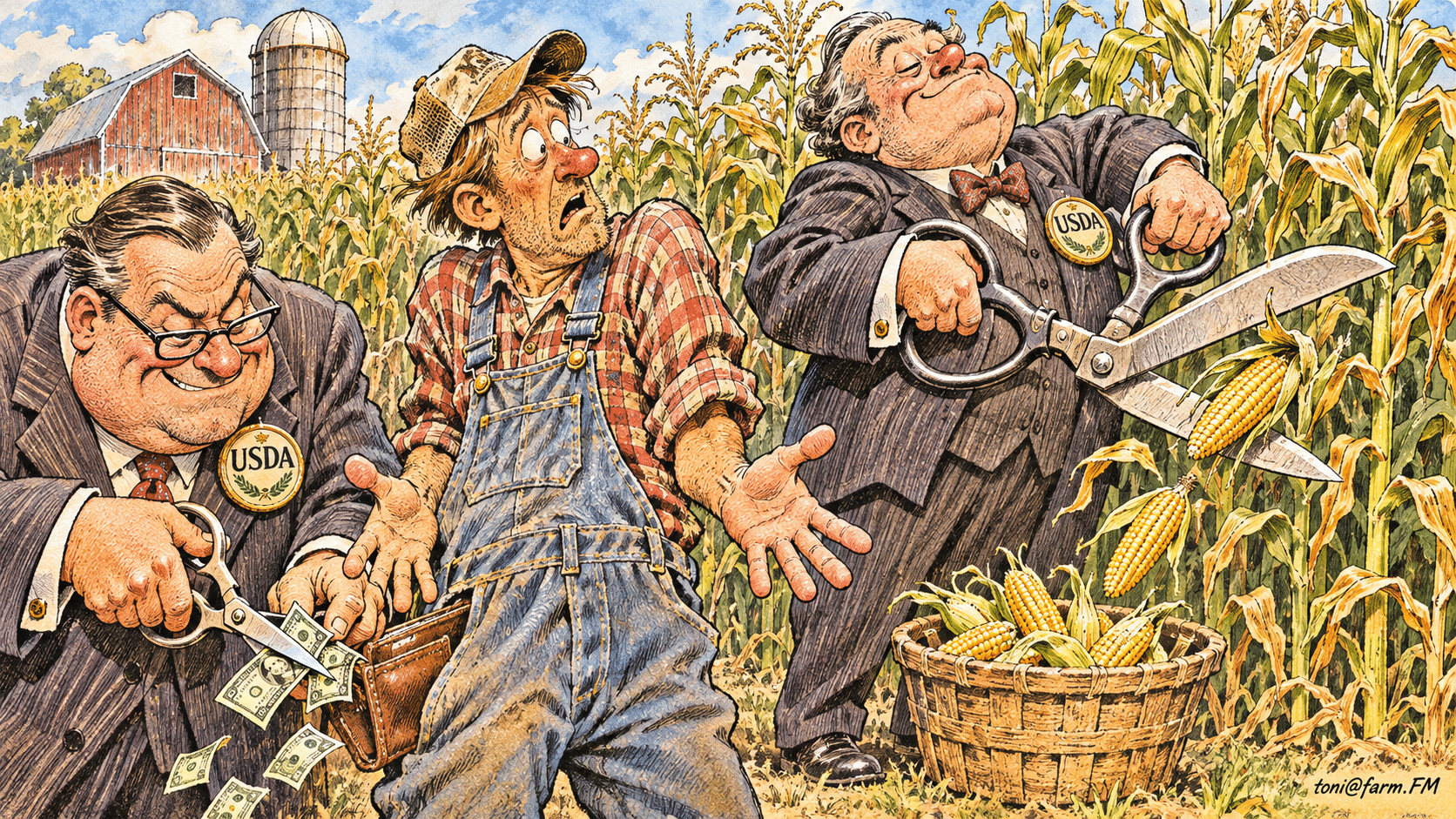
DES MOINES, Iowa — America’s corn farmers received another economics lesson after a USDA outlook pointed toward less corn and a lower projected price. Producers had previously believed that a smaller supply might, on occasion, be worth more money. Federal agriculture mathematics has now advised them to stop spreading dangerous rumors.
USDA Corn Forecast Delivers a Two-for-One Disappointment
Under the old system, farmers worried about producing too little corn. Under the improved system, they can worry about producing too little corn and getting paid less for it. Washington calls this efficiency because both problems fit on one spreadsheet.
“I planted the crop, paid for the seed, rented the ground, bought the diesel, fixed the combine and waited for the market,” said Iowa grower Earl Tiller, studying a calculator that had begun displaying condolences. “Apparently the only thing I forgot to grow was a buyer willing to pay me.”
The real USDA World Agricultural Supply and Demand Estimates report tracks production, demand, stocks and prices. Those figures are forecasts, not prices dictated by the department. Unfortunately, farmers cannot deposit that distinction at the bank.
Farm Economics: Fewer Bushels, Same Bills
A farmer’s operating costs rarely display the same flexibility as commodity prices. Fertilizer companies do not announce a 12 percent discount because a crop report looks gloomy. Equipment dealers have yet to introduce a tractor payment indexed to the owner’s emotional condition.
“The seed salesman wants his money in March,” Tiller explained. “The landlord wants his money in October. My banker wants his money every month. The corn market is the only participant allowed to say it isn’t feeling generous.”
To investigate, Farm.FM assembled a sample budget involving 1,000 acres, an expensive combine and a coffee can containing $7.42. Our accountant determined that the coffee can was the most liquid asset. The combine was described as a sophisticated machine for converting diesel into depreciation.
One economist suggested diversification. Tiller considered growing soybeans, opening a pumpkin patch and renting his field to couples seeking photographs of a lifestyle they could never afford to operate.

Corn Farmers Request a Forecast for Profit
Market analysts note that corn prices respond to far more than the domestic harvest. Export demand, global production, ethanol use and inventories all matter. This explanation was technically correct and therefore deeply unpopular at the grain elevator.
A neighboring producer proposed that USDA publish one additional line in its reports: the estimated number of farmers who can still afford to answer their phones. Another asked for a column tracking how many bushels of corn are required to purchase a replacement pickup tailgate.
For practical planning, farmers can compare their own break-even costs with local cash bids, examine basis and storage expenses, and consult USDA Economic Research Service data instead of treating a national forecast as a personal financial verdict.
Tiller remains optimistic. “Next year I’m going to plant half as much,” he said. “At this rate, maybe they’ll pay me twice as little. Then I’ll finally be rich in government savings.”
Disclaimer: This agricultural satire was cultivated entirely through a human collaboration between two sentient beings: the world’s oldest tenured professor and a philosophy major turned dairy farmer. The quotations, budget exercise and characters are comic devices; the market-report references are real.