
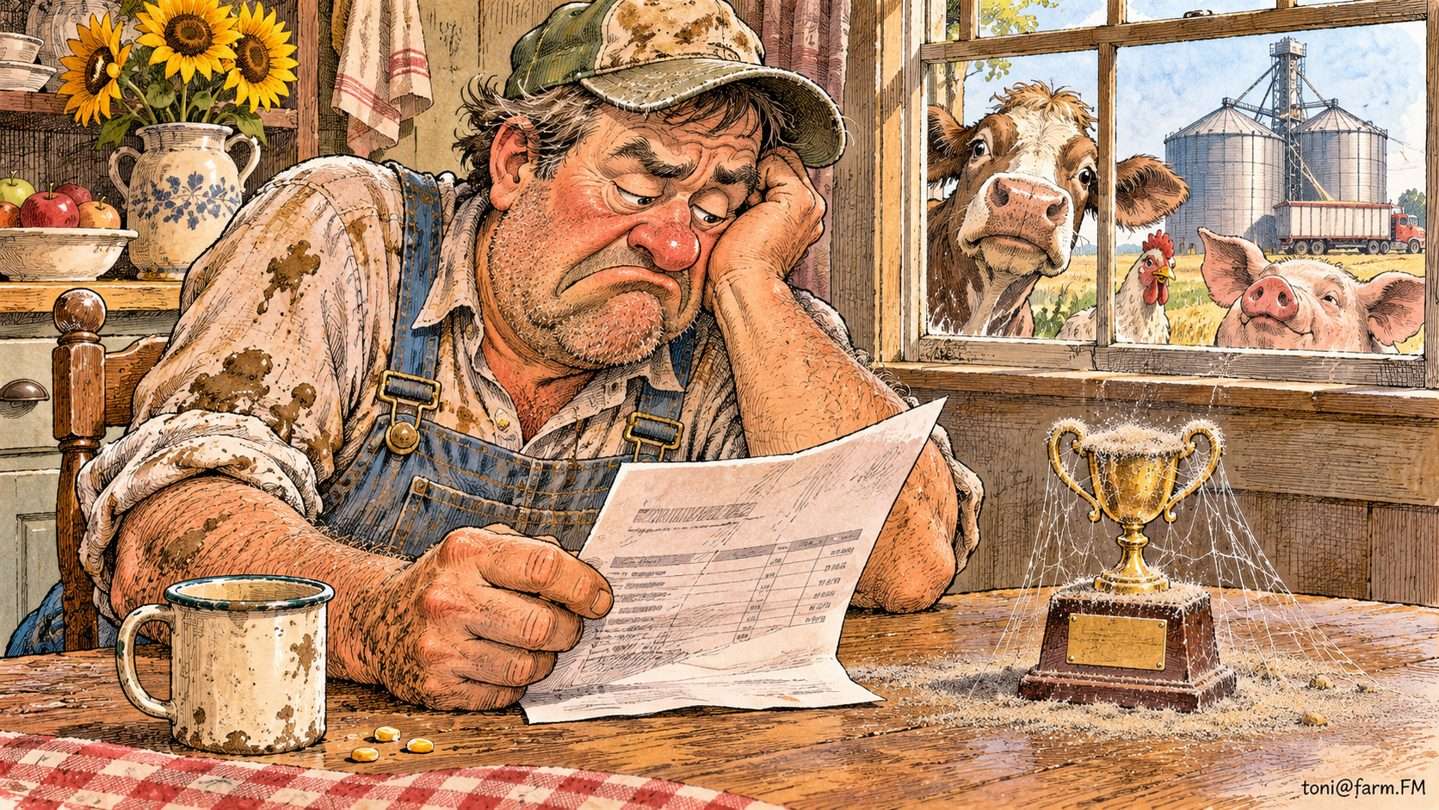
DES MOINES, Iowa — A crop insurance harvest price notice has arrived at Drew Malley’s kitchen table, where it was greeted with the same innocent question that has complicated many family conversations about arithmetic. Malley would like to know who buys his corn at the price in the official document, and whether that person has a truck.
“What I want is for the price on the paper to meet the corn in the bin,” Malley said. “At the moment they’re both seeing other people.”
The Crop Insurance Harvest Price Gets Its Own Chair
The USDA Risk Management Agency’s harvest price bulletin lists approved harvest prices for relevant insurance offers with an October price discovery period. The agency price is used under the applicable insurance terms. Malley’s cash sale still depends on the bid he can get for the crop he has, at the place and time he can deliver it.
Malley’s wife, Cora, performed a kitchen-table demonstration with three coffee mugs. She labeled one insurance, one elevator and one bank. Drew put his hand on the elevator mug, bumped the insurance mug and spilled the bank. Cora wrote down the result as consistent with the last seven years.
Cora said the family also put last year’s yield records in the insurance folder, which briefly made the folder look more prosperous than this year’s grain check. Drew asked if the check could claim the folder as a dependent. The accountant said the folder would at least need to live with them six months. Cora said that would be no problem.
“I used to keep the insurance papers in the glove box,” said corn grower Alma Nieves. “Then a mechanic found them and asked whether the truck had a crop history. It’s got enough corn under the seat to make a case.”

Take the Policy and the Settlement to the Same Meeting
The price in the insurance notice and a cash grain bid answer different questions. The policy documents and production records matter when calculating a potential claim, while the elevator settlement shows what the buyer paid and the deductions that were actually taken. A producer can ask the agent to explain which values apply to a specific policy and what records or notices are required.
Local farmer Hank Sato has made the process easier by writing his questions down before his appointment, in order of how little he wants his banker to hear the answers.
“I asked the agent to show me the numbers as if I were new at this,” Sato said. “He did. Then I asked him to show me again as if I were new at subtraction.”
Malley eventually filed the bulletin next to the policy and brought the actual sale records to his appointment. On the way home, he passed an elevator sign that said the price was subject to change. He appreciated finally seeing something in the grain business that could deliver on its promise.
Farm.FM satire disclaimer. No mug was insured under the Common Crop Insurance Policy. The bank mug recovered most of its coffee.
Last Updated on November 16, 2026 by Alan Nafzger