
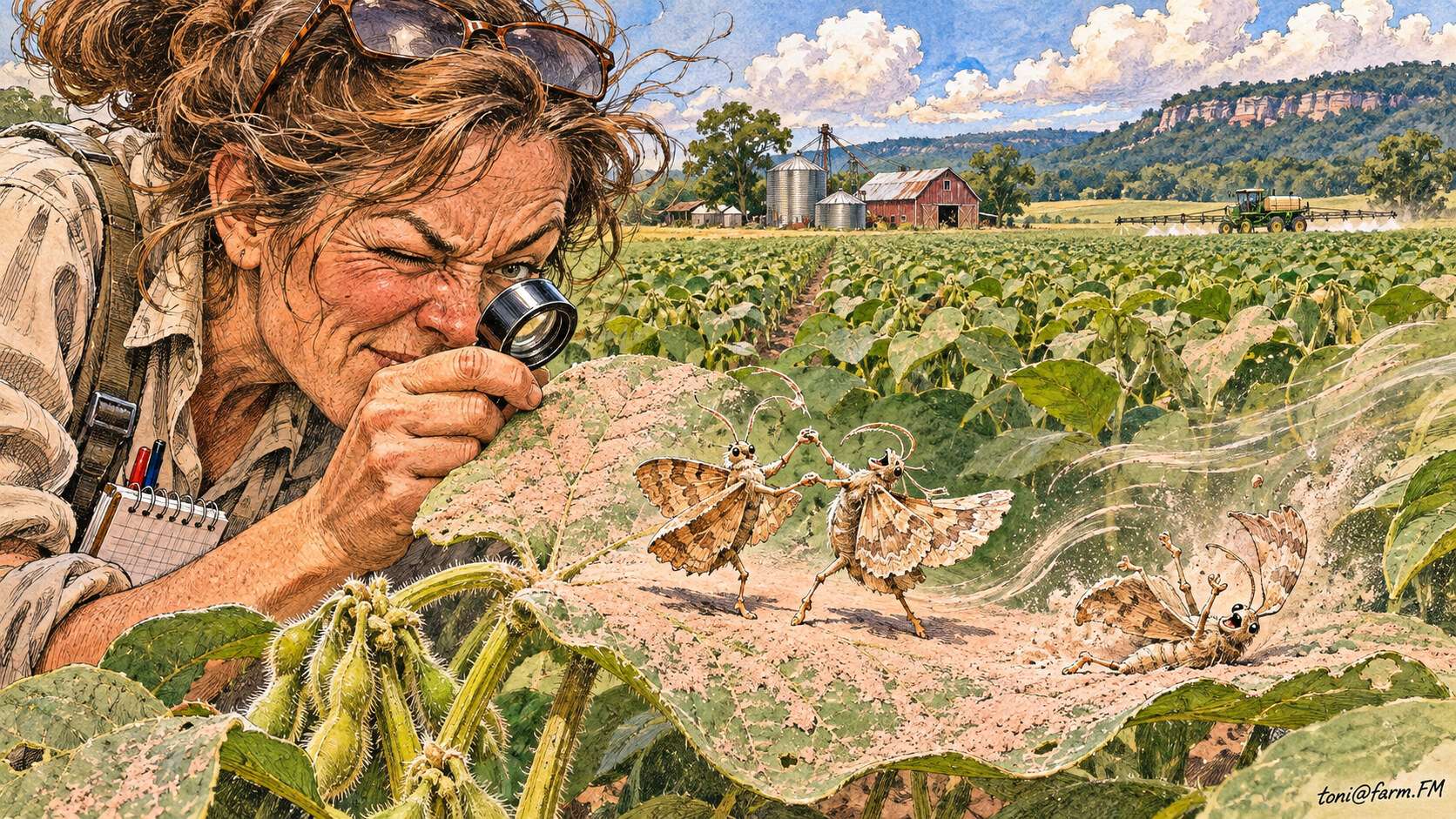
FAYETTEVILLE, Arkansas — A soybean looper moth inspecting a field trial in the Arkansas Delta found the entire dining room dusted with clay and requested to speak to whoever had ruined the leaves. The manager turned out to be a crop entomologist with a clipboard. His idea of making things right was to count how many of the moth’s children came back.
In the University of Arkansas Division of Agriculture’s soybean clay research, Arkansas and USDA researchers examined kaolin, a clay that leaves a thin film on plants. They reported that a kaolin-and-insecticide treatment matched the full-rate insecticide treatment under their study conditions. Looper moths avoided laying eggs on treated leaves, and young loopers that hatched there had trouble feeding. Agriculture.Directory’s crop pest scouting resources have considerably more to say about looking under a leaf than the moth would prefer.
Soybean Clay Research Prompts a One-Star Review
The moth left its review on the underside of a leaf, where it assumed management would never look. It complained that the house salad was gritty, the nursery had been relocated, and a man in khakis kept showing up to count its family.
A grower walking the plot said he had once put a perfectly good shirt through a wash with a pocketful of drywall dust and understood the moth’s disappointment. He also pointed out that the moth had never asked permission to open a nursery on his leased ground. “I’ve got three hundred acres of beans and she calls it a family restaurant,” he said. “None of the family’s ever tipped.”
In a tasting panel conducted along one end row, every caterpillar reached the same conclusion. The panel broke up after they ate their comment cards and rated those higher than the beans.

The Stink Bug Finds a Way Around the Menu
A Customer Who Drinks His Dinner
The University of Arkansas report explains a distinction that the insects have yet to put in their advertising. A southern green stink bug feeds by piercing plant tissue. It can sometimes feed despite the clay coating. That is roughly the difference between trying to eat a sandwich through its wrapper and slipping a straw through the lid of a drink.
This news pleased one stink bug so much that he agreed to serve as the trial’s independent restaurant critic. His first recommendation was to water the plants more often. The researchers declined to let him write the irrigation schedule. They also declined his offer to bring in his cousin as the county’s new crop scout.
At the tailgate that evening, the grower said he would happily keep doing the field walks, check what was actually feeding, and take the results up with his local adviser. He had been promised cheaper pest control before. Usually it arrived in a shiny jug with a baseball cap and an invoice that was the most effective thing in the package.
Farm.FM disclaimer: The world’s oldest tenured professor and a philosophy major turned dairy farmer reviewed the clay. Neither was able to get it out of his molars before press time.
Last Updated on November 17, 2026 by Alan Nafzger
Clay-coated soybeans that make looper moths ask for the manager may be the first pesticide the insects have reviewed, and university and USDA crop-research program notes are the sober follow-up to a very funny bite.