
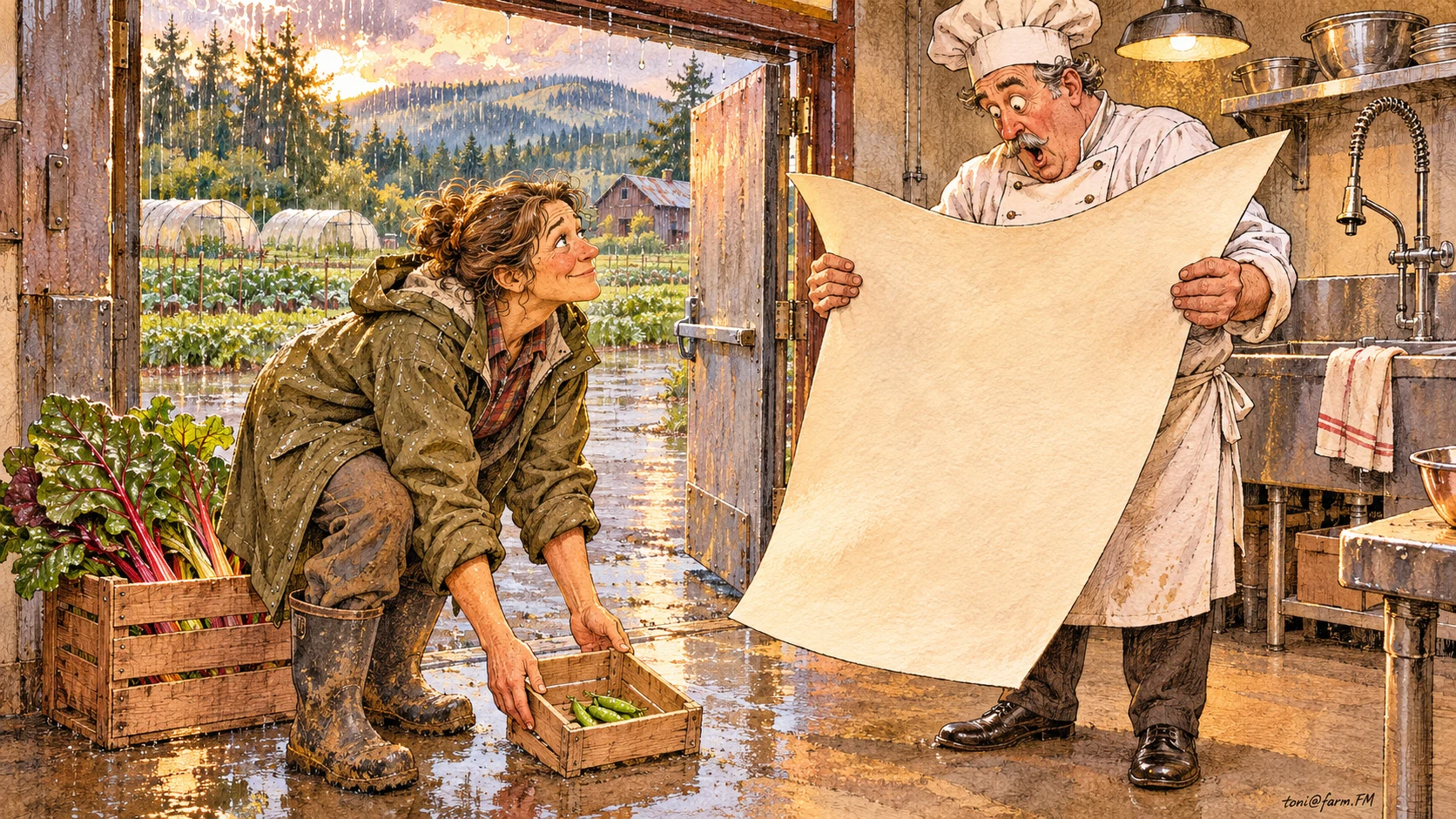
MCMINNVILLE, Oregon — A farm to table menu received its first weather forecast Friday when chef Owen Vail promised fresh peas to every table and grower Lena Fox arrived with a crate small enough to carry in one hand.
Owen looked into the crate. He could see the bottom, which was not something he’d planned to be able to do before six o’clock.
“Is that the sample?” he asked.
“That’s the peas,” Lena said.
“What happened to the rest?”
Lena looked down at the wet knees of her work pants. “The rest of them had a better day than I did. They stayed in the field.”
The Farm to Table Menu Meets the Field
Owen had been using the Farm To Table Directory’s seasonal ingredient and restaurant sourcing guides to plan his produce orders. He had a probable harvest window for peas. By the time he printed the menus, probable had become a handsome description of a side dish at twenty-seven tables.
Lena said she could pick a little that morning, but the wet ground had slowed the crew and she’d called as soon as she knew the amount. Owen said he saw her message. He’d been printing the menus at the time and thought he could wait until the machine was done. The printer, which also had a job for twenty-seven tables, had finished successfully.
Utah State University Extension’s guide to direct produce sales notes that local produce changes with the season and weather. Restaurants with flexible menus can work with those changes. Owen had always considered his menu flexible. He could fold it in thirds without tearing it.
Lena lifted a second crate out of her truck. It held rainbow chard. She’d brought enough to make a side dish if the kitchen could use it. Owen asked whether it was the same price. Lena said it was a different vegetable and handed him the price sheet. Owen said he was beginning to see why she never printed the menu.

Dinner Has a Chance of Chard
Owen served the peas he had as a small tasting portion and made chard the regular side. He gave his server, April, the new description before the dining room opened. She asked what to say to someone who’d come especially for the peas.
“Tell them what happened,” Owen said.
“How much of it?”
“Start after I printed the menus.”
At the first table, a customer studied the small bowl of peas beside a much larger serving of chard. He asked whether the smaller portion was the result of an artistic decision. April told him it was the result of rain. He ate a pea, said it was good and asked at what point the artist would be available to discuss a full serving.
“Next week, if it dries out,” April said.
The Farm to Table Menu Goes to Press Later
Owen and Lena agreed to check quantities before the restaurant committed to a dish, and to talk ahead of time about which substitutions could work. Owen wrote back with the amount he’d want at next delivery and the time by which he could still change the weekend menu. Lena could tell him what was likely and confirm the final amount once she’d checked the field.
The following Friday, Owen waited for her call. It was sunny outside. He put the menus in the printer and kept his hand over the button.
April asked what he was waiting for.
“Local information,” he said. “The sun over here has a good reputation, but it hasn’t delivered anything yet.”
Farm.FM Disclaimer
The world’s oldest tenured professor and a philosophy major turned dairy farmer prepared this account together. The professor has forecast twenty-seven servings of peas. The dairy farmer is waiting for him to put his boots on.
Last Updated on November 17, 2026 by Alan Nafzger
A farm-to-table menu with a weather forecast is the first honest tasting note of the season, and field-to-forecast weather for farm stands is how you avoid promising a tomato you don’t have.