
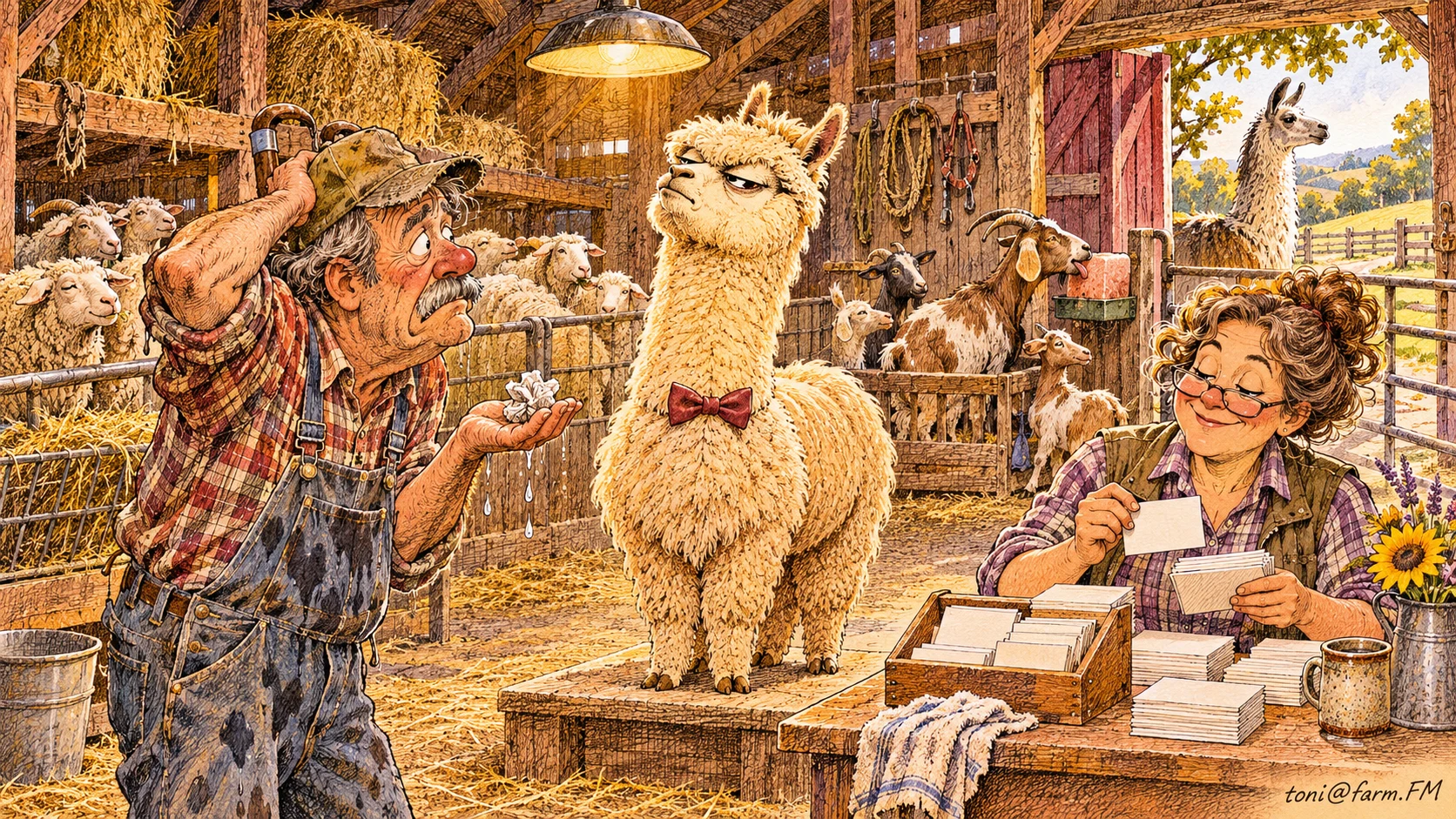
Small ruminant production at the DeWitt family farm has appointed an alpaca compliance officer after the sheep, goats and llamas failed to agree on whether a mineral feeder, fleece record and open gate were three separate emergencies.
The compliance officer’s name is Gerald. He has no formal training, but he can stare across a barn aisle with the quiet disapproval of a man who has reviewed your receipts.
“Gerald doesn’t do anything,” owner Patty DeWitt explained.
Her husband, Earl, disagreed. “He supervises me not doing it correctly.”
Small Ruminant Production Creates Four Departments
The DeWitts began with six sheep and two goats. Then their daughter joined 4-H, their niece wanted fiber animals and Earl watched one video titled “Llamas Are Easier Than You Think.” The barn now contains a wool department, a mohair discussion, a dairy-goat committee and two camelids whose job descriptions consist mostly of standing farther away than expected.
Patty started individual records for identification, weight, body condition, breeding, births, vaccinations, parasite checks, fiber yield and sales. Earl kept his records in a pocket notebook that went through the wash and emerged as a small, clean bale of paper.
The family rebuilt the files from tag numbers and receipts. Gerald observed the process without offering testimony.
Farmers, youth exhibitors and fiber producers can use the SmallRuminantResource national production directory for sheep, goat, alpaca and llama guides, including health logs, fleece records, grazing plans and show preparation. The directory does not certify individual animals. Gerald has reserved that authority for himself.
Body Condition Hides Under the Sweater
Earl assessed the sheep by looking at them from the gate.
“They appear substantial,” he said.
Patty reminded him that a full fleece can make a thin ewe look like a sofa. They used hands-on body-condition scoring at the loin instead of judging the animal by silhouette. This upset one ewe, who had spent the winter developing a very persuasive silhouette.
They scored representative animals, noted changes and grouped them by nutritional need. The growing lambs, pregnant ewes and lactating does received different consideration. The retired wether received less grain and responded by filing a grievance directly into the feeder.

The Parasite Report Contains Unpopular Numbers
Patty also watched performance, body condition and signs of anemia, then used veterinary guidance and testing rather than treating every animal by calendar. The University of Minnesota Extension’s barberpole worm management guidance recommends individual records, multiple indicators and targeted treatment; it also explains how fecal egg count reduction testing can show whether a dewormer works on a particular farm.
Earl preferred a simpler method: hold up the medicine bottle and see which worms looked nervous.
The veterinarian said this lacked diagnostic sensitivity.
Samples were collected, labeled and refrigerated as directed. Earl briefly placed one beside leftover pie and was informed that the refrigerator now had departments, too.
Shearing Day Discovers the Actual Animal
When spring arrived, the shearer set up in a clean, dry work area. Patty prepared holding pens, bags and records. Earl prepared a lawn chair until Patty assigned it to someone useful.
The first sheep emerged from its fleece looking thirty pounds lighter and personally betrayed. The children skirted wool, weighed fleeces and recorded quality observations. Earl held up one dirty edge and asked whether it counted as rustic.
“It counts as the part we remove,” Patty said.
The alpacas waited with theatrical concern. Gerald maintained eye contact with the shearer, the clippers and the concept of accountability.
The Llama Passes Its Performance Review
The llama, Mavis, served as a guardian. Her annual review measured alertness, behavior around the flock and her ability to distinguish a coyote from the feed truck. She scored well on alertness and poorly on welcoming vendors.
One afternoon, Mavis placed herself between the lambs and a loose dog, then escorted the dog toward the driveway with the calm authority of a hotel manager removing a guest who had misunderstood breakfast hours.
Earl offered her a promotion.
Patty said livestock titles did not affect payroll.
Gerald heard this and looked directly at payroll.
The Farm Finally Uses the Records
By summer, the DeWitts compared weight gain, health treatments, fiber returns, feed costs and breeding outcomes. One doe produced less milk but raised strong kids. One ewe required repeated parasite treatment. One alpaca produced beautiful fleece and consumed fencing repairs at a rate not previously included in the fiber budget.
The records did not make decisions automatically. They made family arguments shorter and more specific, which is the closest agriculture comes to automation.
Earl admitted the system worked. He bought a waterproof notebook.
Gerald inspected it, then spat beside the filing cabinet.
The compliance department marked the purchase provisionally acceptable.
Helpful Small-Ruminant Notes
Match records to the enterprise: health, reproduction, growth, milk, meat, fiber or youth projects. Use consistent identification, hands-on condition scoring, species-appropriate nutrition and veterinary parasite plans. Record treatments and withdrawal dates. For fiber, weigh and grade what is actually marketable—not what looked magnificent before the manure was removed.
*Disclaimer: This report is entirely a human collaboration between two sentient beings—the world’s oldest tenured professor and a philosophy major turned dairy farmer. Neither holds an alpaca compliance credential, and both recommend storing fecal samples farther from the pie.*