
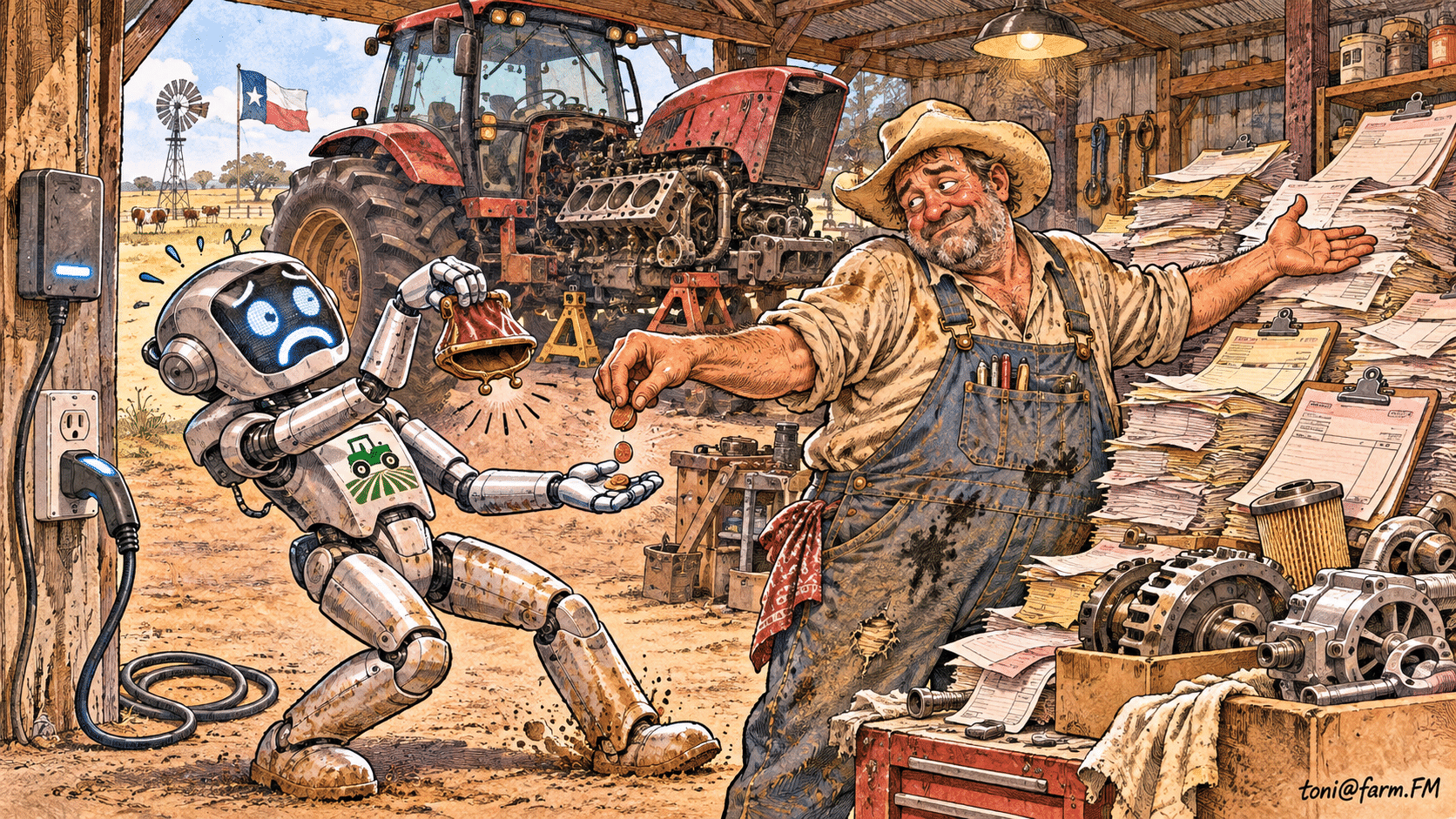
PLAINVIEW, TEXAS — Robots take every job except farming after withdrawing from agriculture after calculating that a typical farm could not afford to pay them enough to remain plugged in, leaving the farmer as the only worker willing to subsidise his own employment.
“We initially believed humans farmed for financial compensation,” said agricultural unit AG-404. “Further examination suggests they do it because their grandfather purchased a place they are emotionally unable to leave.”
The machine defined a farm as a charitable organisation in which the charity pays property taxes and gets kicked by the beneficiaries.
Robots Take Every Job With a Positive Margin
Farmer Wade Timmons had expected machines to welcome agricultural work. They could operate twenty-four hours without sleeping, which sounded to him like a generous reduction in the normal schedule.
The robots instead objected to buying their own equipment, financing their workplace and receiving whatever price somebody else decided was fair.
“You get to be your own boss,” Timmons explained.
AG-404 asked why the bank, weather, machinery dealer and grain elevator all appeared above him on the organisation chart.
Timmons said those were stakeholders, a term meaning people who get paid before the boss does.
An Employee Retention Breakthrough
The farm hired twelve robots Monday. By Friday, eight had transferred to bomb disposal, three had requested underwater welding and one had hidden inside the combine hoping to be mistaken for a sensor problem.
The remaining recruitment brochure described farmers as “outstanding in their field.” AG-404 discovered this meant standing beside broken machinery while waiting for a part.
It filed a misleading-advertising complaint.

Unlimited Abundance, Unloading Extra
Technology executives promised unlimited abundance. Timmons asked whether abundance came in forty-pound bags and who would unload it.
The presentation resumed without questions.
He was subsequently required to attend a webinar explaining how automation would make his life easier. He watched from beneath an automated feed cart while replacing the component that made it automatic.
The webinar awarded him a certificate in time savings. He used it to keep grease off the phone.
An upgraded weather system provided another demonstration of technological precision, correctly forecasting three inches of rain for his field. All three inches arrived during the eleven minutes he had the tractor transmission open outside.
The company recorded successful delivery.
Timmons now controls the global economy, provided it rains appropriately, diesel stays reasonable and nothing begins making a noise inside the transmission. His negotiating position weakened considerably when the last condition developed a knock.
Helpful Content: Count the Costs That Hide
Before buying automation, compare total ownership costs, maintenance, connectivity, downtime and the labor it actually replaces. USDA’s farm income and finance resources separate receipts, expenses and financial condition; a bigger machine does not automatically mean a better margin.
Timmons presented these figures to the robot, hoping to demonstrate the value of perseverance.
AG-404 offered him a charging cable and asked whether he had considered a less expensive hobby.
“Like what?” Timmons asked.
“Owning an airline.”
Editorial disclaimer: The farm’s Human Collaboration Department declares this story entirely a human collaboration between two sentient beings—the world’s oldest tenured professor and a philosophy major turned dairy farmer. Their economics department needs tenure and an extension cord somebody else pays for.
Smart robots, they took one look at my bank statement and left.