
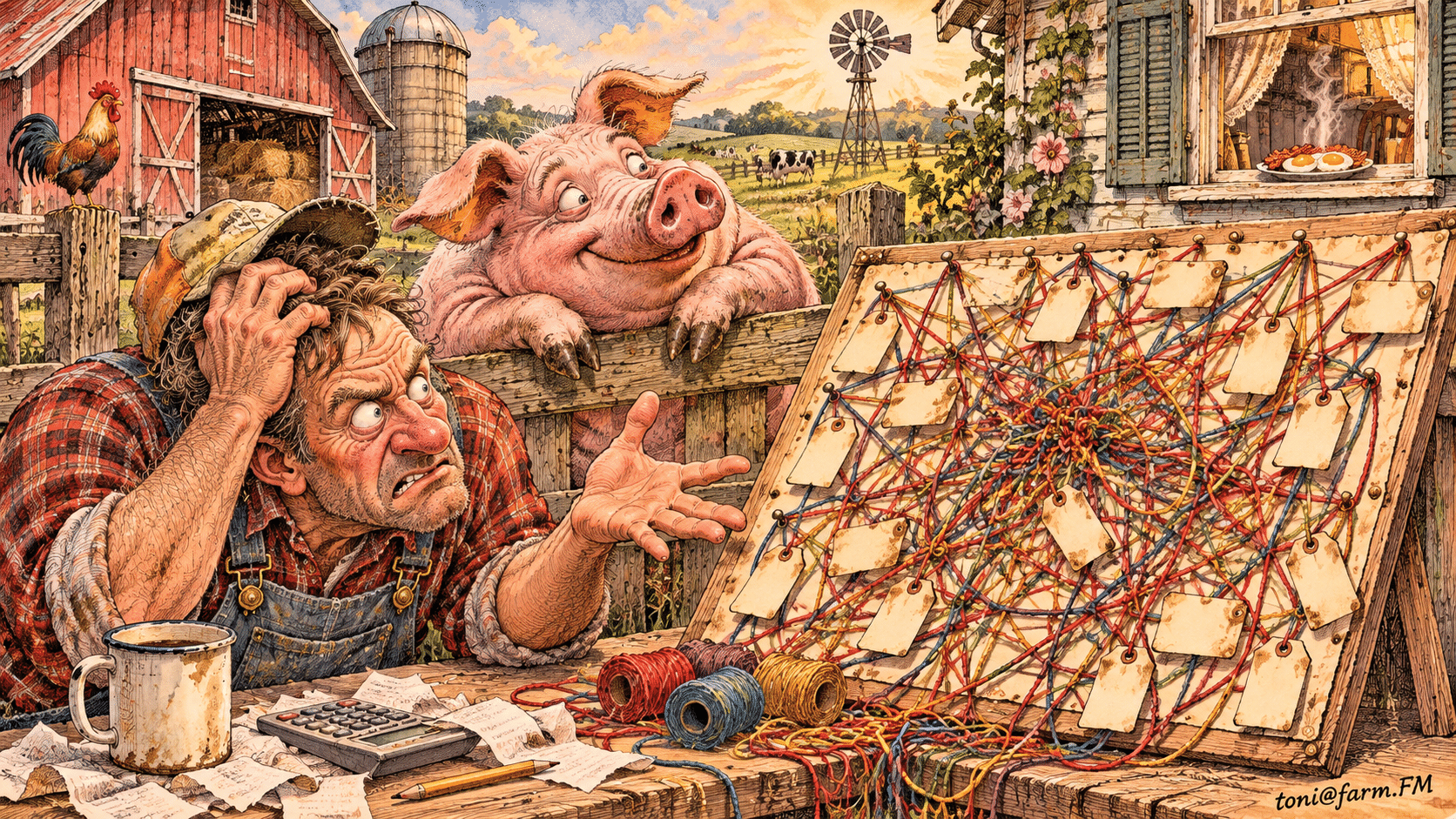
AMES, IOWA — Pork producer losses have prompted a large Iowa hog to demand a financial explanation after hearing, for the ninth consecutive year, that bacon is extremely popular and somebody must be making money from all this enthusiasm.
Recent AgWeb reporting describes falling hog prices and rising production pressures, with a difficult 2027 outlook. Farmer Wes Dobbins says the report accurately captures his position between an animal that needs feeding and a fuel supplier who does not accept cultural appreciation for pork.
The hog, unofficially named Treasurer, began asking questions after watching a breakfast commercial through the farmhouse window. Dobbins says this is why he opposes putting a television where livestock can develop expectations.
Pork Producer Losses require a pie chart
Treasurer requested a diagram showing where the bacon dollar goes. Dobbins drew feed, transport, facilities and other expenses. By the time he reached the farmer’s portion, the animal had eaten the pencil, creating a new expense before management could finish describing the old ones.
For a simple farm example, a $5 increase in cost across 1,000 animals means $5,000 more expense. It does not become smaller because the farmer calls it a cycle. Dobbins has tried. The fuel invoice remains stubbornly indifferent to metaphor.
The farm’s truck is especially committed to the business. It hauls feed one way and livestock another, consuming money on both trips. Dobbins says diversification has finally arrived: the truck can lose margin in two directions.

Bringing home bacon involves several intermediaries
His wife observed that retail enthusiasm does not guarantee strong farm returns. Processing, transport, product demand and market conditions all matter. Treasurer accepted this explanation reluctantly, having assumed the phrase bringing home the bacon described a straightforward producer benefit.
A neighbor suggested waiting for the market to turn. Dobbins agreed, then asked whether the neighbor would also persuade the feed supplier to wait. The supplier said his own optimism was available only on a cash basis.
The hog proposed a premium membership for customers who wanted to feel closer to agriculture. Benefits would include receiving feed bills, worrying about diesel and being awakened before dawn. Dobbins predicted low renewal rates but exceptionally authentic engagement.
The next budget gets fewer heroic assumptions
Dobbins is reviewing costs, cash flow and risk exposure with his advisers. He is also distinguishing a possible recovery from a funded plan. A recovery is something the market might provide. A plan has to explain what the farm does before that happens.
At the kitchen table, the family tested an optimistic scenario, a difficult scenario and a scenario where something expensive breaks while the difficult scenario is occurring. They called the third one the farm scenario and gave it its own column.
Treasurer attended the final budget meeting from the other side of the fence. He remained unimpressed by the relationship between popularity and profit. Dobbins said he was learning quickly and might be qualified for an agricultural economics degree.
The hog declined further education unless it came with feed. Dobbins admired the clarity of the demand. After an afternoon of studying margins, it was refreshing to meet one participant in the pork economy who knew exactly what he expected to take home.
Source: AgWeb reporting on pork producer losses.
Farm.FM satire. The hog has not audited the processing industry. This story is entirely a human collaboration between two sentient beings—the world’s oldest tenured professor and a philosophy major turned dairy farmer.