
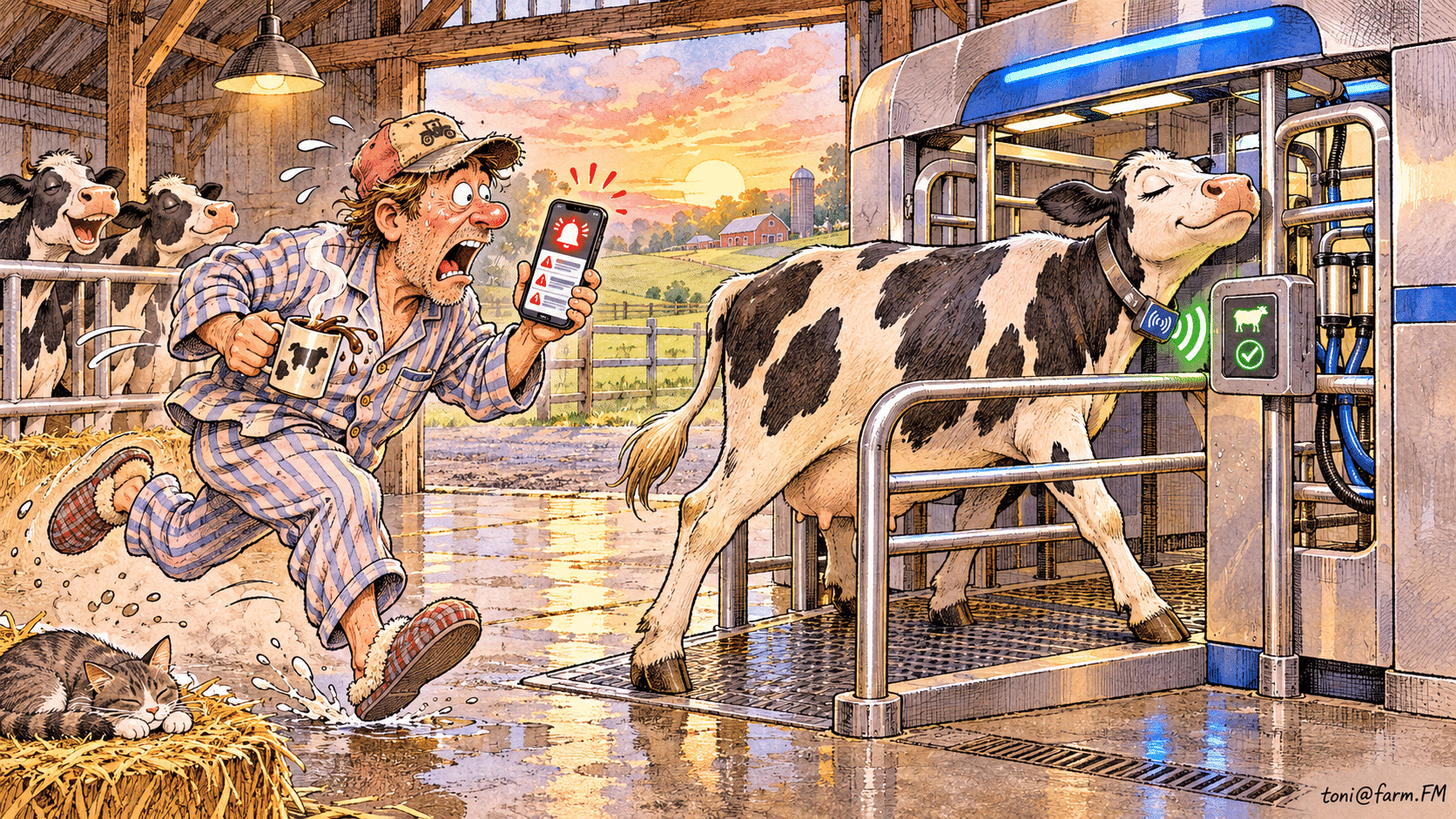
DECORAH, Iowa — Robotic milking has freed dairy farmer Linus Gade from the clockwork of the old parlor and introduced him to the thrill of being paged by a cow that knows when he is sleeping. The new automatic stall operates around the clock. Gade had understood this to mean the equipment would be available around the clock. He now sees how the wording could reasonably have included him.
“The cows walk up whenever it suits them,” Gade said. “So do people at an airport. The difference is an airline has never called me at three in the morning because Gate 4 couldn’t read a Holstein.”
His wife, Molly, said the first thing the farm automated successfully was the distribution of blame. A person used to have to ask who had missed something. The robot can send its suspicions to both phones at once.
Robotic milking changes the daily round
In automatic milking systems, many cows bring themselves to the stall. Some still need to be fetched, and cows’ use of the robot depends in part on how the barn is laid out and managed. Feed incentives, accessibility and cow traffic deserve a place in planning. University of Wisconsin Extension’s guide to voluntary robot visits explains what producers can look at when visits lag.
The salesman told Gade the robot could give him back several hours a day. This turned out to be true, provided he was willing to receive them in seven-minute installments and keep his boots close enough to find in the dark.
Molly says the useful change is where they spend their time. They can check individual cows, plan chores around a wider window and look for patterns in alerts and visits. They also need someone on the farm who can read the instructions without skipping ahead to the picture of the wrench.

Put the service call in the budget
Before buying, compare likely labor savings with equipment and facility costs, financing and maintenance. Ask who takes calls after hours, how quickly help can arrive and what the dairy can do if the system is interrupted. Price the service contract and ask a nearby producer how often they have needed it. The time to find a backup for a broken sensor is during a sales conversation, when everybody’s boots are clean and the salesman still answers on the first ring.
Gade found No. 188 waiting outside the stall while he was on hold with the service center. She was calm, dry and eating. He had a flashlight in his mouth and was wearing two different boots.
Molly took his picture for the equipment dealer. She thought the next brochure could show exactly which part of the operation had become self-service.
Disclaimer: Gade’s calls and comments are Farm.FM satire. Voluntary milking and service schedules are real. Alarm sounds may continue after the punch line.