

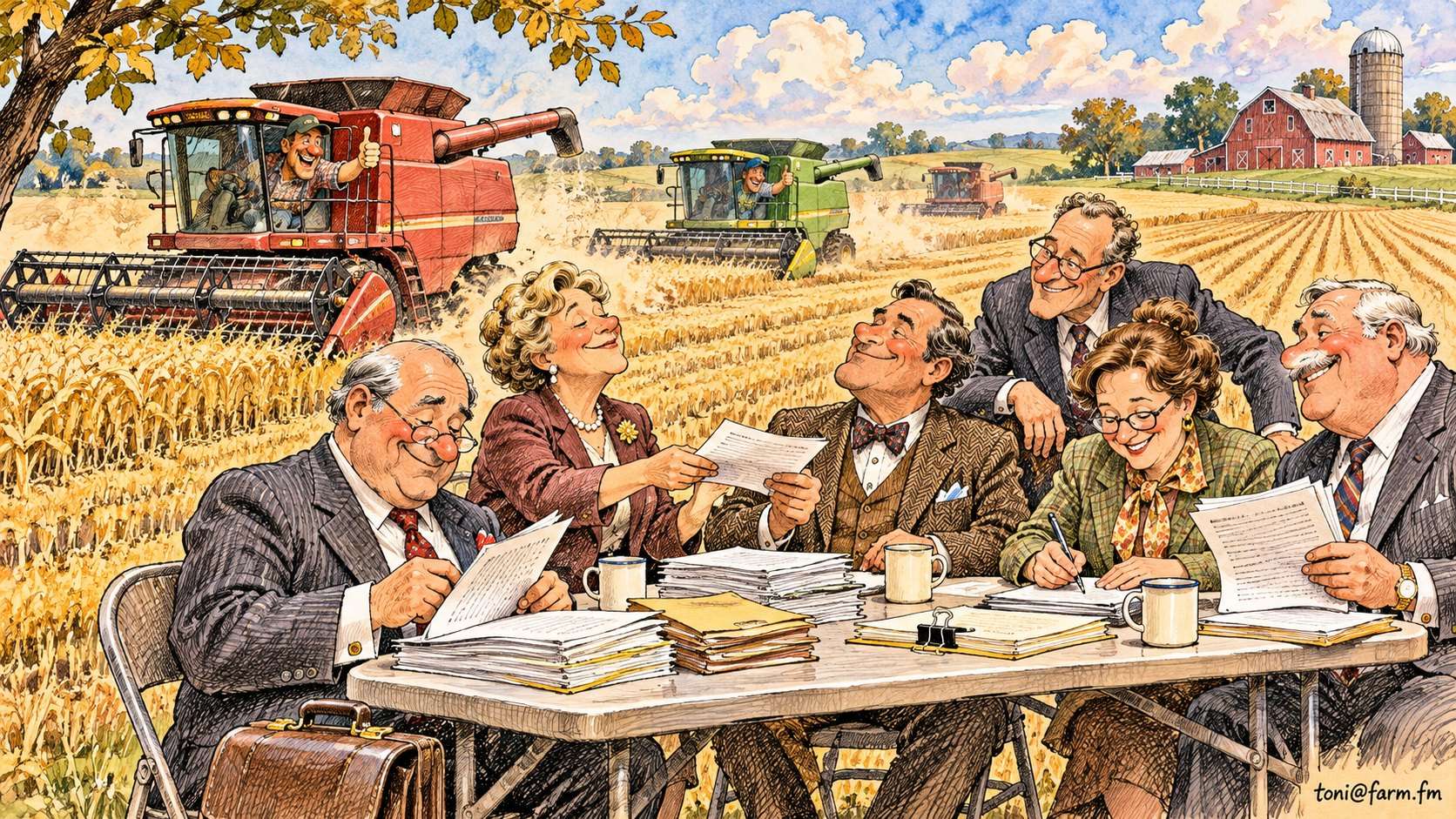
KANSAS CITY, MISSOURI — Farm Rescue volunteers have inspired a local committee to reconsider its theory that every useful rural action must begin with three meetings and a carefully worded statement of concern.
The reconsideration began when neighbors completed a day’s harvest while committee members were still deciding whether “urgent” belonged in the title of their urgent response plan.
Retired farmer Dot Ellison said the contrast was instructive.
“Those people brought equipment,” she said. “We brought a projector that won’t connect.”
Farm Rescue volunteers put help on the calendar
RFD-TV’s latest Farm Rescue report describes the nonprofit helping farm families facing illness or disaster, now serving eleven states and considering broader volunteer opportunities. The organization’s official Farm Rescue website provides current information about assistance and participation. The committee in this story is an invention; the practical need for help is not.
Dot says the important distinction is between expressing support and arriving with something the family can use.
A casserole, a covered chore, or coordinated fieldwork can accomplish more than another photograph of people holding a banner about resilience.

The agenda experiences a delay
Committee chairman Mel Pritchard proposed a task force on reducing delays. Dot suggested reducing one immediately by ending the meeting.
Mel said proper process protected everyone. Dot agreed that equipment, families, volunteers, and safety required coordination. She merely questioned whether selecting a font qualified as coordination.
The Farm Rescue volunteers’ informal survey contained one question: what needs doing? The committee’s survey contained twenty-three questions, including whether the respondent considered the survey sufficiently responsive.
Nobody completed the second survey. Mel described the result as an engagement challenge.
Dot described it as chores.
Farm Rescue volunteers show why asking for help matters
Unexpected hardship can leave essential work undone even on a well-run operation. Accepting assistance does not erase a family’s skill or effort. It allows the family to deal with the event that interrupted them.
Dot believes rural pride should mean showing up for neighbors, not insisting that a person handle everything alone while everyone else politely admires the struggle.
Readers of Farm.FM’s rural-life coverage will recognize people who say “we’re fine” while looking exhausted enough to fall asleep during the sentence. Dot recommends hearing the tired part as well as the words.
By afternoon, the committee made progress. It assigned actual jobs, confirmed who had agreed to what, and stopped duplicating the crew’s work with ceremonial oversight.
Mel carried meals. Another member covered a routine chore. Dot checked with the family before organizing anything else.
Nobody printed a banner.
At dusk, the family could see finished rows from the kitchen window. The Farm Rescue volunteers packed up. The committee’s projector remained unconnected, marking its most productive day in years.
Mel asked Dot whether they should document lessons learned.
She handed him an empty casserole dish.
“Start with returning that,” she said.
Neighbor notice
The committee’s delays are comic invention, not a claim about Farm Rescue’s practices. Use the official organization’s current application and volunteer information. Offering help works best when the family gets a say in what arrives.
Volunteers cut the whole field while the committee was still picking a chairman.
Committee finally voted on lunch, and the volunteers had already eaten it.
Committee’s still on page one, and the volunteers already hauled the grain.