

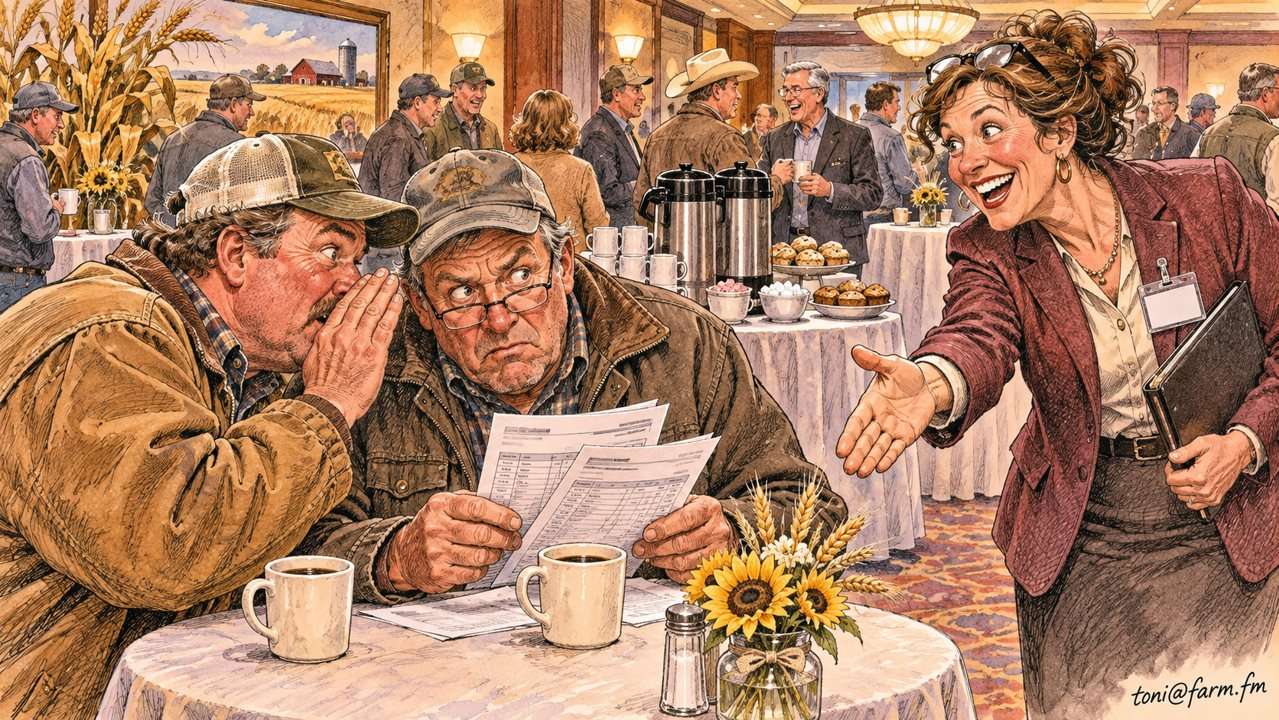
KEARNEY, NEBRASKA — A Farm Bureau meeting promises policy discussions, workshops, and networking. However, farmer James Parker has a specific objective. He wants to discover what the fellow from two counties over actually paid for fertilizer.
Parker supports broad agricultural leadership. However, he says a person can only discuss the future of farming for so long before wanting to know whether another farmer received a better quote on the thing required to reach it.
“I’m here to exchange ideas,” he said. “One of my ideas is that somebody should tell me a number.”
Farm Bureau meeting creates a favorable environment
The latest report on Nebraska’s December farm organization meetings describes the Farm Bureau convention in Kearney, including workshops, policy business, and opportunities to meet other members. The agenda also sits within a busy period of gatherings for the state’s agricultural organizations.
James considers this efficient. Farmers can compare weather, costs, and uncertainty in one building rather than requiring separate trips to three coffee shops and a dealership.

The Farm Bureau meeting approaches the sensitive question
His first conversation began with acreage, continued through rainfall, and spent several minutes on a neighbor’s remarkably fortunate auction purchase. James then asked about fertilizer.
The other farmer said prices were challenging. James agreed and asked how challenging. The farmer said that depended. James replied that he had driven a long way for a conversation the invoice could already have provided.
For example, agricultural networking can establish the condition of a distant field within ninety seconds. Discovering what someone paid may require two cups of coffee, a shared acquaintance, and evidence that neither participant intends to tell the dealer.
The tote bag becomes an economic indicator
At the Farm Bureau meeting, Parker’s wife, Louise, inspected the promotional materials. The bag contained six pens, a notebook, two product brochures, and a stress ball representing an industry that appeared to have identified its target market very accurately.
James called the collection added value. Louise asked whether the notebook contained the fertilizer number. It did not, although one brochure promised better decisions through information.
She suggested that he attend the workshops as well as the informal conversations. He agreed, provided the workshops did not use the word solutions for so long that everyone forgot to name the problem.
Take home more from the Farm Bureau meeting
Therefore, James will bring questions, listen to the policy discussions, and write down information he can check against his own operation. Farm.FM’s farm-finance report has already reminded him that two farmers can sit in the same room while occupying very different financial circumstances.
The networking has nevertheless produced several useful contacts. One man knows a reliable repair shop. Another understands a program James needs to investigate. A third finally supplied a fertilizer figure, then explained the delivery terms that made the comparison less simple.
James says this is exactly why people should talk face to face.
Louise says the convention has paid off.
He came home with better questions, one usable answer, and enough promotional pens to document the next disappointment in six colors.
Farm.FM disclaimer: The world’s oldest tenured professor and a philosophy major turned dairy farmer accept complaints about this entirely human collaboration between two self-described sentient beings. The free pen does not establish a delivered fertilizer price.
Farm Bureau gave me a name tag, but I wanted a price tag.