
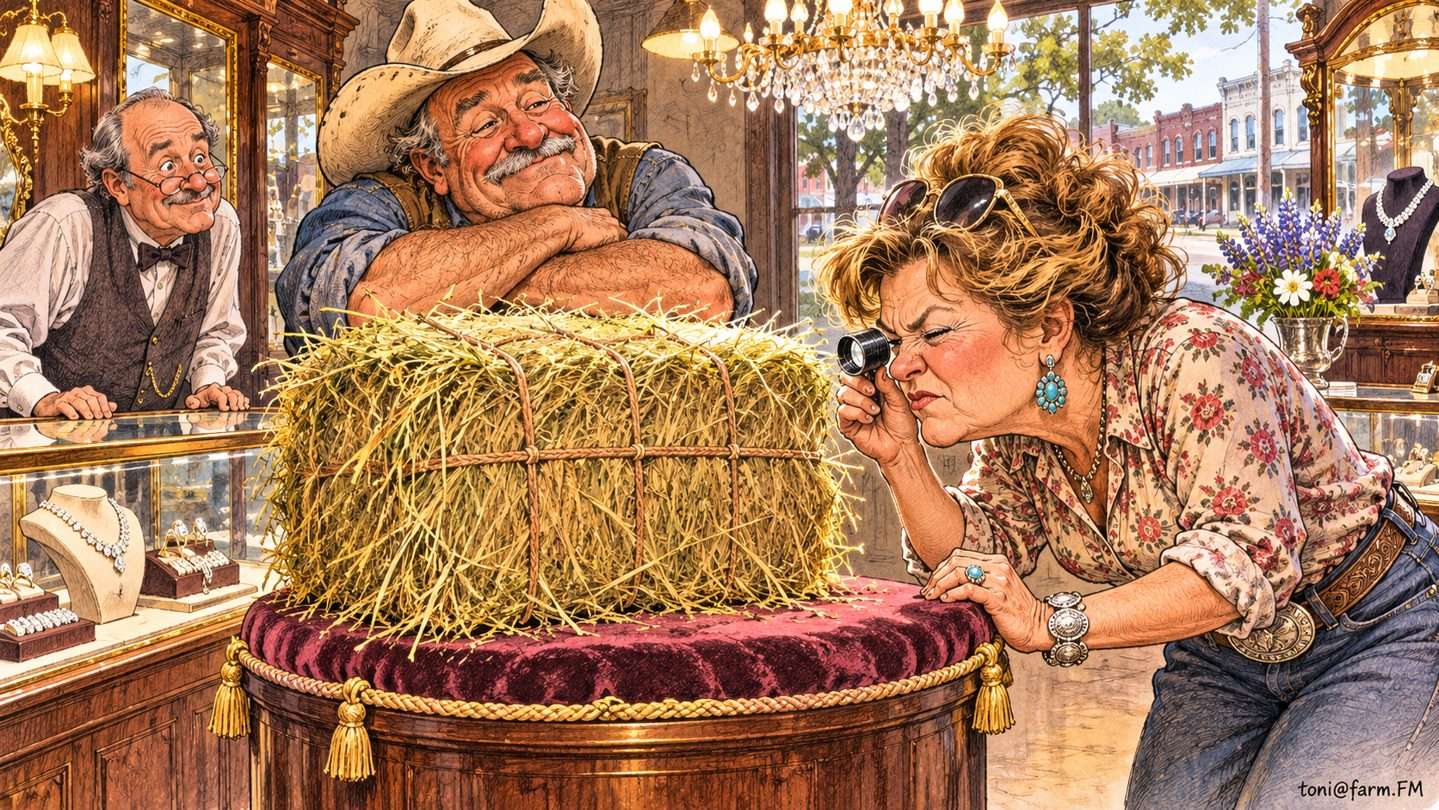
LUFKIN, Texas — East Texas hay prices have turned the first question at a feed store from what’s a bale going for to will you let me hold it without a deposit. Rancher Marla Kemp made an appointment to look at a load and brought along the logbook, a calculator and the sort of expression her husband last saw when they bought a used truck.
“I asked if these bales came with a certificate,” Kemp said. “The dealer said he could certify they’d be gone if I went home to think about it.”
East Texas Hay Prices Put the Feed Budget on Display
The USDA Agricultural Marketing Service’s November 13 direct hay report noted worsening exceptional drought in parts of the South, including eastern Texas. Kemp’s pasture had supplied less fall grazing than she planned, leaving her to figure the winter bill with more trips to the hay yard than she wanted.
Kemp keeps a chalk tally of how many bales the herd goes through over a stretch. Her husband had kept a separate count of how many were left, until it emerged that he had been counting two bales he could see through the fence that belonged to the neighbor. He maintained that the view was still an asset.
Rancher Sam Rios came to the yard with a furniture blanket to protect the hay during the ride home. He still transports the actual furniture exposed to weather, which his household understands to be a straightforward announcement of priorities.
“I bought a bale sight unseen once,” Rios said. “It looked just like the photograph, provided I stood where the photographer stood and didn’t turn it over.”

A Bale Is a Shape. Feed Is What’s Inside It.
The price per bale can hide meaningful differences in weight, delivered cost and feed value. Kemp asks for a representative weight and whether the seller has a forage analysis, then compares what the load will deliver to the herd. She also checks whether the quote includes freight, a question that has ended more than one apparent bargain before she had time to tell her husband about it.
Neighbor Jody Marks calculated that an 800-pound bale at $80 costs $200 per ton before freight. A 1,000-pound bale at the same price costs $160 per ton. That comparison still leaves quality and usable feed to consider. Marks ran the numbers at the kitchen table, then put his pencil down carefully because he suspected a third calculation would make him poorer.
“I’ve got cows that leave half the hay on the ground if you give them enough room to redecorate,” Marks said. “Apparently I’m the only one in the family who thinks the bedding budget and the supper budget should be separate.”
Kemp reserved the load after checking the weights and delivery terms. On the way home she told her husband she had saved money. He asked how much. She said they could find out as soon as someone came to collect for all the hay they hadn’t bought.
Farm.FM satire disclaimer. Hay may be handled without white gloves. Please refrain from asking the cows which bale they’d register for.