
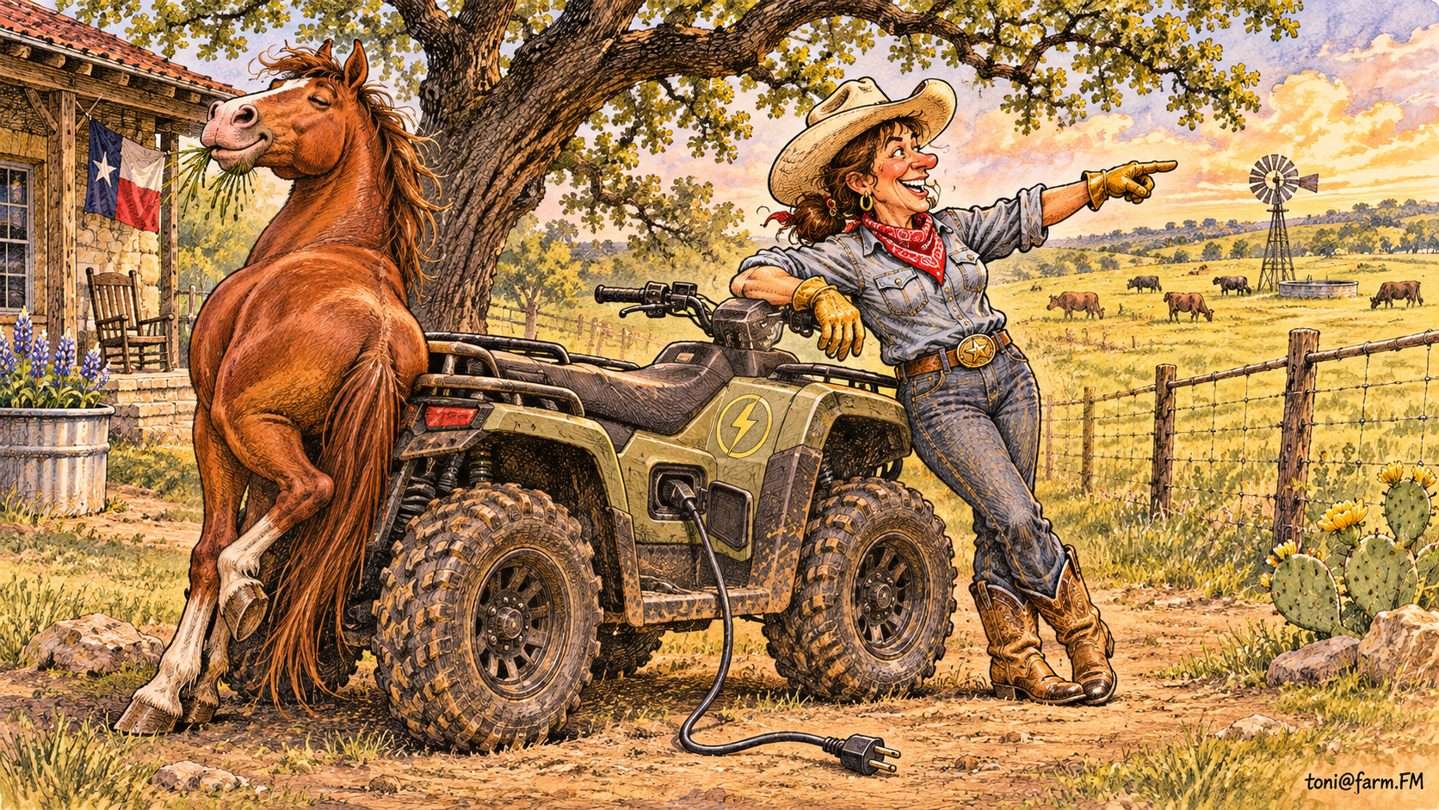
THROCKMORTON, Texas — Two ranchers have ended an afternoon comparison of horses and electric ATVs without agreeing which tool was better for checking the back fence. They agreed on which one ignored them most efficiently. The horse went toward hay of its own accord. The ATV stayed parked until one of the ranchers located the key, which was already in the pocket of the rancher offering advice.
“I told him we ought to head north,” said rancher Marla Kitt. “The horse went south and the ATV waited for a second opinion. I was outvoted without anybody saying a word.”
Horses and Electric ATVs Disagree at the Pasture Gate
The two ranches kept notes for a week. Kitt logged how long it took to get to each job with equipment and return. Her neighbor wrote down how often he had to explain to somebody that a horse is an animal. His record included a five-minute discussion with a visitor who wanted to know whether a full horse took fewer hours to charge than a low ATV.
For running back and forth with supplies, Kitt liked the cargo space. When moving cattle, she wanted a tool and a crew appropriate for the terrain and the animals. The Montana State University Extension overview of using ATVs around livestock describes considerations for doing that work. Kitt says she has also had plenty of opportunities to test the limitations of human instruction, especially with somebody standing on the wrong side of a closed gate shouting where to go.
Rancher Leon Rudd uses a horse in some country the machine does not travel well. The horse has a strong view about which side of a cedar thicket to take. Rudd discovered that view after placing his hat on the opposite side of the thicket without first removing it from his head.
“I told that horse I’d been on the place forty years,” Rudd said. “He let me finish, then he showed me what forty years of walking into a branch looks like.”

Choose the Tool Before the Argument Starts
Both ranches now compare the job, distance, ground and load before deciding what to take. The electric option requires attention to charging and available range. The horse requires appropriate care, a capable rider and occasionally a conversation with the person who borrowed the good saddle. Neither of those arrangements has helped the families identify whom to call when both ranchers swear they left the gate shut.
Rancher Ed Pruitt suggested tracking a third entry for jobs done on foot. He was asked how far he was willing to walk. He said it depended on which of the other two options had gone on ahead and what he would find when he caught up.
“I used to yell at the horse,” Pruitt said. “Now I yell at the machine. It’s a considerable improvement in technology. My wife can hear me just as far and I don’t have to apologize to a horse.”
Kitt eventually chose the ATV for the next run. The horse observed the departure, waited for the dust to settle and returned to the hay. Somebody had finally taken his advice.
Farm.FM satire disclaimer. Both entries remained undefeated in the category of doing what they were going to do anyway.