
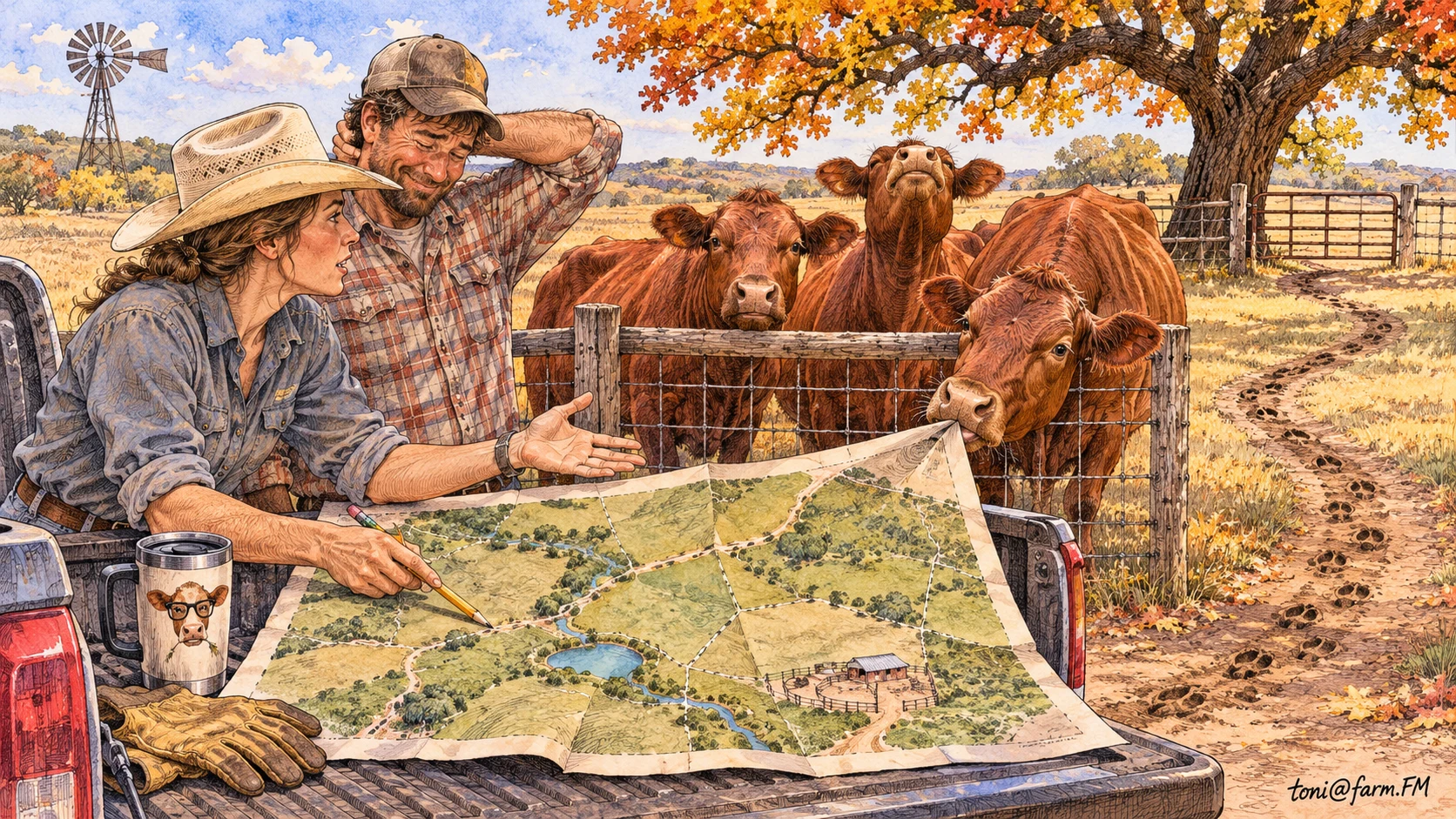
JACKSBORO, Texas — A cattle grazing plan went back to the tailgate Tuesday after a herd of red cows took one look at the ranch’s new route and walked to the old gate. Rancher Vera Chappell said she had drawn them a shorter path. Her brother, Buck, said he thought they might be waiting for a second copy of the map.
Vera rested the map against the tailgate. Three cows looked over the cattle fence. The closest one stretched her neck far enough to put her nose in the approximate location of a pecan tree.
“That’s a fair point,” Vera said.
The Cattle Grazing Plan Gets a Review From the Herd
Vera had used the Cattle Ranch Hub’s grazing and ranch management guides while thinking through how to use a pasture they had rested. Buck drew a line from the previous pasture to the new one. It was an excellent route for a pencil, a creature known to go downhill without taking a rest, to cross a dry draw without slowing down and to show little interest in the location of a water trough.
Oklahoma State University Extension’s guide to drought management emphasizes keeping records of rainfall, forage production and stocking rates to inform ranch decisions over time. Vera had been writing down what the grass looked like before they moved cattle and how it recovered afterward. Buck asked if she had written down how much time the cows spent under the pecan. Vera said she hadn’t needed to. She could look out the window at pretty much any time and find out.
Buck said the direct route would save a few minutes if they could convince the herd to use it. Vera asked what they usually did with those minutes. Buck said they mostly spent them waiting by the gate for anyone who’d decided to go a different way.

Buck Tests the Sunny Side of the Fence
Buck set a lawn chair on the sunny side of the fence and watched the herd follow the worn path around to the shade. He had brought a hand fan from the church picnic. It opened partway and folded back in on itself. The cows, with access to the whole tree, had completed their setup.
Vera came by with a sandwich and asked if he had reached a conclusion. Buck said there were different considerations for something that spent all day outside. Vera handed him half the sandwich and waited.
“I’d like to take my lunch over there,” he finally said.
They walked both routes afterward. The short one had a soft patch at the bottom and took the cattle farther from their usual water. The worn path was easier to monitor from the lane. Vera noted the conditions and the gate they used, then put a date on the map so they’d have something to compare on the next move.
The Cattle Grazing Plan Acquires a Second Copy
Back at the truck, Buck drew a solid line along the route the cows had actually taken. His first line stayed on the page. Vera asked why he hadn’t erased it. He said he might want to try it after the ground dried out.
She asked which part was supposed to dry first. Buck put his finger on the low spot and said he’d check. The cow closest to the tailgate lowered her head over the fence again. Buck moved his pencil out of range.
“Give me a minute,” he said. “You’ve already had your turn.”
Farm.FM Disclaimer
The world’s oldest tenured professor and a philosophy major turned dairy farmer prepared this account together. The professor has requested that the map be read in full. The dairy farmer suggests he bring a chair and see which side of the fence he chooses.
Last Updated on November 17, 2026 by Alan Nafzger
The herd walking back to the old gate is cattle filing a shade complaint, which pasture heat and grazing-weather outlooks would have predicted before the pencils did.