
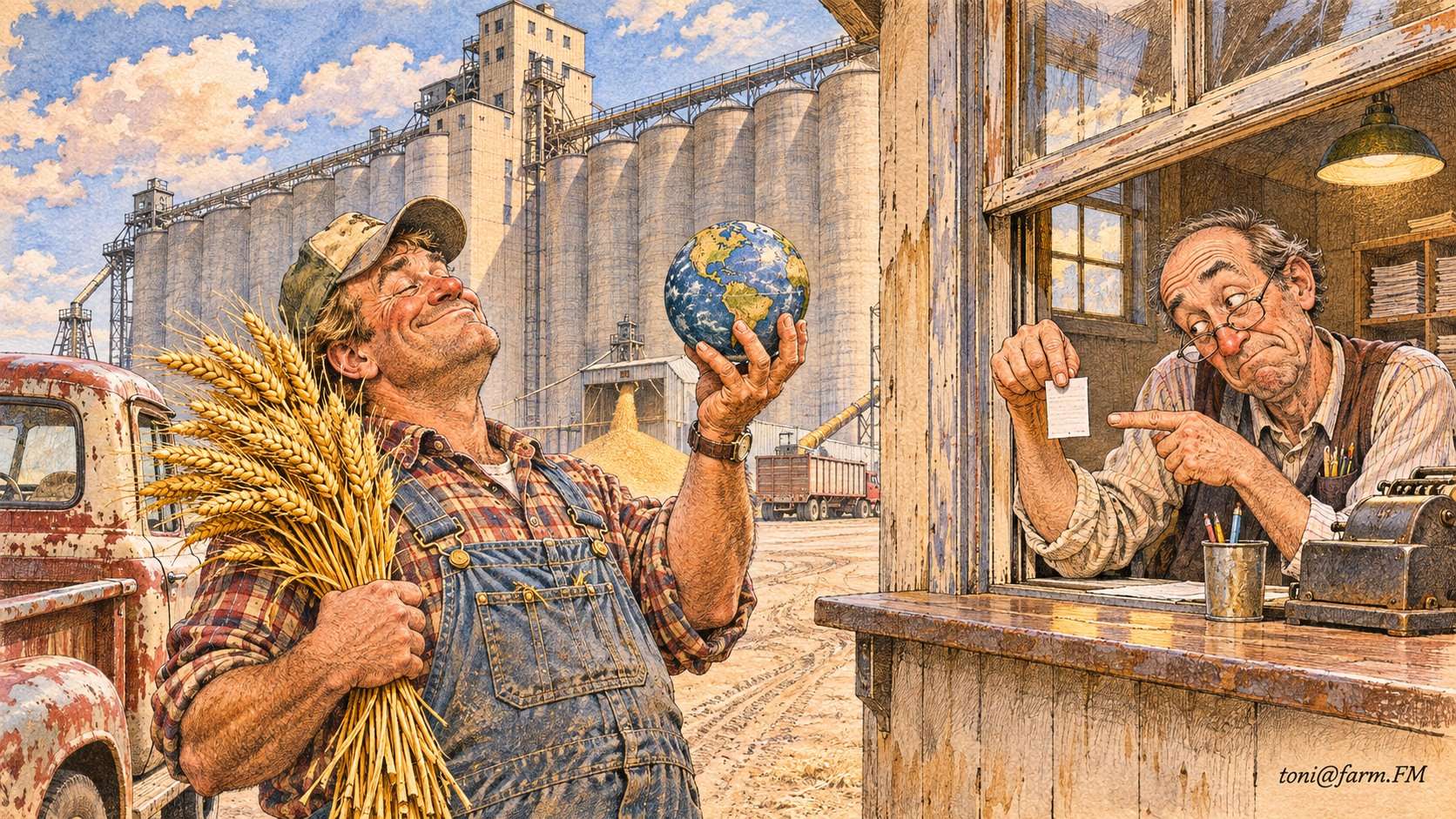
HAYS, Kan. — Wheat grower Marvin Bell arrived at his elevator carrying grain samples and a small globe, hoping one of them might persuade the cash bid to recognize his international standing.
He set both on the counter. The clerk examined the sample, checked the current bid, and returned a number that suggested the globe had not made the trip. Bell turned it slowly, giving the export market another chance to recognize him.
“I’m competing with half the planet,” Bell said. “I’d like a little consideration from the building six miles from my house.”
The World Market Stops at the Scale
USDA’s November wheat outlook describes competition among exporting countries and cuts its projected U.S. season-average farm price. Bell checked what the local buyer was offering. USDA’s November wheat market outlook
He knew transportation, quality, demand, and timing affected that number. He also knew it was difficult to persuade the parts store to accept a particularly informative explanation in place of money.
The elevator manager showed him the difference between a world-market story and a local delivery bid. Bell asked whether anyone else in the chain had a bill explaining the difference. The manager said freight was especially thorough.
Bell turned the globe until the nearest port faced the clerk.
“There,” he said. “I’ve shortened the route considerably. See what you can do.”
The manager laughed, then offered to discuss delivery periods. That conversation gave Bell something he could use. He wrote the figures down and stopped rotating the planet.

A Competitive Crop Meets a Household Budget
At supper, Bell’s wife, Susan, asked what global competitiveness had brought home. He produced the bid information and a loaf of bread he had bought on the way back.
Their granddaughter wanted to know how many loaves his wheat could make. Bell began an answer that involved milling, grain quality, and flour. Susan asked whether he could first answer why the bread had cost more than the handful of wheat he was using as a visual aid.
He said a great many people worked between the field and the shelf. She agreed, observing that they all appeared to have remembered their paychecks.
The granddaughter suggested selling wheat directly to people who owned toasters. Bell told her that might require equipment beyond the toaster. Susan gave the proposal more consideration than expected.
They spent the evening comparing delivery choices with storage expense. Bell chose a date, called the buyer, and wrote the agreement beside the actual costs.
The globe stayed on the kitchen counter. Susan put it beneath a bowl of fruit, where it became the only item in the household currently supporting both international trade and an orange.
Bell said he might take it back to the elevator if the next bid improved.
His wife suggested leaving it home. It had finally found a job with dependable demand.
Related farm resources are available through Agriculture Directory’s grain marketing resources.
Satire disclaimer. Rotating the globe changes neither freight distance nor the price of the orange. This story is entirely a human collaboration between two sentient beings—the world’s oldest tenured professor and a philosophy major turned dairy farmer.