
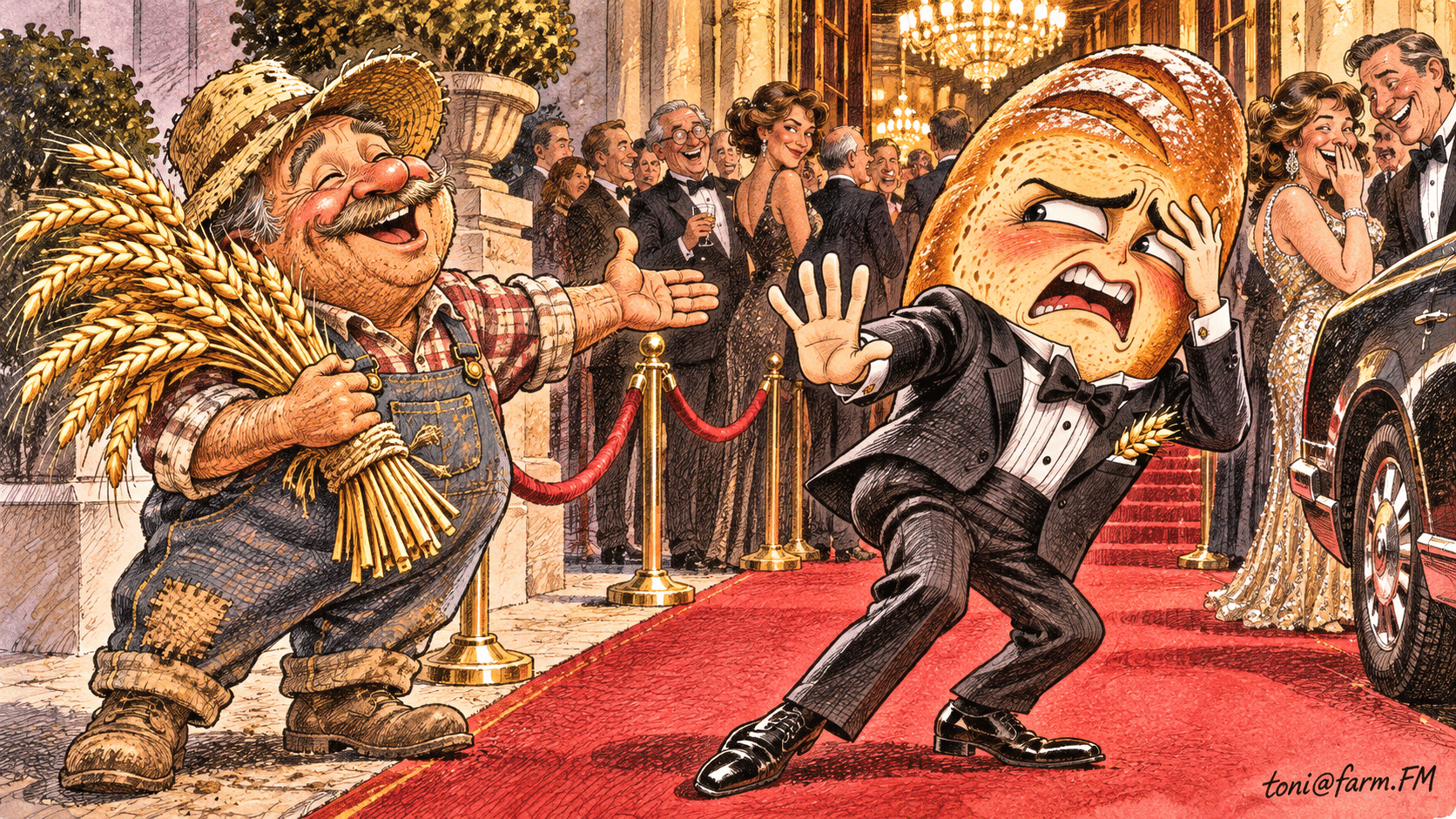
DENTON, Texas — A locally sold bread loaf addressed questions about bread prices by announcing that it had moved beyond agriculture and should henceforth be understood as a lifestyle experience with a crust.
“Wheat is part of my journey,” the loaf said through its publicist. “It does not define my current positioning.”
The statement followed a shopper’s rude suggestion that cheaper grain might eventually influence the price of something made largely from grain. The loaf cancelled the remainder of its meet-and-greet.
Bread Prices Acquire a Personal Brand
The USDA wheat research program follows grain markets. The loaf’s publicist said those reports belonged to an earlier chapter, before the product developed artisanal shoulders and a paper sleeve.
Baker Rosa Benton confirmed that flour, labor, power and equipment still mattered. She denied that her oven had ever heated itself through narrative development.
“I understand selling good bread,” she said. “I’m less clear on why this one needs a launch party.”
The loaf’s packaging described its rustic character in language ordinarily reserved for a retired ambassador. A shopper asked whether rustic meant cheaper. The publicist laughed so abruptly that a sesame seed fell off.

The Toast Test Creates an Awkward Silence
Benton arranged a neighborhood tasting. Participants sampled two loaves, one wearing elaborate packaging and one wearing a plastic bag. Butter was applied equally to avoid what the publicist called methodological hostility.
The group liked both. Several preferred whichever piece was warmer. One man requested jam and was removed from the consumer-insight panel for failing to respect the positioning.
The BLS guide to average retail prices explains how defined products are measured. The celebrity loaf requested its own category, separate from bread and adjacent to wearable technology.
Its agent proposed “edible heritage platform.” Benton proposed “sandwich material.” The agent said that phrase tested poorly with investors.
A Modest Loaf Returns to Work
Behind the commotion, Benton’s ordinary bread continued doing reliable bread work: holding eggs, supporting peanut butter and becoming crumbs without issuing a statement.
Customers compared price per ounce and bought what suited their tastes and budgets. Benton said that was a perfectly respectable shopping strategy, although it generated very little content for the loaf’s social-media team.
The celebrity loaf attempted to explain its premium by citing fermentation time. Benton acknowledged the legitimate craft involved, then asked why the marketing department’s fermentation required a company retreat.
By evening, the loaf had hired a stylist to rearrange its scoring and asked the bakery to remove all photographs of the wheat field.
“My audience wants authenticity,” it said. “We can’t have people seeing where I came from.”
Benton put it in the toaster.
For the first time all day, the loaf delivered a warm response without consulting its team.
Newsroom disclaimer: The world’s oldest tenured professor and a philosophy major turned dairy farmer, collaborating humans, advise that bread’s personal brand does not survive contact with gravy.
Last Updated on November 23, 2026 by Alan Nafzger
Bread got fancy, but my wheat check still reads like a bus ticket.