
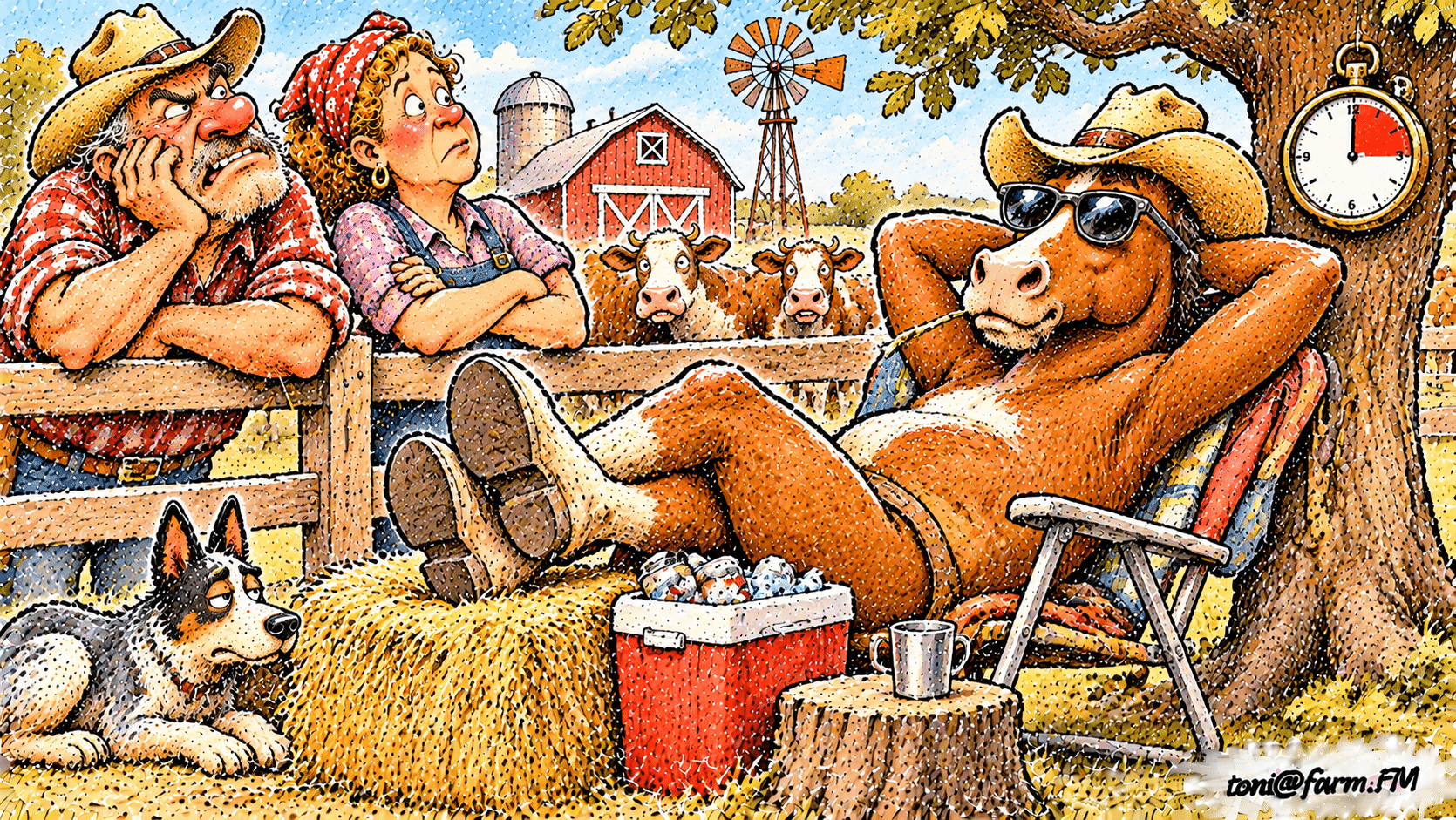
Payroll the Horse Works Fifteen Minutes an Hour
AMARILLO, Texas (Farm.FM) — A ranch quarter horse named Payroll has interpreted the word “quarter” as a binding labor agreement, announcing that he will work precisely fifteen minutes of every hour and devote the remaining forty-five to staring across the pasture like a department manager.
Owner Clay Wilkes discovered the new arrangement while sorting cattle on Monday. Payroll completed one elegant turn, moved a stubborn heifer toward the gate and then stood absolutely still as if waiting for a pension administrator.
“He’s not lazy,” Wilkes said. “He’s unionized his name.”
Payroll’s representative, an elderly barn cat named Mitzi, declined comment except to demand tuna before continuing negotiations.
Ranch Quarter Horse Submits a Timesheet
The contract allows fifteen minutes of livestock work and forty-five minutes of professional development and pasture-based reflection.
Wilkes objected. Payroll’s expensive consultant countered that there was no point in being a quarter horse if the other three quarters weren’t yours.
A consultant suggested measuring cattle moved per carrot. Wilkes explained that a sensible feeding plan cannot be negotiated by spreadsheet.
Meanwhile, the cattle had discovered Payroll’s new schedule. One heifer waited until minute sixteen to walk calmly back through the gate. Wilkes called it the clearest case of management exploiting a staffing shortage he’d ever witnessed.
The horse’s first union demand was an additional afternoon grooming session. His second was a company-wide ban on phrases such as “just one more pasture” when it was clearly time for supper.
What a Ranch Quarter Horse Actually Does
The term American Quarter Horse comes from the breed’s historical reputation for speed over a quarter-mile, not a fifteen-minute work shift. On working ranches, horses may help riders handle livestock and navigate terrain where calmness, training and responsiveness matter.
The Texas State Historical Association’s Quarter Horse history traces the breed from quarter-mile racer to practical ranch mount. The American Museum of Natural History explains the name and the breed’s working-cattle heritage.
Wilkes said a horse is a partner requiring humane care, rest, thoughtful training and sound judgment from the rider. Even an animal with an outstanding work ethic shouldn’t be worked beyond its condition.
“That part I agree with,” he said. “I just don’t remember promising him a corporate retreat in the clover.”
The Cattle Negotiate Their Own Lunch Break
By Wednesday, the heifers had hired a spokesman: a bull who stood beside the water trough looking like a bank president about to deny a family loan.
The herd demanded a thirty-minute break between every round of sorting, preferably while standing in the most inconvenient corner of the pasture.
Wilkes held an emergency meeting with Payroll and pointed out that someone still had to get the job done before dark. The horse flicked one ear and walked back to work, perhaps concluding that six hours of negotiation had become more tedious than moving cattle.
The sorting was finished before supper. Payroll received an extra grooming, a sensible ration and public praise for a job well done.
The consultant sent an invoice for organizational transformation.
Mitzi slept on it.
“Now that’s the only executive in this outfit,” Wilkes said, “who knows how to handle paperwork.”
Disclaimer: Payroll, his contract, the cattle negotiations and the quotations are satirical. Quarter Horses are real working animals deserving proper care; the breed name has nothing to do with employee hours. This story is entirely a human collaboration between two sentient beings: the world’s oldest tenured professor and a philosophy major turned dairy farmer.