
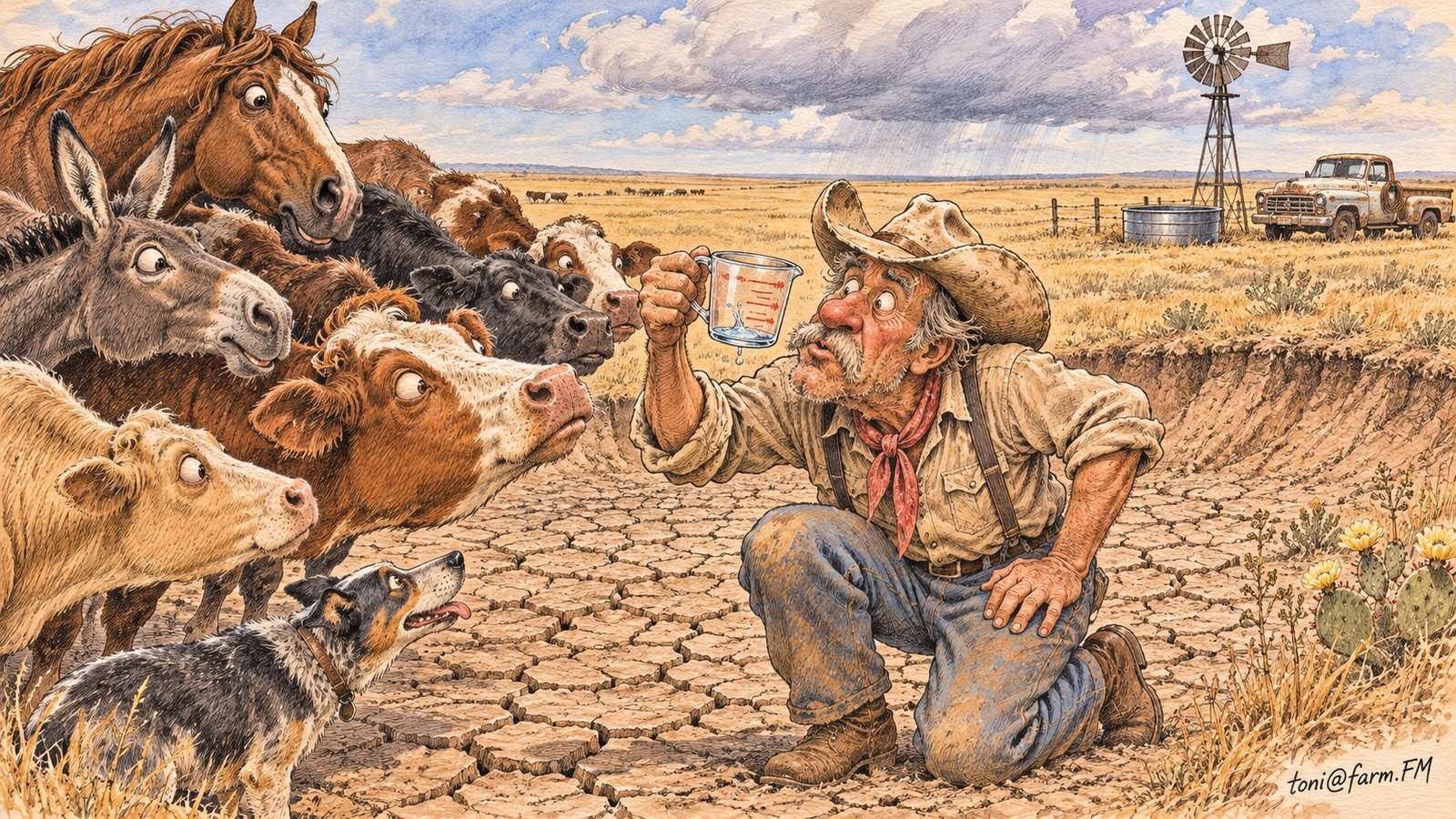
CANADIAN, Texas — News that the Panhandle drought had eased in several counties reached Dale Kincaid while he was looking into a stock pond from a little closer than he would have preferred. He’d driven down to see whether the cattle had water. He left the truck running so he could report back to his wife before the good news had a chance to evaporate.
She asked what he saw. “I can tell now which way the minnows were walking,” Kincaid said. He carried a measuring cup back to the truck. A cow trailed him for several yards, then lost interest when she realized he had brought the small one.
The Panhandle Drought Map Improves County by County
the Panhandle report using U.S. Drought Monitor data found that severe-or-worse drought coverage shrank by at least five percentage points in 11 of the 49 counties it tracked. Parts of the Panhandle still showed severe drought. A regional map is a useful view of who’s drying out or recovering and how large an area is affected. Water in an individual pond depends on where rain falls, whether it produces runoff and what conditions were there before it arrived.
Kincaid has a neighbor whose stock pond catches runoff from a broad draw. His own pond, he said, appeared to be taking personal days. It had received some rain right over the top and absorbed the news with about as much outward enthusiasm as his dog hears the word veterinarian.

A Rancher Checks the Water Before He Changes the Plan
Kincaid keeps a log of pond levels and checks more than one pasture before he makes grazing decisions. A dry stock pond can look temporarily improved before it supplies enough water for a herd over time. Ranchers can check access and equipment on a backup source, make sure cows can reach it, and think through how long they can supply it in dry conditions. Kincaid told a neighbor that doing this on a good day ensures that nobody has to discover the spare hose has a hole at six in the morning after they’ve already unrolled all of it.
At the café, a friend asked if he’d studied the long-range forecast. Kincaid said he hadn’t had a chance because he was busy reading the short-range forecast behind the sheriff’s left shoulder. The friend said the outlook was improving. Kincaid asked what the outlook weighed when you put it in a tank.
In the afternoon, his daughter drove by the pond on her way to check a trough and noticed the water had crept over a flat rock at the edge. Kincaid drove back to see it. They waited together and eventually agreed it was still over the rock. He allowed himself to go home and tell his wife the pond had released preliminary results. The cattle, having located the trough, declined to wait around for a recount.
The pond has scheduled a follow-up report after the next honest rain.
Last Updated on November 15, 2026 by Alan Nafzger