
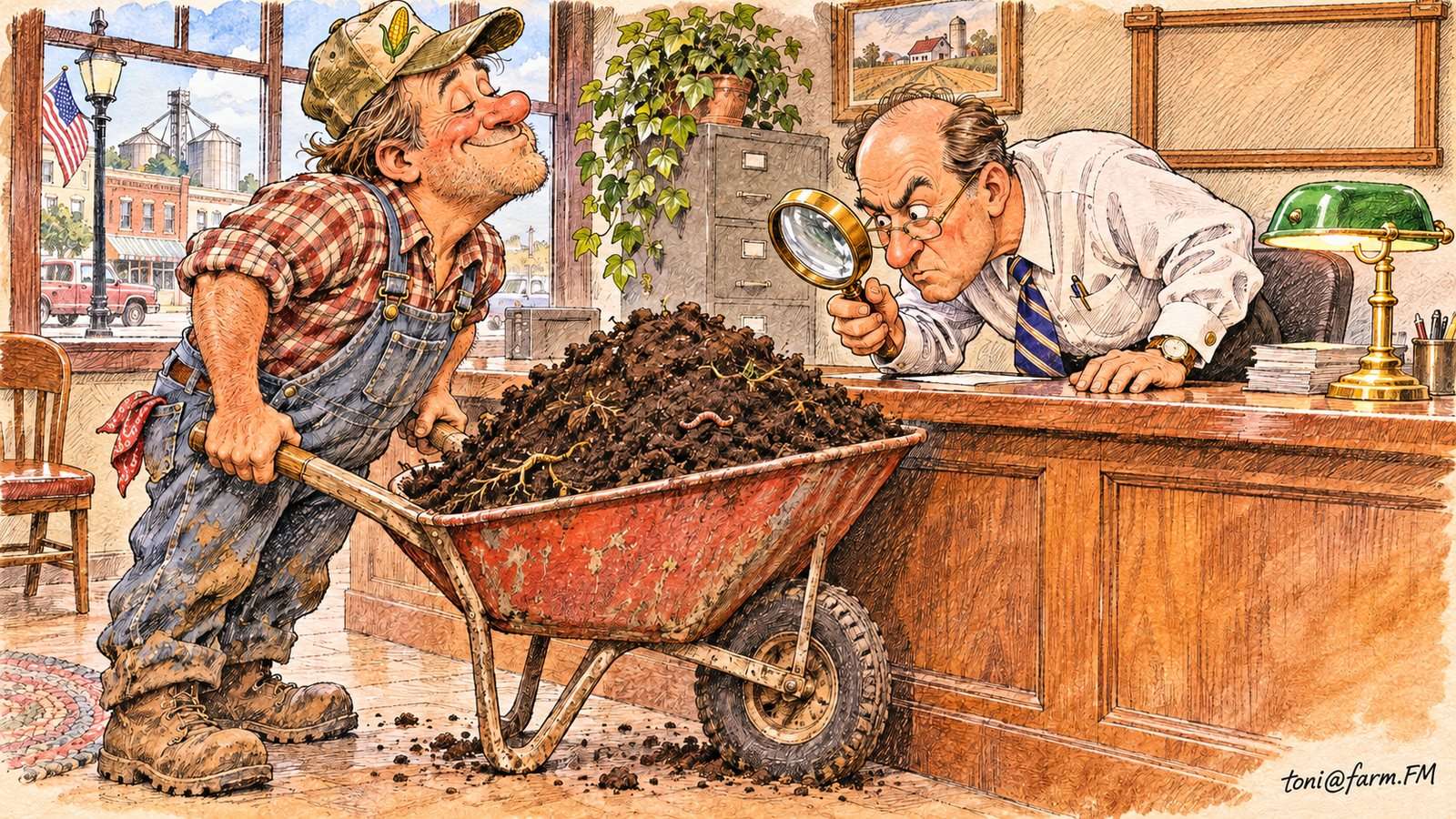
FREEPORT, Illinois — Midwest farmland values rose 4% in the Chicago Federal Reserve’s district, prompting Stephenson County farmer Walt Wenzel to ask the bank if he could make December’s payment in topsoil. He showed up at the back door with a wheelbarrow. The teller asked whether he wanted a deposit slip. Wenzel said a scoop would make more sense if the branch had one that went up to about a thousand dollars.
The branch manager stepped outside and examined the material. Wenzel pointed out that he had brought it from a patch the appraiser liked. The manager said he liked it too, although he generally preferred it in the condition in which the appraiser had found it.
Midwest Farmland Values Rise While Some Borrowers Feel a Squeeze
the Chicago Fed’s November farmland and credit survey reported that third-quarter agricultural land values in the Seventh Federal Reserve District were up 4% from a year earlier. Illinois was flat in the survey while several other district states gained. Farm credit conditions weakened by some measures. The figures illustrate two things a farm household can experience at the same time. An asset can hold or gain value while the operating account is under pressure. Wenzel said he would display the distinction at the kitchen table as soon as he found one more pile of bills to keep the table level.
Farmland value measures what property may be worth in a transaction. Cash flow measures what comes in and goes out over a period. They meet when you sell property, borrow against it or earn income from it. Wenzel told the branch manager he had extra ground to show for the first figure and a family-sized checkbook to show for the second. The manager asked what size family. “One with a kid in college,” Wenzel said.

An Appraisal Can Improve While a Payment Gets Harder to Make
To prepare for a lender conversation, bring actual cash receipts and obligations, the timing of upcoming bills, and a realistic projection of crop, livestock or rental income. Identify which payments are flexible and which aren’t, and compare the total cost of any restructuring or added borrowing. A lender may find your equity reassuring while still wanting to know what is due before the next grain check. Wenzel thought the sober way the branch manager said all this showed why nobody had ever asked him to provide announcements at a wedding.
The branch manager had some questions about stored grain. Wenzel had sold a portion and held back some for later. He had a delivery contract with a date. The banker said that was the first thing he’d heard all morning that sounded like a way to make a payment. Wenzel asked whether they should include the wheelbarrow. The banker said the bank would consider that equipment.
Wenzel took his soil home and spread it back where he got it. His wife asked how the meeting went. He said the bank had taken the loan seriously and passed on the dirt. She asked what that meant for the survey. “We’re holding our position,” Wenzel said. “I got back every pound I took in.”
More Farm.FM rural life stories
The topsoil remained on the farm. The teller was glad to see it go before anybody suggested counting it.
Last Updated on November 15, 2026 by Alan Nafzger