
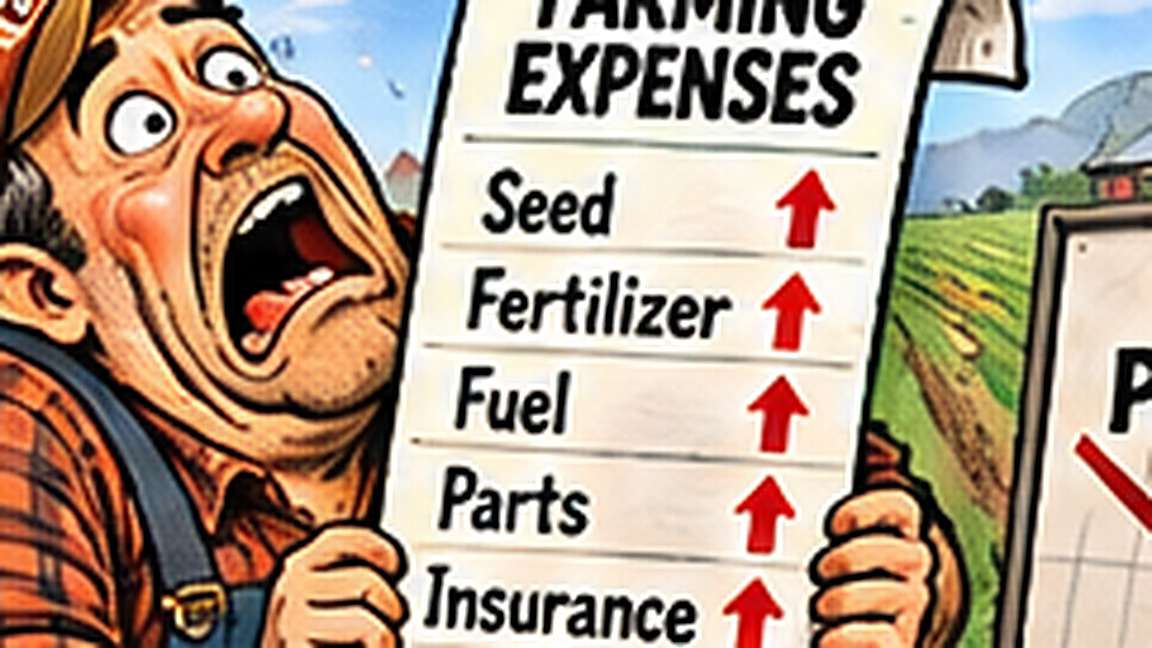
WASHINGTON, D.C. The U.S. Department of Agriculture has confirmed that farmers are paying more to earn less, an agricultural achievement that attracted immediate attention from Wall Street investors seeking a business model with no apparent upper limit on expenses.
USDA agricultural price data reported by RFD-TV show the Prices Received Index fell 1.7% in September to 133.2, while the Prices Paid Index rose 0.4% to 160.5. The ratio between them slipped to 83 from 85 in August. In finance, this is called margin compression. In the machine shed, it is called Tuesday.
Wall Street Discovers the Farm Franchise
A fictional investment committee toured an Iowa farm and became fascinated by its operating structure: the owner buys seed, fertilizer, insurance, diesel and machinery, then works all summer hoping to sell something at a price determined by strangers.
One analyst reportedly shouted, ‘This is brilliant. Customers pay you less every year, suppliers charge more, and you personally guarantee all the debt. How do we scale it?’ The farmer explained that it already covered several million acres and that the franchise fee was called property tax.
Another executive suggested introducing an app that lets investors experience farming from home. For $49 a month, subscribers receive a photo of a healthy cornfield and a surprise invoice that is twelve times larger. Premium subscribers can wake up at 3 a.m. because a bearing has failed.
The Agricultural Numbers Refuse to Cooperate
The September price ratio matters because input costs affect every planting decision, not merely the headline value of a crop. RFD-TV reports the overall production-cost index stood about 6% above the previous year. There is no law requiring the corn market to notice when nitrogen becomes expensive.
Another farm-income outlook projected 2026 production expenses of about $492.8 billion, a 4.5% increase. USDA estimates reflect the entire U.S. farm sector, not a profit forecast for any individual producer. Still, $492.8 billion is enough money to make an accountant remove his glasses and stare at the horizon.
A Farm.FM kitchen-table poll found that four out of four participating farmers preferred being paid more. The sample size was small, but the emotion was statistically significant enough to wake the dog.

The New Business Plan: Lose Less Magnificently
The hypothetical franchise contract includes several attractive benefits: flexible working hours as long as all 24 are available; complimentary weather anxiety; and an opportunity to purchase ever more sophisticated machinery to document exactly how much money has disappeared.
The only franchise requirement is that applicants must own land, rent more land or know somebody willing to lend them land on terms that will eventually be regretted by both parties.
One investor asked whether farming offered recurring revenue. The farmer pointed to the grain elevator. ‘They send a check every year,’ he said. ‘Then everybody else sends one of theirs.’
The Actual Survival Strategy
Farmers can fight back with realistic break-even prices, machinery-sharing arrangements, careful lease reviews and input budgets that distinguish useful purchases from shiny expensive optimism. They can also compare borrowing costs before accepting another generous equipment-financing offer.
Wall Street ended the visit asking if farmers would consider an initial public offering. The farmer said he already offered everything he owned to the public every harvest. Somehow, the public never offered enough.
Farm.FM’s numbers come from linked farm-economy reporting. Its franchise executives are satire, produced through a human collaboration between the world’s oldest tenured professor and a philosophy major turned dairy farmer.
Last Updated on November 10, 2026 by Alan Nafzger