
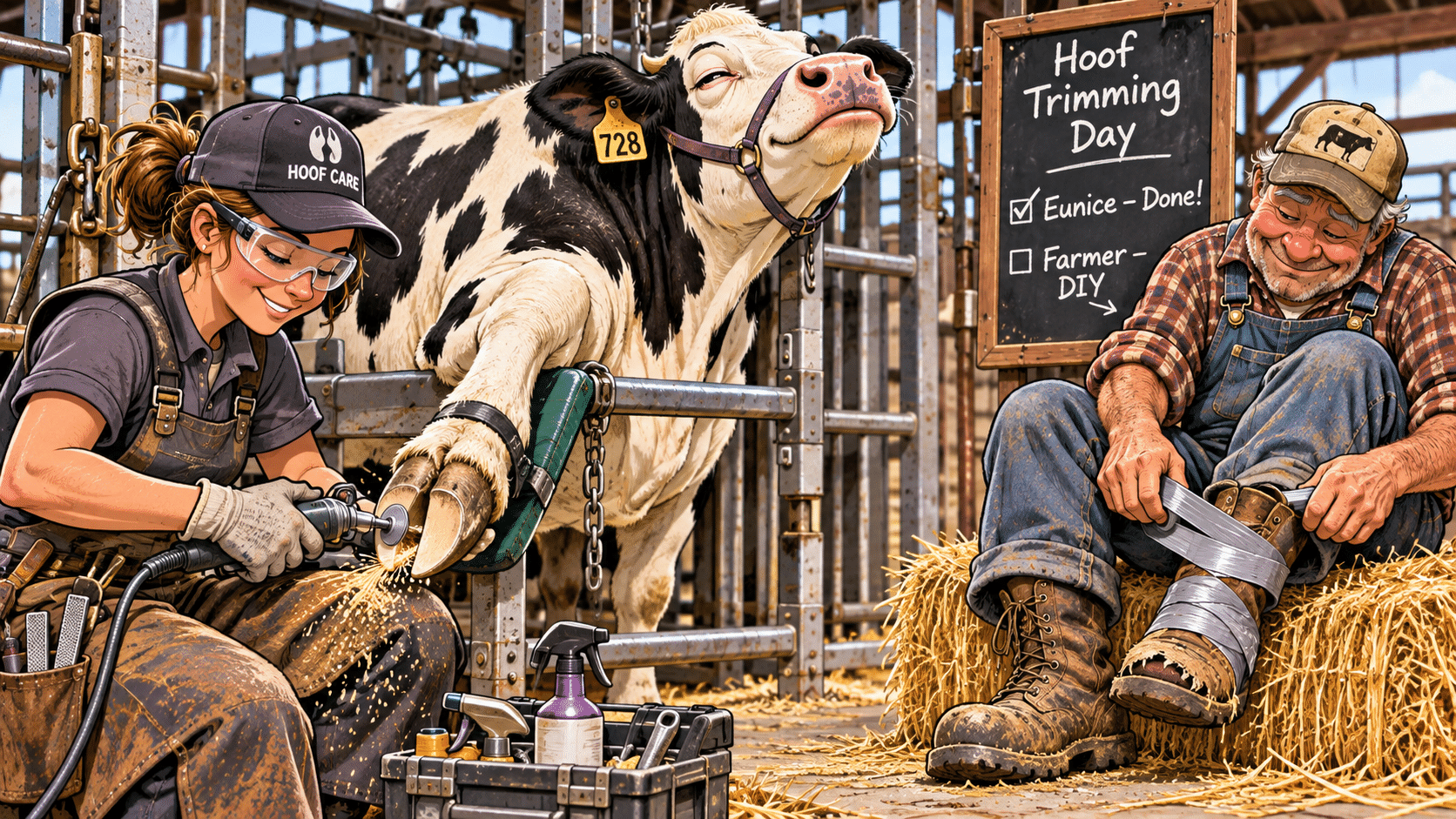
The Cows Get a Spa Day; the Farmer Gets Tape
EAU CLAIRE, Wisconsin (Farm.FM) — A dairy farm has announced a wellness day for its Holsteins after management discovered that the animals were receiving professional foot care while the owner was repairing his own boots with electrical tape and an expression normally associated with divorce proceedings.
The hoof trimmer arrived in a specialist truck, unfolded equipment worth more than the farmer’s pickup and greeted each cow by number. The farmer asked whether his own feet qualified for a group discount. The trimmer said he handled hooves, not financial casualties.
The herd interpreted the occasion as a spa opening. One cow requested lavender towels. Another asked for a cucumber facial, then ate the cucumber. A third would not enter the chute until management agreed to stop calling it a chute and start calling it the executive relaxation suite.
Four Hooves, One Extremely Expensive Calendar
Hoof health is serious dairy business. University of Wisconsin Extension guidance on hoof health and housing recommends regular observation of cattle movement, timely trimming by qualified specialists, prompt attention to lame animals and housing practices that reduce time spent standing on hard surfaces. The advice is sensible because a cow with painful feet cannot simply call in sick and work from home.
The same guidance notes that heifers, dry cows and animals at different stages of lactation may need distinct hoof-care schedules. This sounded impressive until the farmer remembered that his own annual medical checkup had been postponed twice because the parlor motor kept demanding appointments.
An unofficial poll of six cows recorded six votes for softer flooring, no votes for harder concrete and one attempted ballot theft involving the clipboard. The veterinarian explained that the polling method was not scientifically sound. The farmer said it was still more transparent than most committee meetings he’d attended.
The Farmer Requests a Pedicure and Is Offered a Broom
Preventing lameness also involves sound walking surfaces, appropriate footbaths, reasonable stocking density and early detection. Wisconsin’s dairy footbath recommendations describe how properly designed baths can help manage infectious hoof problems. None of this means randomly tipping chemicals into a trough and hoping the cows understand chemistry.
The farm checked slippery alleys, reviewed trimming records and marked animals requiring follow-up. That prevented the absurd alternative: waiting until every cow walked as though she had just received an unexpected property-tax bill.
Meanwhile, the owner’s left boot split at the heel. He applied another strip of tape and assured the hired hand that the footwear had at least three productive years remaining. The hired hand asked whether the farmer had considered replacing it. The farmer pointed toward the hoof trimmer’s invoice and laughed without making a sound.
By sunset, the cows walked comfortably back to their stalls. The farmer limped to his truck, happy that his herd was healthier and mildly irritated that nobody had offered him a warm towel.
Editorial note: The characters, quotes and cow poll are satirical. The extension guidance is real. This story is entirely a human collaboration between two sentient beings: the world’s oldest tenured professor and a philosophy major turned dairy farmer.