
Zhejiang Province
“Zhejiang Tea So Relaxing, Even Businessmen Take Time to Watch Grass Grow”
15 Educational Observations
- Zhejiang is renowned for its tea cultivation, especially the famous Longjing (Dragon Well) tea.
- The tea is so relaxing that locals say even the busiest businessmen stop to watch grass grow after a cup.
- Farmers joke that their tea is so soothing, it could calm a hyperactive squirrel.
- The region’s tea ceremonies are so elaborate, they make an average wedding look like a quick handshake.
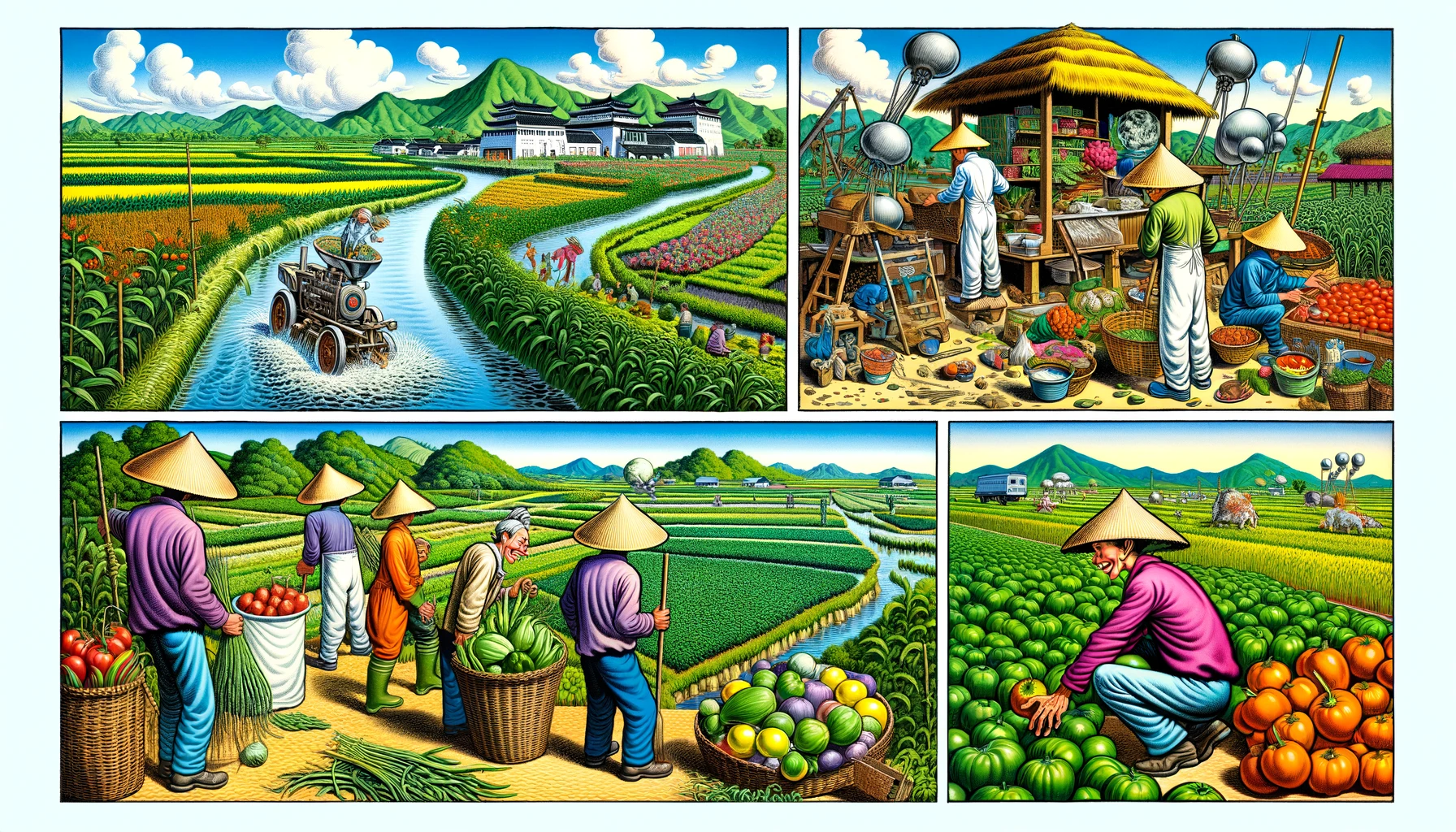
- Tea farms are so picturesque, they look like they were designed by nature’s top landscape artist.
- The locals claim their tea is so calming, it has replaced bedtime stories for children.
- Farmers in Zhejiang take tea breaks so seriously that it’s considered a major part of the workday.
- Tourists often fall asleep during tea tastings because the tea is that relaxing.
- The tea is so famous, it has its own national holiday—Tea Appreciation Day.
- Locals joke that their tea can solve any problem, from a headache to a mid-life crisis.
- Business deals in Zhejiang are often made over multiple cups of tea and can last longer than the deals themselves.
- The region’s tea fields are so vast, farmers use drones to monitor the crops.
- Even the farm animals seem more relaxed, thanks to the calming tea-infused air.
- Farmers have created tea-flavored ice cream, cookies, and even soap to capitalize on their famous crop.
- The tea is so beloved, it’s rumored that the secret to its calming effect is a sprinkle of fairy dust.
Zhejiang Tea So Relaxing, Even Businessmen Take Time to Watch Grass Grow
In the serene and picturesque Zhejiang Province, famous for its tea cultivation, the local Longjing (Dragon Well) tea is renowned for its incredibly relaxing properties. So much so that even the busiest businessmen in the region are known to take time out of their hectic schedules to watch the grass grow after enjoying a cup. This humorous look at Zhejiang’s tea culture explores the calming effects of its famous tea and the whimsical ways locals and tourists alike experience its magic.
Relaxation for All
Zhejiang is renowned for its tea cultivation, especially the famous Longjing (Dragon Well) tea. The tea is so relaxing that locals say even the busiest businessmen stop to watch grass grow after a cup. “I used to be a workaholic,” said Mr. Li, a local entrepreneur. “But now, I take my time to enjoy the simple things—like watching the grass grow. It’s very Zen.”
Calming Hyperactive Squirrels
Farmers joke that their tea is so soothing, it could calm a hyperactive squirrel. “We had a squirrel problem once,” said Farmer Chen. “Then we started giving them tea. Now they just lounge around, looking very content.”
Elaborate Tea Ceremonies
The region’s tea ceremonies are so elaborate, they make an average wedding look like a quick handshake. “We take our tea very seriously,” said Tea Master Wang. “Every step is an art form, from the water temperature to the pouring technique.”
Nature’s Top Landscape Artist
Tea farms in Zhejiang are so picturesque, they look like they were designed by nature’s top landscape artist. “It’s like stepping into a painting,” said tourist Mei. “Everywhere you look, it’s beautiful.”
Bedtime Tea
The locals claim their tea is so calming, it has replaced bedtime stories for children. “Just a cup of Longjing, and the kids are out like a light,” said resident Liu. “It’s our secret weapon for bedtime.”
Serious Tea Breaks
Farmers in Zhejiang take tea breaks so seriously that it’s considered a major part of the workday. “Tea time is sacred,” said Farmer Zhang. “We work hard, but we make sure to take our tea breaks.”
Sleepy Tourists
Tourists often fall asleep during tea tastings because the tea is that relaxing. “I’ve never felt so calm,” said visitor John. “I actually dozed off right there at the table.”
Tea Appreciation Day
The tea is so famous, it has its own national holiday—Tea Appreciation Day. “It’s a day to celebrate and enjoy our wonderful tea,” said event organizer Li. “We have tastings, ceremonies, and even tea-themed games.”
Problem-Solving Tea
Locals joke that their tea can solve any problem, from a headache to a mid-life crisis. “Feeling stressed? Have some tea,” said resident Chen. “It’s our go-to solution for everything.”
Lengthy Business Deals
Business deals in Zhejiang are often made over multiple cups of tea and can last longer than the deals themselves. “We believe in taking our time,” said businessman Zhao. “Good tea and good conversation lead to good business.”
Drone Monitored Tea Fields
The region’s tea fields are so vast that farmers use drones to monitor the crops. “It’s the future of farming,” said Farmer Liu. “We can check on the plants without stepping into the fields.”
Relaxed Farm Animals
Even the farm animals seem more relaxed, thanks to the calming tea-infused air. “Our cows and chickens are the happiest around,” said Farmer Wang. “They’re living the good life.”
Tea-Flavored Everything
Farmers have created tea-flavored ice cream, cookies, and even soap to capitalize on their famous crop. “Tea is versatile,” said Chef Li. “We’ve incorporated it into all sorts of products.”
Sprinkle of Fairy Dust
The tea is so beloved, it’s rumored that the secret to its calming effect is a sprinkle of fairy dust. “It’s just a rumor,” laughed Tea Master Zhang. “But who knows? Maybe there’s some magic in our tea after all.”
Conclusion
In Zhejiang Province, the calming properties of Longjing tea have created a culture of relaxation and appreciation for the simple things in life. From elaborate tea ceremonies to sleepy tourists, the magic of Zhejiang’s tea is felt by all who experience it. The locals embrace their tea culture with humor and pride, turning every cup into an opportunity for tranquility and joy.
Helpful Tips for Farmers
Farmers looking to cultivate a unique and marketable crop can benefit from these tips inspired by Zhejiang’s tea culture:
- Quality Over Quantity: Focus on producing high-quality crops that stand out in the market.
- Cultural Integration: Integrate local traditions and culture into your farming practices and products.
- Tourism Opportunities: Develop tourism initiatives that highlight the unique aspects of your agricultural products.
- Product Diversification: Explore diverse ways to incorporate your primary crop into various products.
- Relaxation and Well-being: Emphasize the health and well-being benefits of your products to attract a wider audience.
By focusing on these areas, farmers can enhance their productivity and create a thriving, community-oriented agricultural environment.
### Disclaimer
This article is a satirical take on the relaxing tea culture of Zhejiang Province. Any resemblance to real persons, living or dead, or actual farming practices is purely coincidental. No squirrels were caffeinated in the making of this story. This story is a collaboration between a cowboy and a farmer who believe in the power of relaxation and a good laugh.
Top 20 Agricultural Areas in China
Heilongjiang Province, Henan Province, Shandong Province, Sichuan Province, Jiangsu Province, Zhejiang Province, Fujian Province, Anhui Province, Yunnan Province, Guangxi Province, Hubei Province, Hebei Province, Hunan Province, Inner Mongolia, Jilin Province, Xinjiang Uygur Autonomous Region, Shaanxi Province, Guangdong Province, Jiangxi Province, Tibet Autonomous Region.
Last Updated on October 25, 2026 by Alan Nafzger