
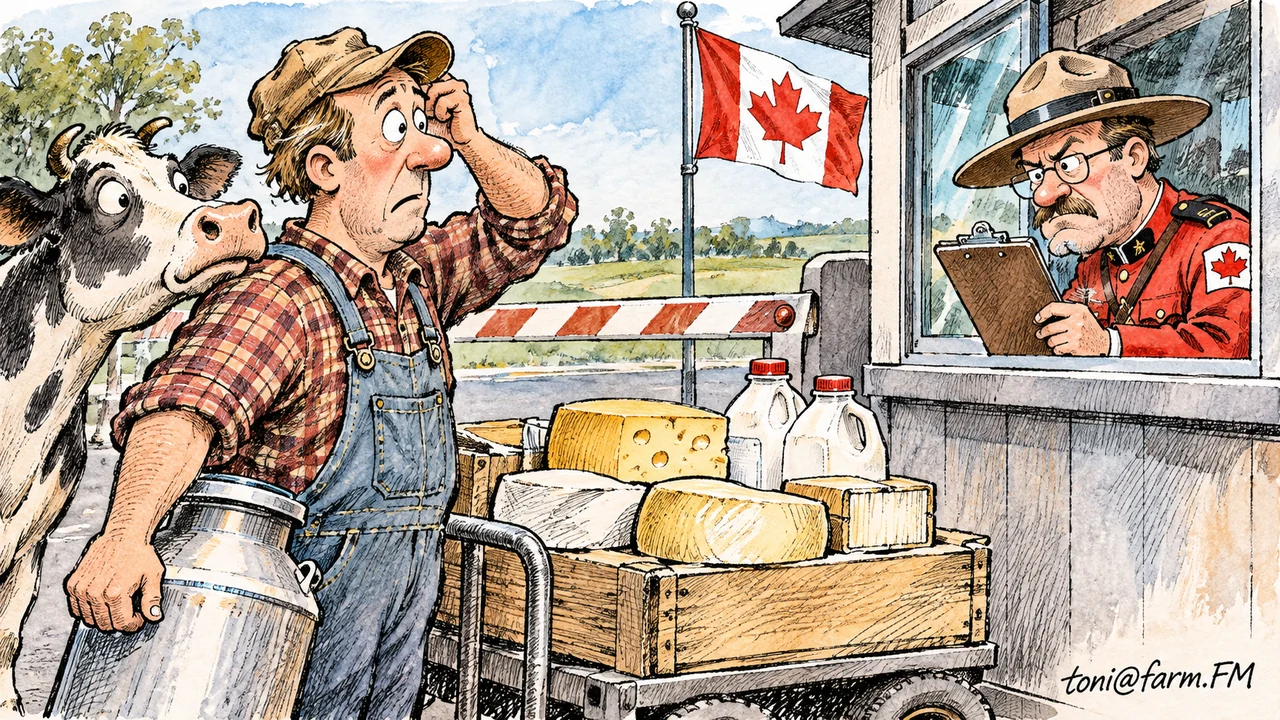
EAU CLAIRE, WISCONSIN — Dairy farmers have become the world’s most reluctant experts on tariff policy after another round of U.S.–Canada dairy restrictions turned milk into a diplomatic weapon. Their central question remains heartbreakingly simple: if it’s called free trade, why does everybody keep sending an invoice?
Dairy Trade With Canada Becomes a Two-Country Cheese Argument
A University of Wisconsin Extension analysis tracks new 2026 dairy tariffs and retaliatory measures. Certain dairy ingredients have faced 50% tariffs, cheese has faced additional restrictions, and both countries insist that their policies promote fairness. The cheese is apparently innocent, but nobody has asked it to testify.
“I’ve spent my life thinking that a free market involves willing buyers, willing sellers and a price,” said fictional Wisconsin dairyman Ed Kowalski. “Now I need an economist, a customs attorney and a guy with a map just to explain where my whey powder went.”
Milk Truck Requires Two Diplomats and One Very Patient Cow
Kowalski staged an imaginary export exercise in his barn. He placed a milk can on one side of a painted line and a block of cheddar on the other. Before moving anything, his teenage son announced retaliatory duties, his daughter announced a new import classification, and their cow announced she’d stopped production until someone brought breakfast.
His wife, Diane, ruled that all family members could freely trade kitchen chores with Canada, provided Canada accepted the teenagers and agreed never to return them. The negotiations collapsed when the neighbor asked for a subsidy to take out the garbage.
Kowalski said the dairy industry has invented an impressive new unit of measurement: the number of government decisions required between a cow and a customer. One milk shipment now contains enough paperwork to provide winter bedding for a medium-size herd.
Farm.FM Survey Reveals Farmers Prefer Customers to Customs
Our utterly unofficial sample of eight dairymen found seven would prefer stable access to customers across the border. The eighth asked whether Canadians would consider purchasing his unpaid equipment loan. A dairy economist called that request “innovative financial integration” before noticing the collateral was a manure spreader.
Real trade policy is more complex than the jokes: tariff rates vary by product and date, and market access can affect processors, farmers and consumers differently. Export competition, quotas, currency values and production costs all matter. Dairy producers have good reason to pay attention even if they never personally ship a carton across the border.
Wisconsin Farmer Proposes a Tariff on Trade Meetings
Clyde “Straight Row” Mercer listened to the dispute and suggested a more practical treaty. “If your idea of fairness means every family farm needs a lawyer on speed dial,” he said, “maybe the trade agreement ought to include a coupon for legal fees.”
Diplomats promised further talks. The cows continued milking, apparently unaware that their work had become an international negotiating position.
Satire note: Interviews, the barn exercise and the survey are invented; cited trade measures are real. This story is entirely a human collaboration between two sentient beings: the world’s oldest tenured professor and a philosophy major turned dairy farmer.