
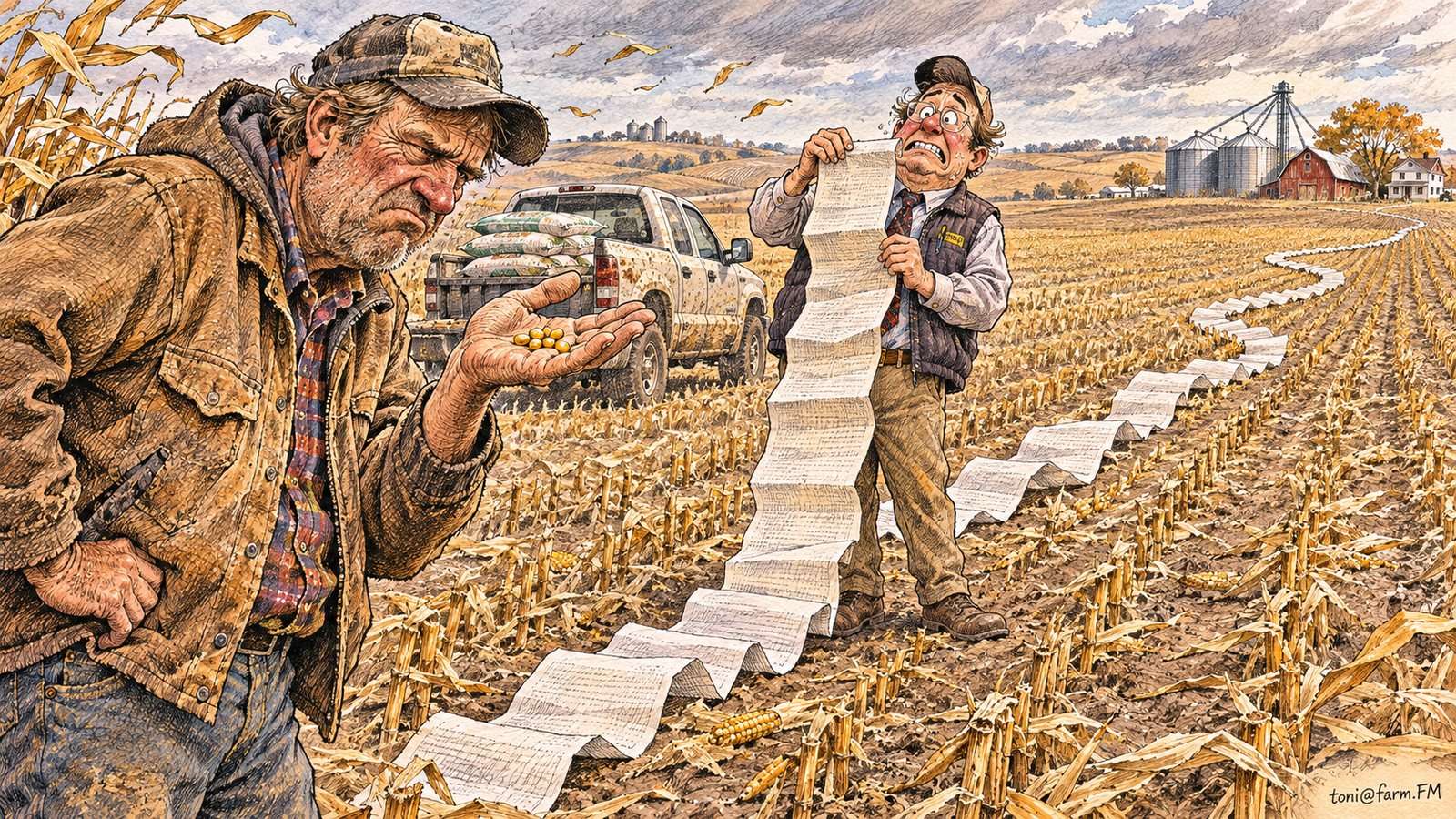
AMES, Iowa — The USDA corn yield estimate fell to 179.6 bushels per acre this month, prompting Iowa farmer Walt Renshaw to ask whether the same analysts could make a quick pass over his fertilizer bill before lunch. He had the document ready on the kitchen table, underneath a saltshaker and a second, heavier saltshaker supplied by his wife.
“If they can make a bushel and a half vanish from every acre in America with a spreadsheet,” Renshaw said, “I’d like to see what they can do to line seven. Line seven has been bothering me since March.”
The USDA Corn Yield Estimate Takes a Little Off the Top
The November estimate is down 1.6 bushels per acre from the prior forecast, according to USDA’s November Feed Outlook. That is a revision to expected national output. It’s also a small enough number to sound harmless at a meeting where everybody goes home to somebody else’s acreage. On a farm budget, a change in expected bushels changes the number of chances you get to recover your costs. The check you wrote in the spring maintains its original opinion.
Renshaw’s wife, Linda, made two columns on a legal pad. The first showed expected revenue per acre. The second showed what they had already spent on seed, nutrients, machinery and rent. Walt asked her to round the second column down. Linda pointed out that she had already rounded it down, which was why he could still eat sitting upright.

What a Smaller Crop Does to a Bigger Bill
For a first look at break-even, divide the costs you want to recover per acre by the bushels you reasonably expect to sell. On a sample $800-per-acre budget, 190 bushels put cost near $4.21 a bushel. At 175 bushels, the same costs need about $4.57. Use your own numbers and decide whether to include rent, debt service or family living costs, depending on what question you want the budget to answer. A farm can make its payment and still leave the family eating leftovers with the light off.
The fertilizer dealer, who attended the meeting because he wanted the saltshakers back, said nutrient costs could sometimes be managed with soil tests and a plan made well before planting. Walt asked what he could do about a test he’d skipped last spring. “Put it on the calendar for next spring,” the dealer said. Linda wrote that down while Walt continued to search the invoice for a customer satisfaction survey.
By supper, he’d written a letter asking USDA to revise his bill downward. Linda removed the envelope from the outgoing pile and replaced it with the dealer’s actual payment. Walt asked whether that counted as a government shutdown. “It counts as the check clearing,” she said, and passed him the potatoes.
The invoice in this report was weighed with the saltshakers on it. Both saltshakers were later cleared of wrongdoing.
Last Updated on November 15, 2026 by Alan Nafzger