
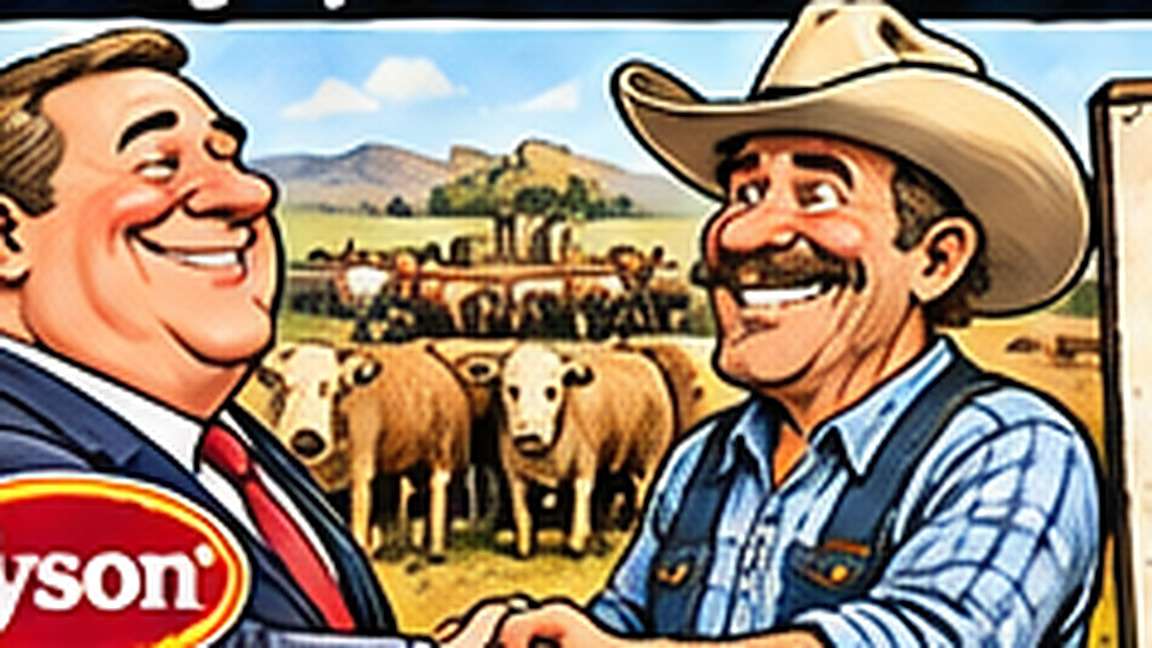
AMARILLO, Texas. After decades of sophisticated supply-chain management, Tyson Foods has announced a breakthrough strategy for finding beef: establish a partnership with the people who actually raise cattle. Texas ranchers applauded the discovery, then went back to feeding cows while the company prepared a slide deck explaining what a rancher is.
Tyson’s November 9 announcement describes a planned long-term partnership with Allied Beef, a consortium of American ranchers. The company is also restoring a second shift at its Amarillo processing facility, with full operation expected by summer 2027.
Corporate Consultants Discover an Entire Industry
At a fictional meeting in Amarillo, a consultant reportedly unveiled a chart showing that cattle move through a mysterious system involving feedlots, ranches, trucks and people who wear hats because the sun exists.
One executive asked who controls the beginning of the supply chain. A rancher replied, ‘Mostly my cows, but I try to influence them.’ Management requested an immediate follow-up meeting to explore cow governance.
The consultant proposed installing a digital dashboard to track cattle availability. A cowboy offered an equally efficient technology: drive to the pasture and count them. The board approved a six-month pilot program to study the cowboy’s surprisingly disruptive idea.
A Farm.FM survey conducted at a Panhandle sale barn found that seven out of seven ranchers knew cattle came from ranches. The eighth participant was a calf, who declined to answer after chewing through the questionnaire.
Why the Tyson Deal Actually Matters
The partnership comes amid a genuinely tight U.S. cattle supply. Reuters reports meatpackers face the lowest supplies in roughly 75 years, raising the cost of livestock even as consumer beef prices remain high. Plant capacity is only valuable when enough cattle arrive to keep the lines operating.
Direct producer relationships may give processors better visibility into future cattle availability and scheduling. Whether that creates better returns for ranchers depends on contract terms, negotiated prices and who carries the risk when feed costs rise. Cowboys generally prefer agreements that reward raising cattle rather than simply praising it.
Tyson’s plan concerns intent and anticipated operations, not a guarantee that a new wave of cattle will materialize overnight. On a ranch, the development cycle for a replacement heifer tends to resist urgent PowerPoint requests.

Texas Ranchers Propose a Simpler Supply-Chain Strategy
The company reportedly asked ranchers for innovative ideas. Their fictional suggestions included paying a sustainable price, leaving enough room for the producer’s feed bill and not confusing a live steer with a warehouse pallet.
One banker proposed bundling cattle into an investment product called Beef-Backed Optimism. A rancher objected that the animals would need additional feed during the offering period, and optimism had never been accepted as payment at the co-op.
An excited corporate strategist suggested scheduling a town hall with the herd. The rancher agreed, provided the guests brought boots and understood that the cows would not be taking questions.
The Real Work Ahead
Ranchers considering supply agreements should read delivery requirements carefully, examine price formulas, understand quality specifications and calculate whether premiums outweigh costs. Processors should keep asking producers what works instead of treating pasture knowledge as confidential intellectual property.
By the end of the day, everyone agreed on one fundamental principle: beef starts with cattle. The ranchers had known for years. The consultants requested permission to trademark it.
The Tyson announcement is factual; the consulting session is satire, created entirely by the world’s oldest tenured professor and a philosophy major turned dairy farmer, two sentient human collaborators.
Last Updated on November 10, 2026 by Alan Nafzger