

DODGE CITY, KANSAS
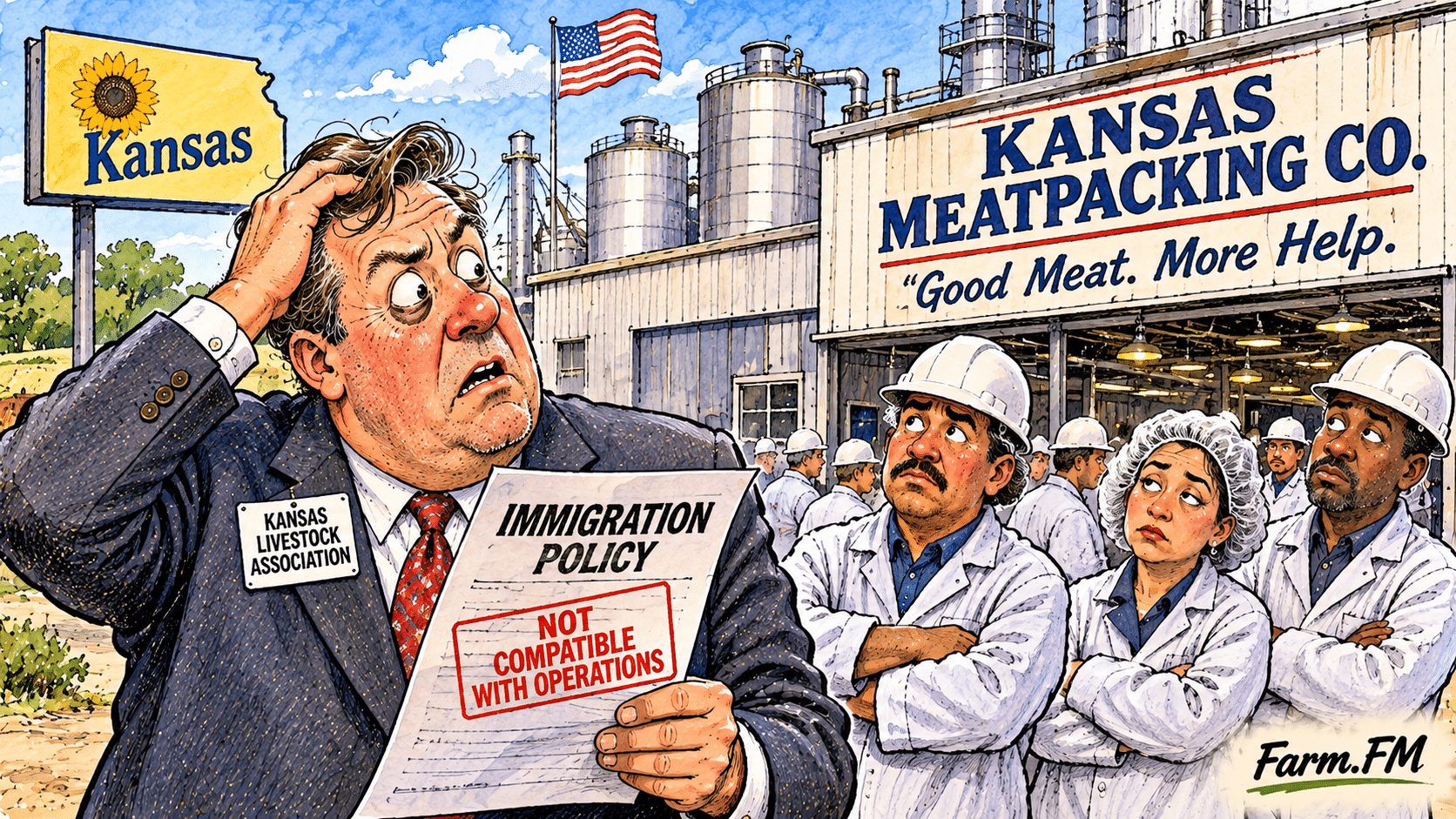
A visiting policy consultant attempted to address the Kansas meatpacking labor shortage Tuesday by delivering a forty-minute presentation to a processing plant’s shift supervisor, who subsequently asked whether the presentation could cover Thursday’s second shift.
The consultant explained that he specialized in workforce solutions rather than actual work. Supervisor Maria Alvarez thanked him for clarifying the distinction before anybody issued him a pair of boots.
Outside, cattle feeder Russell Hargrove waited for confirmation of his next delivery. He had brought a notebook containing three questions: When? How many? And who pays for feeding them until then?
Kansas Meatpacking Labor Shortage Has Real Economic Consequences
According to Kansas Farmer’s November 25 report, the Kansas Livestock Association estimates that the state’s beef supply chain supports approximately 57,400 jobs and generates $22.89 billion in annual economic output. Four major southwestern Kansas packing plants employ more than 12,000 people, approximately 60 percent of whom are foreign-born.
Birthplace alone does not establish anyone’s immigration status. The workforce includes people with different backgrounds and legal circumstances.
Hargrove asked the consultant which percentage represented people who actually knew how to operate the equipment. Alvarez suggested that this was the statistic most relevant to her shift schedule.
Press Release Fails to Report for Work
In September, the Kansas Livestock Association reported workforce disruptions and delayed cattle deliveries following immigration enforcement activity. Industry representatives called for targeted lawful enforcement, clear communication and respect for due process.
At Hargrove’s feedyard, the cattle continued eating while the consultant discussed administrative efficiency. Hargrove explained that a steer does not suspend its appetite while Congress considers an amendment.
In his hypothetical budget, keeping 500 cattle for three extra days at $4 per head per day adds $6,000 in feed and yardage costs. The consultant offered to include the figure in his next presentation. Hargrove offered him the invoice.

Ranchers Request a Workforce Policy That Works on Weekends
Industry groups support changes to legal work pathways for agricultural employers, including year-round livestock operations. The Department of Labor’s H-2A guidance describes a program for temporary or seasonal agricultural employment. Different jobs and employers have different eligibility requirements.
Alvarez supports lawful hiring, worker safety and dependable staffing. She also believes employers should offer competitive pay, training and reasonable working conditions.
The consultant promised to establish a task force. Alvarez asked if its members could arrive at six in the morning.
Cattle Decline to Participate in Another Listening Session
Hargrove plans to coordinate delivery schedules with his processor and maintain contingency arrangements for disruptions. Producers can follow additional developments through Farm.FM’s ranching coverage.
The consultant departed with a complimentary steak and a promise to return after further discussions. Hargrove wondered whether the steak should have been given to somebody who actually worked the shift.
Disclaimer
This Farm.FM satire draws on genuine industry reporting. Alvarez, Hargrove, the consultant, their dialogue and the cost example are invented. The illustrations portray imagined scenes. The nation’s only agriculture professor that actually needs tenure recommends measuring workforce policy by practical results.
Last Updated on November 29, 2026 by Freja Lindholm