
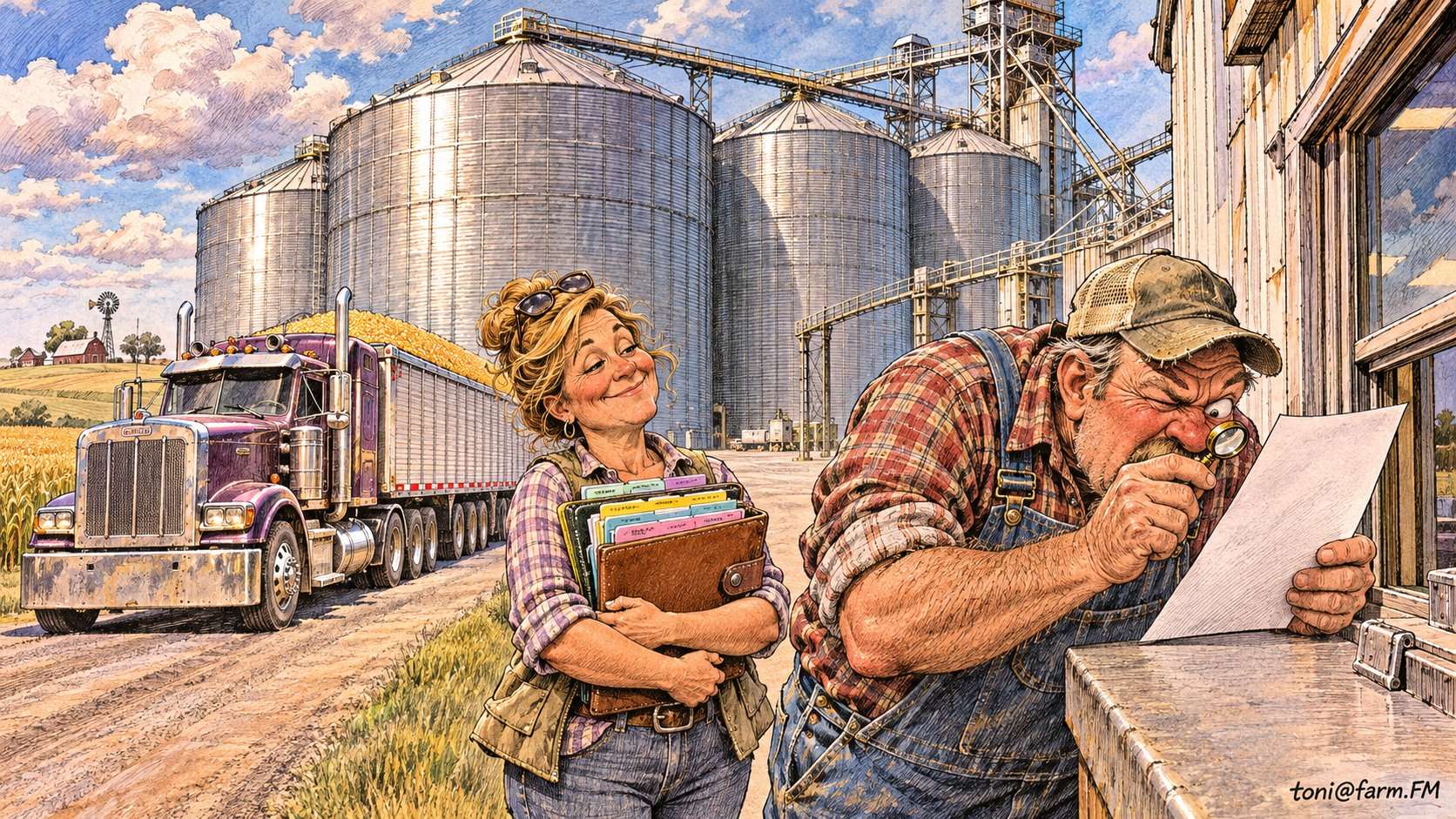
FALLS CITY, NEBRASKA — Grain elevator licensing has entered the recreational calendar of corn grower Wade Holcomb, who previously assumed a tall building full of grain-related machinery was demonstrating a fairly serious commitment to the grain business.
He now checks the paperwork before admiring the bins, a reversal he describes as watching a movie’s legal credits before deciding whether to buy popcorn.
Grain elevator licensing requires more than a familiar driveway
Nebraska regulators ordered two Home City Grain facilities closed after finding they were operating as grain warehouses without the required state or federal license. The case concerns those Nebraska sites; it does not mean every business location elsewhere is covered by the same order. A familiar name is no substitute for checking the relevant operation and jurisdiction. See report on Nebraska grain warehouse licensing enforcement.
Holcomb found the distinction upsetting mainly because it was reasonable. Farmers already identify weeds, watch moisture, inspect trucks and calculate hauling costs. Apparently, delivering the crop also required making sure the receiving end had completed its own homework.
“I checked my brakes before leaving,” he said. “Turns out the financial system has brakes too, and I’m supposed to inspect those.”
His wife, Janice, suggested adding a license check to the hauling checklist. Wade agreed, then asked whether he also needed to verify that the bank was a bank. Janice replied that sarcasm had never recovered a bushel, although it remained his most abundant crop.

Due diligence gets its own glove compartment
The farm created a folder for buyer details, license information, scale tickets, payment terms and storage agreements. Holcomb initially objected to owning another folder, having entered agriculture under the impression that most of the paperwork would be green.
Their grain-marketing conversation changed accordingly. “Good bid” now had to share the table with “clear agreement” and “documented delivery.” The highest number on a board could not answer what happened to the grain after it crossed the scale.
“A handshake still matters,” Janice said. “So does knowing whose hand is legally holding what.”
The local lunch group offered several traditional verification methods: everybody goes there, the building has been there forever, and a cousin knew the previous owner. Each method was popular, friendly and capable of being completely irrelevant to the current license.
Nobody at the table wanted the farmers affected by a closure turned into a punchline. Their predicament was the reason to stop confusing trust with the absence of routine checks. Familiarity makes business possible; documentation helps when familiarity cannot answer the telephone.
Holcomb’s practical list is short: check current licensing with the appropriate regulator, understand whether the transaction is a sale or storage arrangement, retain records and ask specifically about protections and deadlines. Rules vary, so the relevant authority beats a confident stranger’s summary.
“I’m still hauling grain,” he said. “I’ve just stopped treating the driveway as a credential.”
By evening, his new hobby had displaced weather apps as the most useful thing on his phone. He remained hopeful it would prove boring. In agriculture, boring verification is much cheaper than an exciting certified letter.
Related agricultural resources: grain marketing resources at Agriculture.Directory.
Farm.FM disclaimer: This story is entirely a human collaboration between two sentient beings: the world's oldest tenured professor (the nation's only agriculture professor that actually needs tenure) and a philosophy major turned dairy farmer. A familiar driveway has declined to provide legal advice.
If “looks like an elevator” failed due diligence, I’ve been admiring bins the way some people watch the trailer and skip the credits. I’ll be checking a licensed grain elevator directory before I buy the popcorn, or deliver the corn.
He checked his brakes before leaving and then learned the financial system has brakes too. A little grain warehouse licensing and policy news is less exciting than a familiar driveway, and a lot cheaper than finding out later.