
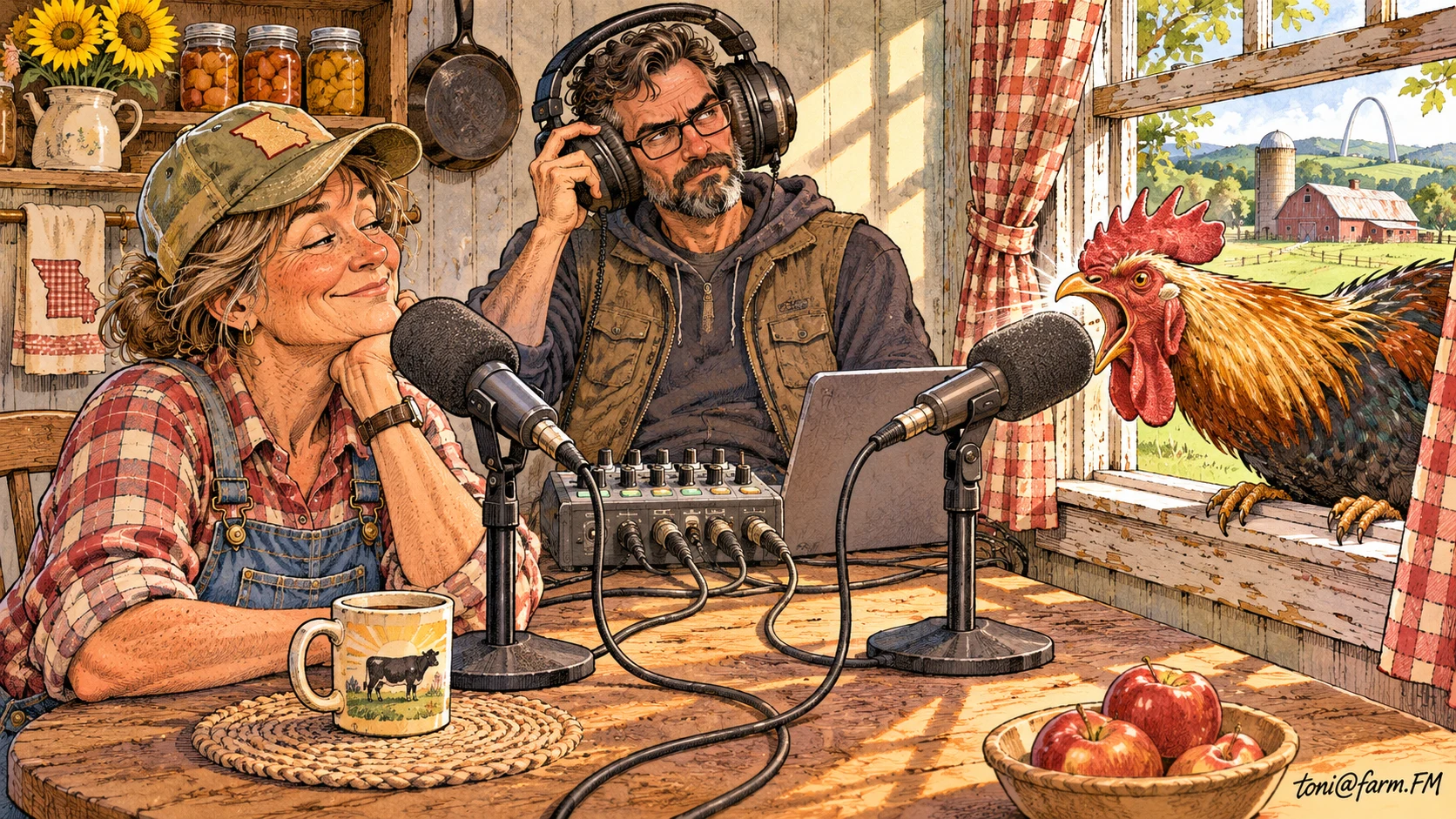
ST. LOUIS COUNTY, Missouri — A farm podcast about keeping reliable records stopped recording Tuesday after a rooster delivered his opening remarks into the spare microphone. Producer Ben Tully asked who had invited him. Farmer Jo Carver said the bird had been doing a daily show on the property for three years and probably thought they were guests.
Tully waited for the rooster to finish. Carver said he could do that, though she had been waiting since March and her mother had taken to calling exclusively after dark.
A Farm Podcast Discovers the Other Host
Carver had been browsing the Ag Podcast & Webinar Hub’s farm podcasts and producer training directory for interviews she could listen to in the truck. She liked the ones that told her in the first two minutes what the episode was about. Tully said his introduction took four minutes. Carver said she could set two of them aside for him while he fixed the waterer.
University of Minnesota Extension’s crops podcasts and videos cover topics such as crop nutrient management and emerging pest concerns. Carver had listened to a field-crop discussion while repairing a gate. She finished the episode and the gate at almost the same time. Her husband asked what she learned. She told him to stop throwing the good screws in the bucket with the bent ones.
Tully set up a second microphone for an interview with Carver’s neighbor. The rooster leaned through the open window and took it. Tully asked if he could shut the window. Carver said he could, provided he wanted the next interview to be with the nest of wasps above it. Tully lowered the spare microphone a few inches. The rooster lowered himself by the same amount.

The Field Interview Loses Its Wind Cover
They moved outside for a segment on getting a farm ready for winter. Tully held the boom microphone over Carver while she explained which water lines she drained first. A goat pulled the furry wind cover off the end. Tully asked whether that happened often. Carver said it was the first time the goat had gone to the trouble of taking the wrapper off.
Tully reviewed the recording. He had caught the goat chewing and six seconds of usable information about a shutoff valve. He asked Carver to say the useful part again. She pointed out they had now spent fifteen minutes getting to the sentence where a listener should turn the water off.
For a demonstration that depended on seeing the parts, they recorded a short video and put it alongside the audio. Carver asked Tully to add a brief list of what she was using and put the actual shutoff in the frame. Tully had previously framed the shot around the microphone. It was the only piece of equipment he understood.
The Rooster Is Available for a Second Season
Tully edited the episode down to nineteen minutes and sent it to Carver. She asked for a timestamp where the instructions started. He sent her one. Her husband used it to skip directly to the part with the goat.
The rooster stayed in the opening. Tully said it was good to have a recognizable signature sound. Carver asked what a signature sound cost. Tully said seven dollars a month in chicken feed. Carver said that seemed fair. The rooster had put in for a lot more appearances than either of them.
Farm.FM Disclaimer
The world’s oldest tenured professor and a philosophy major turned dairy farmer prepared this account together. The professor would like a transcript of the rooster’s remarks. The dairy farmer is willing to record a reply once the microphone dries out.