
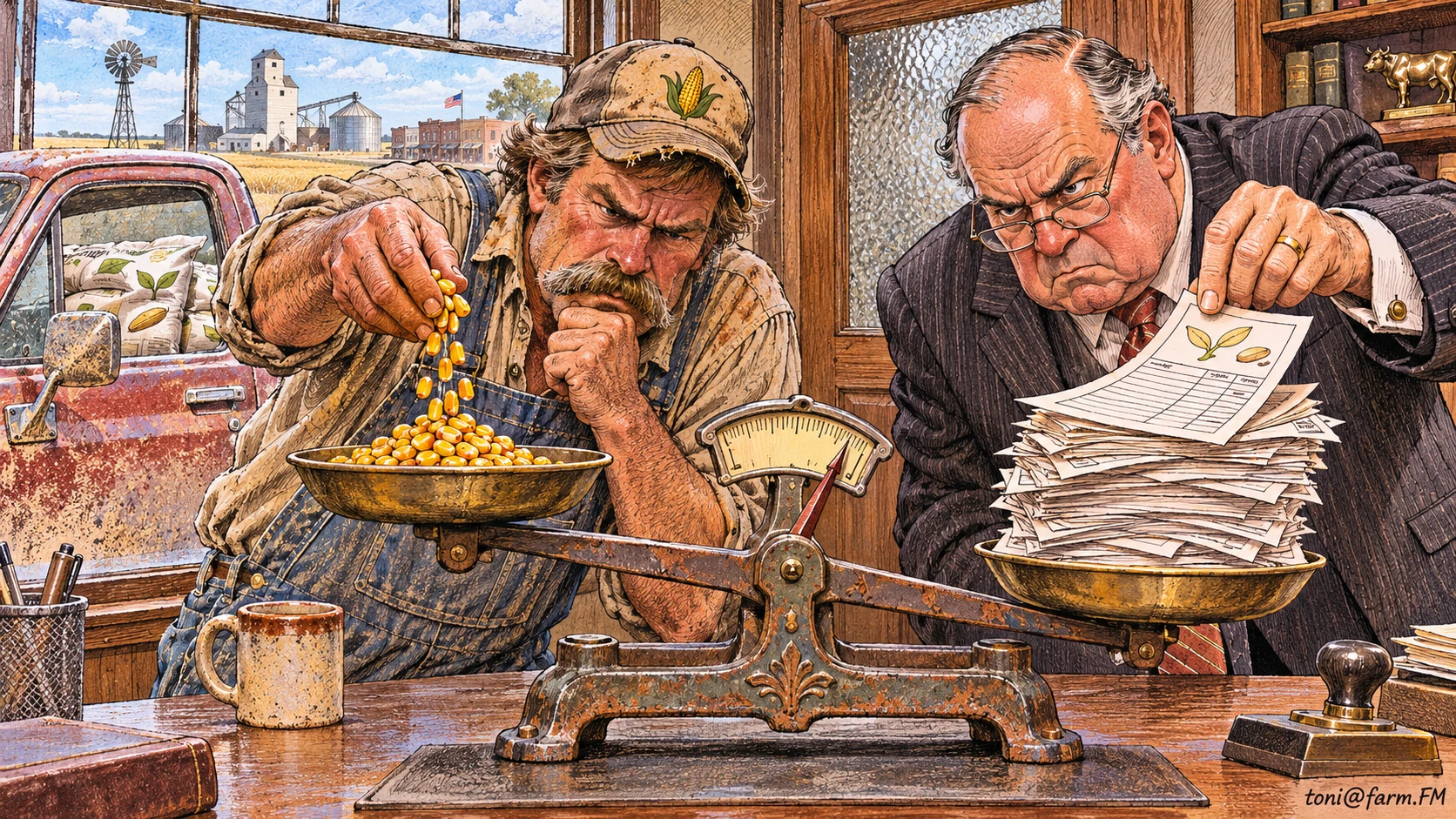
SALINA, Kansas — A meeting about farm operating loans paused Thursday after grain grower Vera Bell asked the banker when he expected the seed to begin paying for itself. He said at harvest. She opened an envelope and showed him the seed dealer’s opinion, which was that the process should start next Friday.
The banker asked whether she had brought the rest of the figures. Vera reached into a canvas bag. She took out quotes for seed, fertilizer and diesel, then a handful of corn that had been in the bottom since last fall. The banker looked at the kernels and said he appreciated seeing what they were financing.
“You ought to,” said Vera. “They’re the only thing in here that didn’t go up while I was in the parking lot.”
Farm Operating Loans Meet the Seed Dealer’s Calendar
Vera had used the AgLendingGuide directory of agricultural lenders to find offices she could call before she needed the money. Her husband, Gene, recommended the office they already used. He knew which of its pens worked. Vera said she was hoping to compare a few other things.
The USDA Farm Service Agency’s farm loan programs guide explains that eligible borrowers can use farm loans for expenses such as seed, feed and equipment. Vera said it was encouraging to find a list of things she could buy. She already had a much longer list of things she could be billed for.
The banker put the seed quote next to Vera’s expected harvest receipts. She asked what would happen if she borrowed less. He said her payment would be smaller. The seed dealer, reached afterward, said the bags would also be fewer. Vera made a note to introduce the two men. She thought they would enjoy finding out there was a third number called yield.

This Year’s Calendar Gets the Good Seat
At home, Vera clipped the payment schedule to a wall calendar. Gene brought both out to the machine shed while she was getting the tractor ready. She propped the calendar up next to the driver’s seat and buckled it in to keep it from blowing out.
“If it’s coming with us every day, does it want coffee?” Gene asked.
“Give it half a cup,” Vera said. “It’s already got interest.”
Gene asked why a farm could have good ground and still need to borrow for seed. Vera asked if he remembered building the back porch. He remembered. She asked if the lumberyard had let him pay after his first barbecue. He could see what she meant, though he still felt the lumberyard would have gotten its money faster if it had accepted ribs.
The Banker Finds a Line for Repairs
At the next meeting, Vera brought the due dates she had collected, the month she expected to sell grain and a separate number for repairs. The banker asked whether the repair amount was a quote. She said the mechanic had given her a low number and a high number. The one she wrote down was the face he made when he lifted the hood.
They went through what the credit would cost, when payments were due and whether the timing lined up with grain checks. Then the banker asked if there were any other regular expenses to list.
Vera took out a receipt for pens. She said the last one she borrowed from the bank had stopped working halfway through writing the word “fertilizer.”
The banker slid a fresh pen across the desk. “We can cover that.”
Vera wrote it down as the first thing the bank had agreed to pay for outright.
Farm.FM Disclaimer
The world’s oldest tenured professor and a philosophy major turned dairy farmer prepared this account together. The professor asks that the corn be counted as a primary source. The dairy farmer would like it out of the carpet.
Last Updated on November 17, 2026 by Alan Nafzger
Putting the seed bill ahead of harvest is not sloppy bookkeeping. It is the calendar every operating loan is supposed to respect, and too many term sheets quietly hope October will arrive early. Before anyone signs another note just to buy time, it is worth comparing a farm loan and lender directory that lists Farm Credit associations, USDA loan offices, and local lenders who actually write these notes, along with the questions worth asking before the payment book gets its own seat in the tractor.
The seed bill always goes first, like the oldest kid at the dinner table. Compare farm operating loans before supper.