
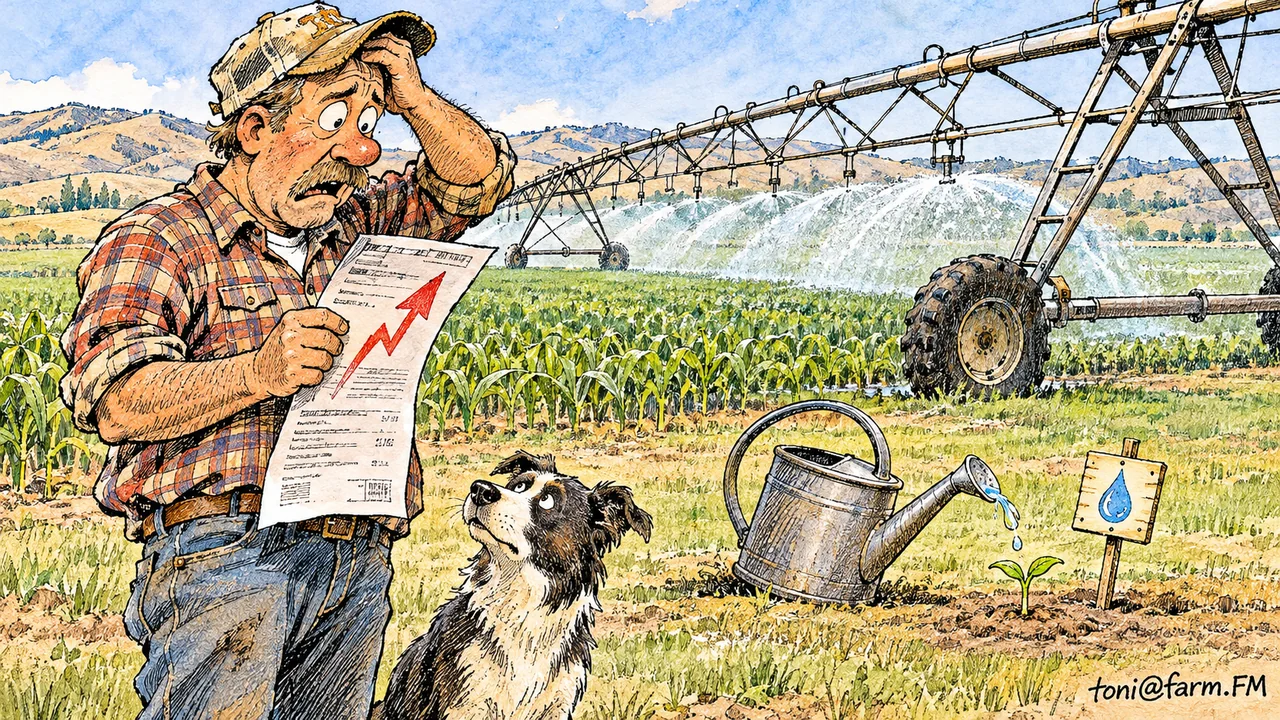
The Water Bill Is Bigger Than the Milk Check
TWIN FALLS, Idaho (Farm.FM) — A dairy farm irrigation bill has exceeded the latest milk check, prompting the owner to announce an ambitious crop-rotation experiment: stop growing alfalfa and begin growing water, preferably in $100 bills.
The farm’s pivot completed another dignified circle across the field while the electricity meter performed the sort of athletic sprint usually associated with Olympic events. Owner Calvin Ross watched the sprinkler turn, inspected his utility statement and asked whether the water had been transported first class.
His accountant explained that irrigation involves pumps, pressure, fuel or electricity, repairs and equipment ownership. Calvin replied that he had assumed rain was still available without a subscription.
A Pivot That Spins the Farm Into Debt
A dairy farm irrigating feed crops does not pay one magical universal price per gallon. Pumping costs depend on water lift, delivery pressure, plant efficiency and energy prices. The University of Nebraska’s 2026 crop budget assumptions use 125 feet of pumping lift, 35 pounds per square inch of pressure, electricity at 12 cents per kilowatt-hour and diesel at $2.70 a gallon for center-pivot budgeting. Those are planning assumptions, not Calvin’s actual bill, which arrived looking considerably angrier.
The farm’s unofficial irrigation committee proposed charging the cows for water-intensive alfalfa. A Holstein named Dorothy rejected the proposal, reasoning through a series of prolonged chewing motions that her compensation package already included hay.
Calvin then suggested a government-sponsored rain consultant. The consultant promised a rainfall feasibility study, followed by public meetings in which citizens would be encouraged to express their preferred level of moisture. The sky declined to participate.
The Rain Is Free. The Pump Isn’t.
The USDA Natural Resources Conservation Service’s irrigation water management guidance emphasizes scheduling irrigation to match crop needs and available soil moisture. That is less glamorous than a ribbon-cutting ceremony for a new pivot but considerably more useful. Irrigating too early wastes water and energy; irrigating too late can sacrifice forage yield and quality.
Calvin invited a consultant to explain the difference between inches of rainfall and inches applied through irrigation. The consultant explained it clearly. Calvin thanked him and asked whether he could arrange four free inches by Thursday.
Farm manager Rosa Bennett suggested checking nozzles, measuring pump performance, monitoring soil moisture and comparing cost per acre-inch instead of simply despairing at the total electric bill. She also proposed protecting forage quality so the irrigation investment actually feeds cows rather than a stack of rejected hay.
At the next staff meeting, Calvin unveiled a jar of rainwater labeled as the farm’s newest high-value asset. The cows showed limited interest. Dorothy preferred the fresh alfalfa that required the water in the first place.
The pivot resumed turning. The meter resumed running. Calvin asked the banker whether water futures could be delivered directly to his pasture, and the banker said no, but offered financing on a larger jar.
Editorial disclaimer: Farm characters, conversations and events are satirical; linked agricultural research and program requirements are real. This story is entirely a human collaboration between two sentient beings, the world’s oldest tenured professor and a philosophy major turned dairy farmer.