
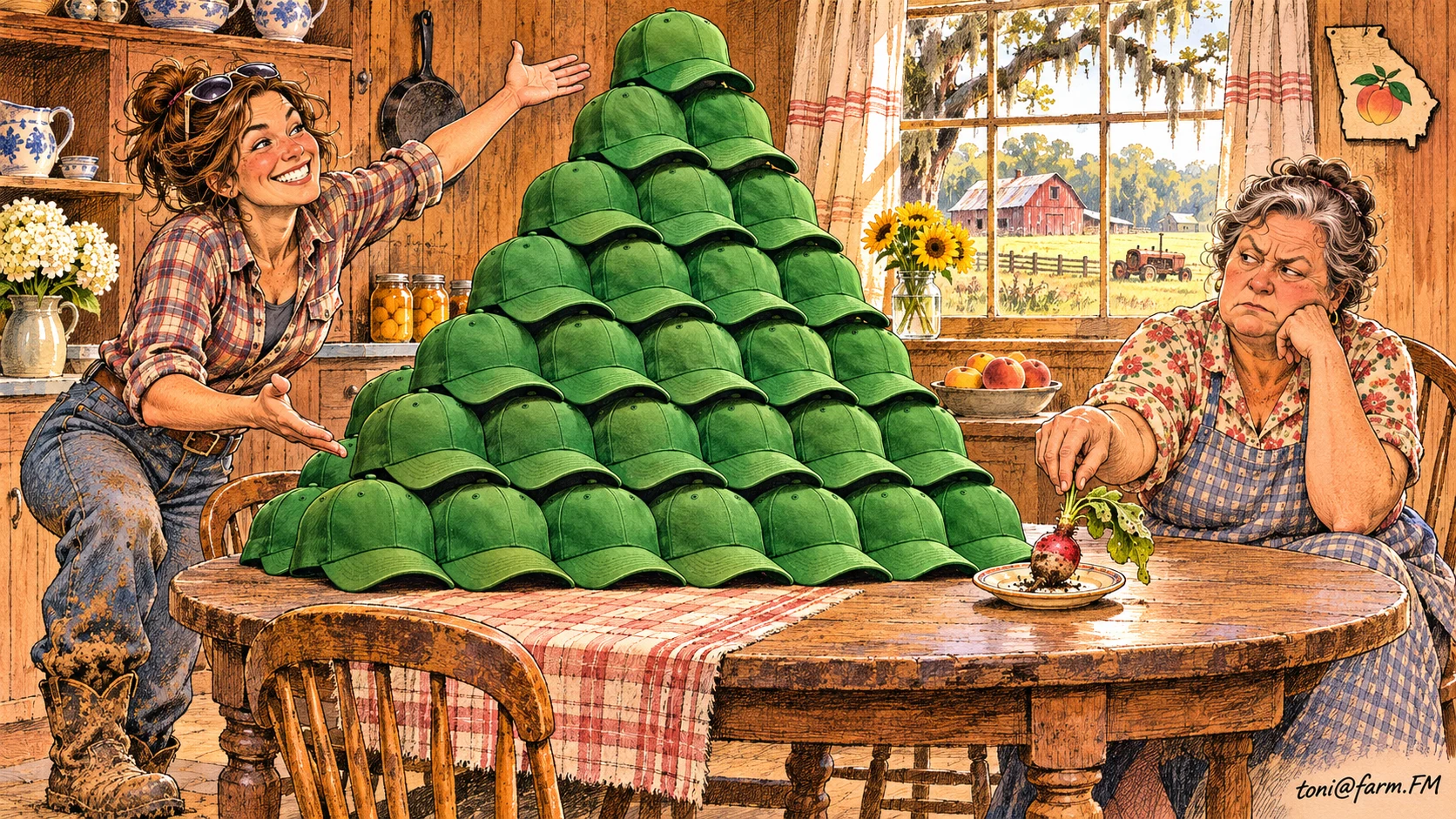
MOULTRIE, Georgia — A beginning farmer bought forty-eight green ball caps on Tuesday, putting the merchandise side of her business a full growing season ahead of the farm. Her aunt Dottie asked what the business would sell. Jess Harlan said vegetables. Dottie asked if she could see one.
Harlan went out to the truck and brought back a radish she’d pulled from her test row. Dottie put it on a saucer. They both looked at the radish, then at the hats.
“We ought to have plenty of change,” Dottie said.
A Beginning Farmer Has the Hats in Hand
Harlan had used the Beginning Farmer Guide’s planning and land-access resources to work through her options. She had a patch of ground she could try for a season and a neighbor willing to tell her the truth about it. He said the ground was good if she didn’t mind the north end staying wet until the south end had started asking for water.
The USDA’s guide to planning a new farm operation suggests starting with goals and fleshing out a plan for the business. Harlan had already chosen two colors for the operation. Dottie asked if she had also chosen a customer. Harlan said she was thinking about people who liked a nice radish. Dottie said there was a woman down the road who did, though between the two of them she could probably eat only six a week.
Harlan visited the woman, who said she bought vegetables on Fridays and liked a bunch small enough to finish. Harlan asked what else she bought. The woman said greens, when she could find them. Harlan asked whether she wore caps. The woman said she had a hat that had served her since 2004 and was resisting succession.

The First Farm Stand Leaves Room for Growth
Harlan worked out what seed, supplies and the land would cost. She also wrote down the time she’d spend washing, packing and taking vegetables to town. Dottie asked whether she’d allowed anything for standing at a farm stand watching people drive past. Harlan said she could use that time to fold hats.
They borrowed a folding table from Dottie’s church and put a bunch of radishes on it. The table rocked. Harlan tucked a cap under one leg and stepped back. Dottie said that was the first hat they could confidently charge to the farm.
A man stopped and bought the bunch. He asked whether Harlan would have more on Friday. She said she would and asked if he wanted her to set any aside. He said he’d take one. She wrote his name down. Dottie noted that the business had acquired a customer without having to determine his hat size.
The Beginning Farmer Revises Her Order
The first market day showed Harlan how long it took to get the vegetables out of the field, washed and into a bunch she was happy to sell. She decided to track what moved, what came back home and what people asked for. She could then change the next planting without having to buy a second table.
The hat supplier called to ask whether she wanted to repeat the order. Harlan said to give her a few weeks. The supplier asked whether there was a problem with the hats. She told him one had held up under considerable pressure and the other forty-seven were still available for testing.
Dottie put the radish money in an envelope. Harlan asked what they should do with it.
“Buy more seed,” Dottie said. “Let’s give the hats somebody to work for.”
Farm.FM Disclaimer
The world’s oldest tenured professor and a philosophy major turned dairy farmer prepared this account together. The professor would like a hat for attending the opening. The dairy farmer will issue one when he has finished bunching the radishes.
Last Updated on November 17, 2026 by Alan Nafzger
Forty-eight hats and zero sales is a merch launch, not a farm start, so spend one cap on beginning-farmer scholarships and short courses before decorating the truck.