
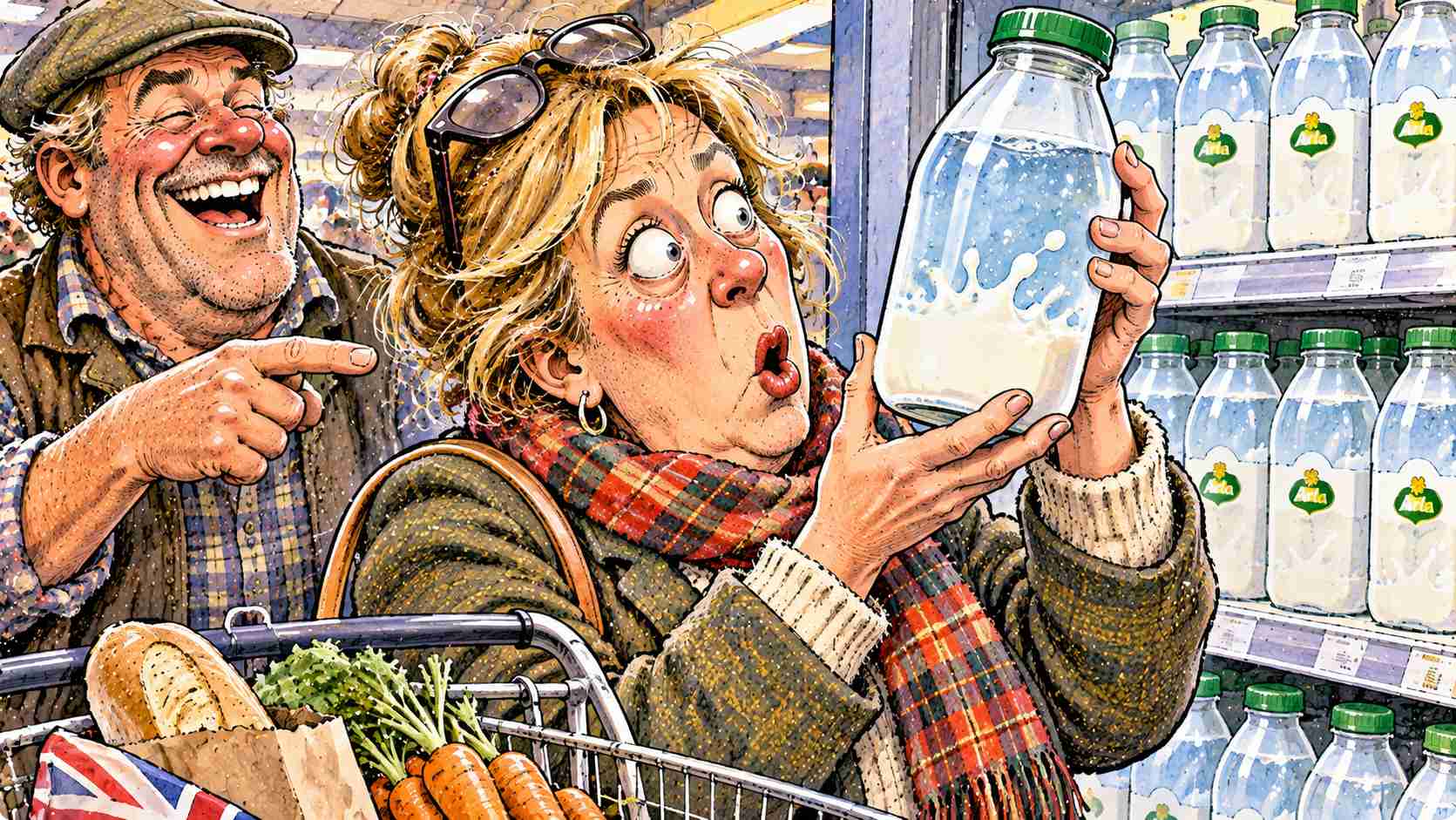
Cows ask about the original
COPENHAGEN, Denmark — After centuries of milking cows and selling milk, the dairy industry has developed an extraordinary new strategy: remove most of the familiar milk experience, add water and explain that the result is a modern lifestyle product. Farmers, who had been under the impression that milk already contained water and protein, have begun requesting marketing degrees for their cattle.
Arla Launches a Whey Protein Water
Agriland reported that Arla launched a water-based protein drink made with whey protein from milk, initially marketed in Denmark. Each bottle contains twelve grams of protein. The product serves a different consumer occasion from ordinary milk, according to the company. This is a reasonable commercial distinction that nevertheless sounds magnificent when explained to a dairy cow.
Cows Review the Pitch
At a barn meeting, a Holstein named Margaret listened to the pitch and asked whether the company intended to put the milk back later. The product manager assured her that consumers wanted convenience, hydration and functional nutrition. Margaret pointed out that she had been producing three of those things since adolescence and had never once received an influencer discount code.
A Jersey cow proposed taking the concept further. Remove the cheese from cheese, sell the remaining idea in recyclable packaging and charge extra for its “authentic dairy heritage.” Another suggested marketing empty yogurt cups as the ultimate low-fat dairy product. A third preferred simply getting a fair milk price, a proposal judged insufficiently exciting for the brand innovation team.
A consumer survey of 312 shoppers outside a Copenhagen gym found that 74 percent would pay more for a bottle labeled “protein water” than for the same amount of protein in a glass of milk. Asked why, the most common answer was “it comes in a bottle.” The second most common was “it’s colder.” One respondent said she hadn’t known milk had protein, and was told it had been there the whole time.
What Whey Protein Actually Is
To be fair, whey is a real and valuable dairy ingredient. Food companies have long used milk components in specialized products, and a protein drink can meet a consumer need without pretending to replace milk. The trouble starts when the marketing language treats familiar agricultural nutrition as though it were discovered in a laboratory three weeks ago.
Dr. Anders Lindqvist, a food scientist who has worked with dairy cooperatives, said the product is “clever and perfectly honest.” He said whey is a valuable ingredient and that a clear drink can reach people who don’t want a thick one. “The marketing is where the art is,” he said. “The cow is where the protein is. They’re different jobs and only one of them gets up at four.”
A consumer survey reached a difficult conclusion. Shoppers will gladly pay a premium for an ingredient if it appears in a bottle with a sufficiently energetic name. Put the same ingredient in a barn, however, and some people insist on discussing manure, animal care and why the cow is looking at them.
Early reviews posted by customers were mixed. “Tastes like water that heard about milk,” wrote one. “Twelve grams of protein and zero regret,” wrote another. A third gave it two stars, noting that he had bought it to support dairy farmers and later learned that dairy farmers were not in the building. A fourth asked whether it came in chocolate.
Where the Value Goes
Dairy farmers know what happens upstream of every shiny new product. Someone feeds the animals, manages the herd, runs the milking system and pays the electricity bill. Product innovation is welcome if more of its value returns to that farm, rather than stopping at the designer who chose the font.
Margaret eventually accepted the business proposition, though she issued one condition: the next beverage must acknowledge where its protein came from.
The company suggested a tasteful cow silhouette. Margaret demanded a profit-sharing arrangement and a longer lunch break.
Five Observations About Protein Water
- After centuries of milking cows and selling milk, the dairy industry came up with the next big idea: take the milk out, put water in, and say it’s modern. Genius. That’s like removing the engine and charging extra for the car.
- Margaret the Holstein asks whether they intend to put the milk back later. The product manager says consumers want convenience, hydration and functional nutrition. Margaret’s been producing all three since adolescence and never got an influencer discount code.
- A Jersey cow says remove the cheese from cheese and sell the remaining idea. Folks, that’s already a thing. It’s called a diet.
- People will pay extra for an ingredient in a bottle with an energetic name. Put that same ingredient in a barn and suddenly everybody wants to talk about the smell. The cow’s right there. She can hear you.
- The company said the next one will have a tasteful cow silhouette. Margaret asked for profit sharing and a longer lunch break. That’s the first labor negotiation in history where the other side has to bring snacks.