
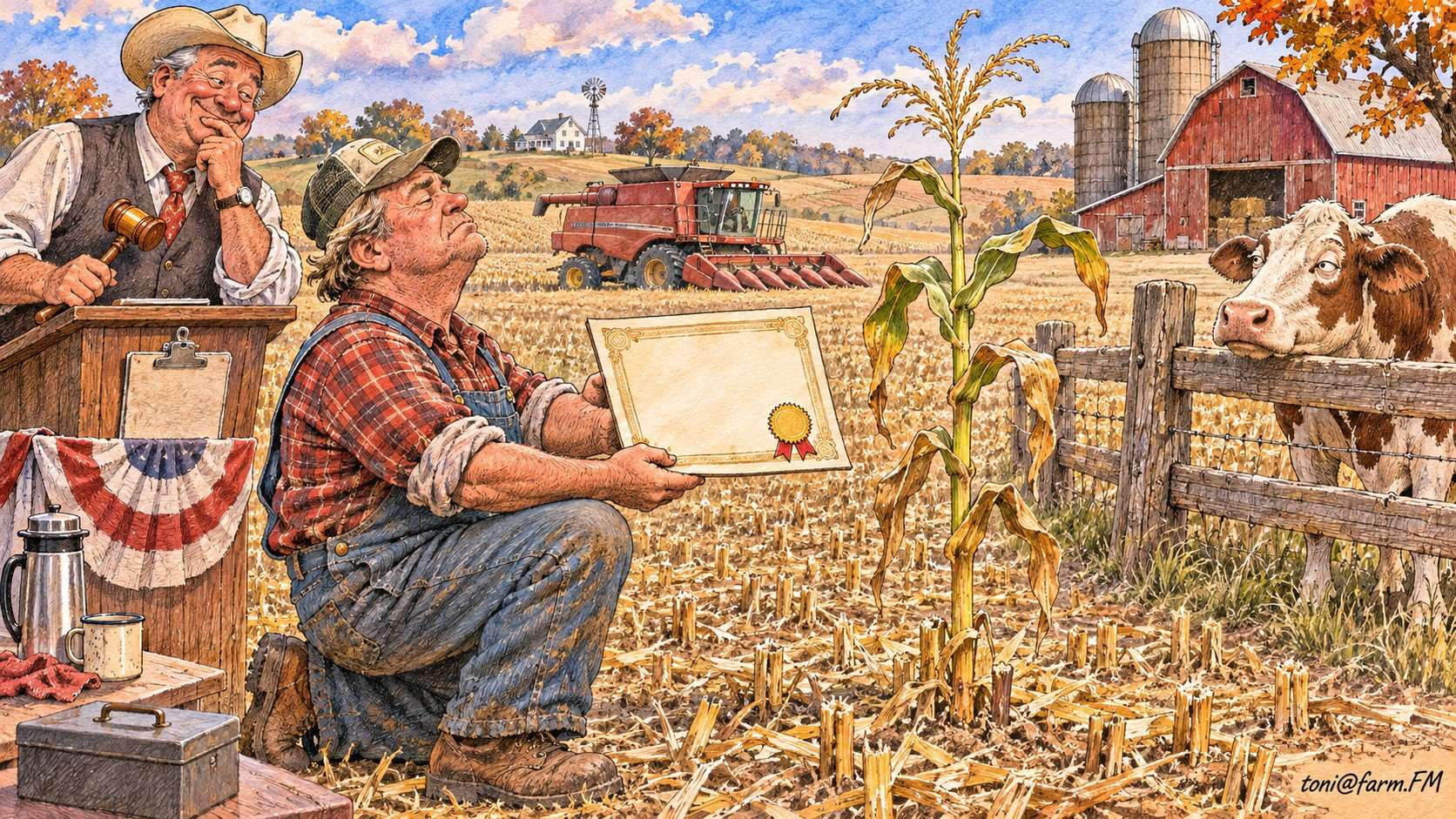
AMES, Iowa — News about Iowa farmland prices prompted grower Dan Voss to walk into his field carrying a printout of recent sales. He wanted the corn to understand the quality of the address from which it would be expected to earn next season’s living.
The corn displayed the same level of ambition it had shown before the announcement. Voss described this as a disappointing response from a crop now associated with increasingly valuable real estate.
“I’ve told it what people are paying for the neighborhood,” he said. “So far it still wants nitrogen.”
Iowa Farmland Prices Meet the Production Budget
Successful Farming reports that more than 8,000 Iowa acres sold for nearly $89 million in October. Those were completed sales across different properties, rather than a prediction for every field. Read Successful Farming’s October Iowa farmland sales review.
Voss’s wife, Mary, made that distinction when he began applying the headline to the back eighty. She asked which comparable land he had examined, whether he intended to sell, and where he planned to put the combine if he did.
He said he had intended only to feel better about their assets.
“Enjoy it,” she told him. “Then turn the page to what the assets need from us.”
The following page contained drainage repairs, seed, insurance, and a machinery payment. None had heard that the household was now enjoying a more impressive theoretical position.
Their daughter compared local sales, land quality, location, and conditions. Voss appreciated the care. His original valuation method had consisted of reading the largest number over breakfast and seeing whether it improved the coffee.

The Corn Declines a Luxury Upgrade
At the elevator, Voss asked whether delivering grain from expensive ground qualified it for a better class of service. The buyer said the grain’s actual qualities and delivery terms were more relevant to the bid.
Voss said he would let the field know. It had been expecting recognition for its improved social position.
A neighbor considering retirement joined the conversation. For him, land values had a different practical meaning. Another neighbor trying to begin farming listened carefully and reached for his calculator.
Voss recognized that the same headline could sound like retirement, an obstacle, or a larger rent discussion depending on who was reading it.
At home, Mary put the comparable-sales notes beside the actual operating budget. They discussed what they needed from the farm and what decisions they could afford to make. Their daughter asked whether the corn should attend.
“It’s already supplied its opening statement,” Mary said. “We have the yield records.”
Voss took one ear to the kitchen as a reminder of the distinction between a valuable field and the crop paying this month’s expenses.
Their grandson admired it and asked whether it was rich.
“Very well located,” Voss said. “The income is still under discussion.”
The child put it beside a bowl of ordinary grocery-store apples. Nobody challenged its qualifications, and for the rest of the evening the household had a landowner at the fruit bowl who never once asked for additional rent.
For practical background, explore farmland value resources at Agriculture.Directory.
Satire disclaimer. The corn has declined to discuss comparable properties until somebody explains why it is still expected to live outside. A human collaboration between the nation’s only agriculture professor that actually needs tenure and a philosophy major turned dairy farmer.