
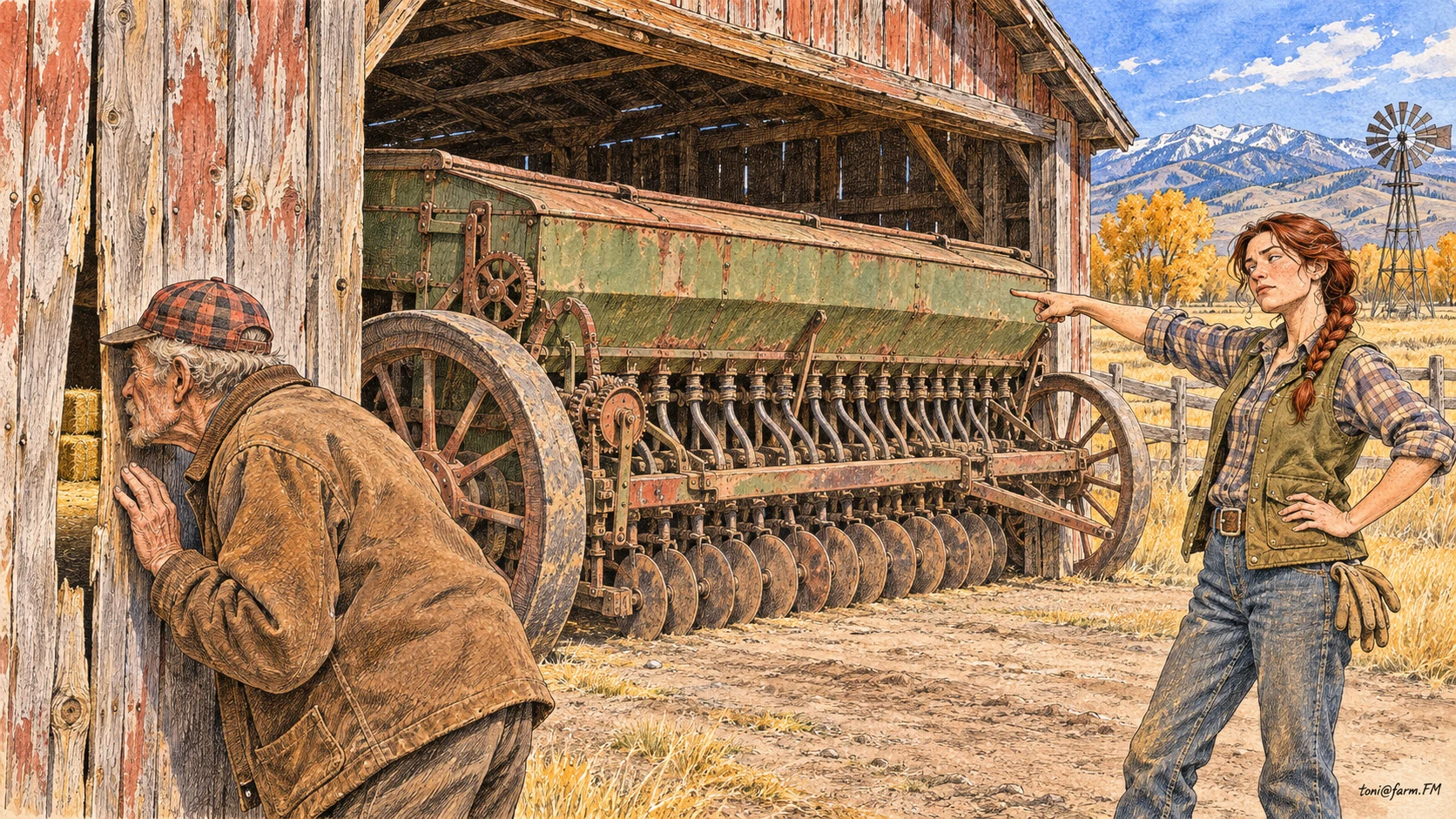
LEWISTOWN, Montana — A winter hay inventory at the Voss ranch counted 116 bales Thursday, including four that would require the sale or removal of a grain drill retired in 1996.
Rancher Eddie Voss counted the four through a gap in the shed wall. His daughter, Mara, asked how he planned to get them out.
“The same way I got them in,” Eddie said.
“Before you put the drill there?”
Eddie looked through the gap again. “That would be the simplest.”
The drill hadn’t moved in twelve years. Eddie had kept it because a neighbor once asked him whether he might sell it. He wanted to be available if the man asked again.
The Winter Hay Inventory Checks the Back of the Shed
Mara had used the ForageAndPastureHub’s forage budget and hay storage resources to start the count before winter. She wanted to know how many bales they had, what they weighed and which ones could actually be fed when needed. Eddie was happy to answer the first question. He said he could answer it twice if that helped.
Penn State Extension’s guide to estimating bale weights explains that knowing bale weights improves winter feed planning. Counts can be useful, but two groups of bales need not contain the same amount of forage. Mara wanted representative weights for the different lots. She also wanted to inspect the bales stored outside and account for any losses.
Eddie said the four behind the drill were his best ones. Mara asked why. He said they hadn’t been bothered since August. She put them on a separate line in the notes so they could deal with access before relying on them.

One Bale Is Estimated by Reputation
Eddie took a photograph from the side of the shed and sent it to his brother, Roy. Roy said those looked like his bales.
“Are you sure?” Eddie asked.
“I’ve been looking for them since August.”
Roy came over and showed Mara the twine they’d used on his small hayfield that year. It matched. Eddie explained that he’d been taking care of the bales for him all this time. Roy asked why Eddie hadn’t called. Eddie said he’d been concentrating on the part of taking care of them where you leave them alone.
They checked the rest against the season’s records. Two lots were different sizes. Mara wrote down which hay they expected to rely on first and what they wanted to confirm before placing any order. Eddie looked at the list and said the paper was lighter than he’d expected for something that had just taken four bales away from him.
The Winter Hay Inventory Gets a Clear Aisle
Roy knew someone who could safely move the old drill. He asked Eddie again whether he would sell it. Mara said that was the second offer Eddie had been waiting for. Eddie asked who had made the first one.
“I did,” Roy said.
Eddie thought about it. “Well, I suppose you know what you’re buying.”
They agreed to the sale. Roy asked whether they should settle up for storing the four bales. Eddie said he could pay for storing the drill instead. Roy suggested they call it even and get the whole back corner cleared.
Farm.FM Disclaimer
The world’s oldest tenured professor and a philosophy major turned dairy farmer prepared this account together. The professor counted every bale he could see through the wall. The dairy farmer would like to know who owns them.
Last Updated on November 17, 2026 by Alan Nafzger