
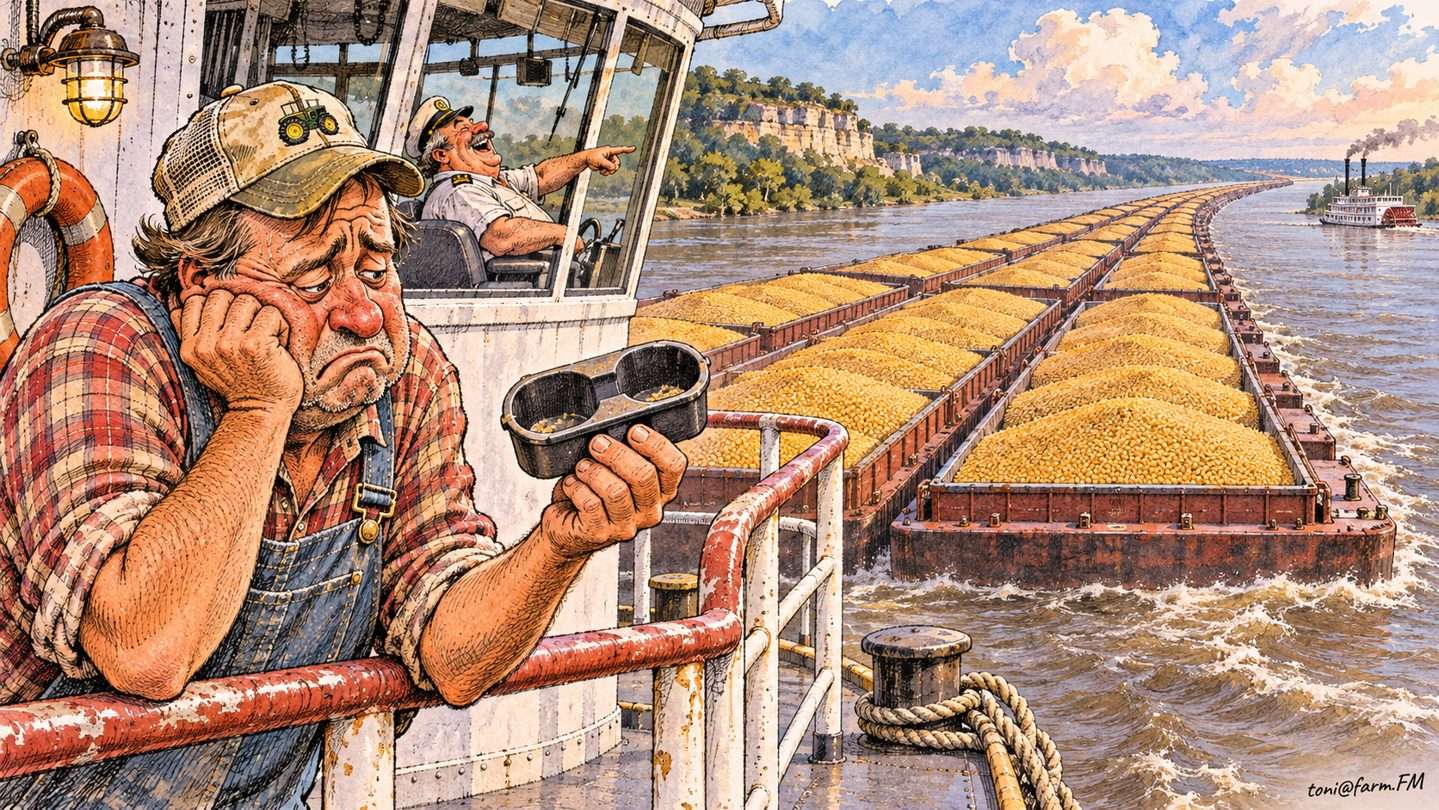
LEVEE, Illinois — The weekly grain barge traffic report has forced Illinois farmer Dean Tully to reconsider his working definition of a load. At his house a load is whatever he can put in the pickup without his wife seeing the springs. On the Mississippi, a load is something a towboat moves while Dean is still looking for a place to put his coffee.
“I told my brother we could do it in two trips,” Tully said. “I meant two trips to the bank to explain why I bought a bigger pickup.”
Grain Barge Traffic Has Room for One More Story
The USDA Grain Transportation Report counted 849,550 tons of barged grain movements for the week ending November 7. Tully heard the number at the elevator, where four men immediately offered four theories about what it meant for his bid. Two had opposing theories and were using the same weather map.
The evidence gathered in the elevator parking lot was less comprehensive. One man had a receipt from his last delivery, another had a screenshot of a quote from the previous week, and a third had a tape measure. Nobody asked him to bring the tape measure. He brought it because he had spent forty years in agriculture and knew that sooner or later someone would say something was bigger than it really was.
Gwen Pike, who farms across the river, said she measures a delivery in an older unit called how many times I have to back up before somebody stops helping. She said the towboat crew probably has better radios, although it still has relatives.
“My husband tells me I’m crooked while he’s standing directly where I need to go,” Pike said. “If a barge pilot had to work with him, the grain would get to New Orleans by Christmas of some year.”

The Freight Number and the Farm Number
Grain moves by river, rail and truck, and freight is one of several costs that help shape what buyers can bid. The useful number to compare across buyers is what reaches the farm after hauling, drying or other charges. A neighbor who offers a dime more and is an extra hour away can cost a farmer the dime and an hour with a man on the radio explaining his opinions about daylight saving time.
Farmer Owen Fisk keeps a notebook with the date, buyer, bid and charges for each trip. The notebook has become thick enough that his pickup now bottoms out an inch sooner.
“The elevator offered me a better price if I delivered on Tuesday,” Fisk said. “I asked if they meant my Tuesday or the Tuesday when my truck would be back from the shop.”
Tully eventually stood on the bank to watch a tow go by. He counted the barges until his coffee cooled, then turned to his wife and conceded that perhaps it would take three trips. She pointed out that he still needed to bring the truck home empty.
Farm.FM satire disclaimer. No pickup was overloaded in the making of these freight estimates. One cupholder was judged extravagantly ambitious.