
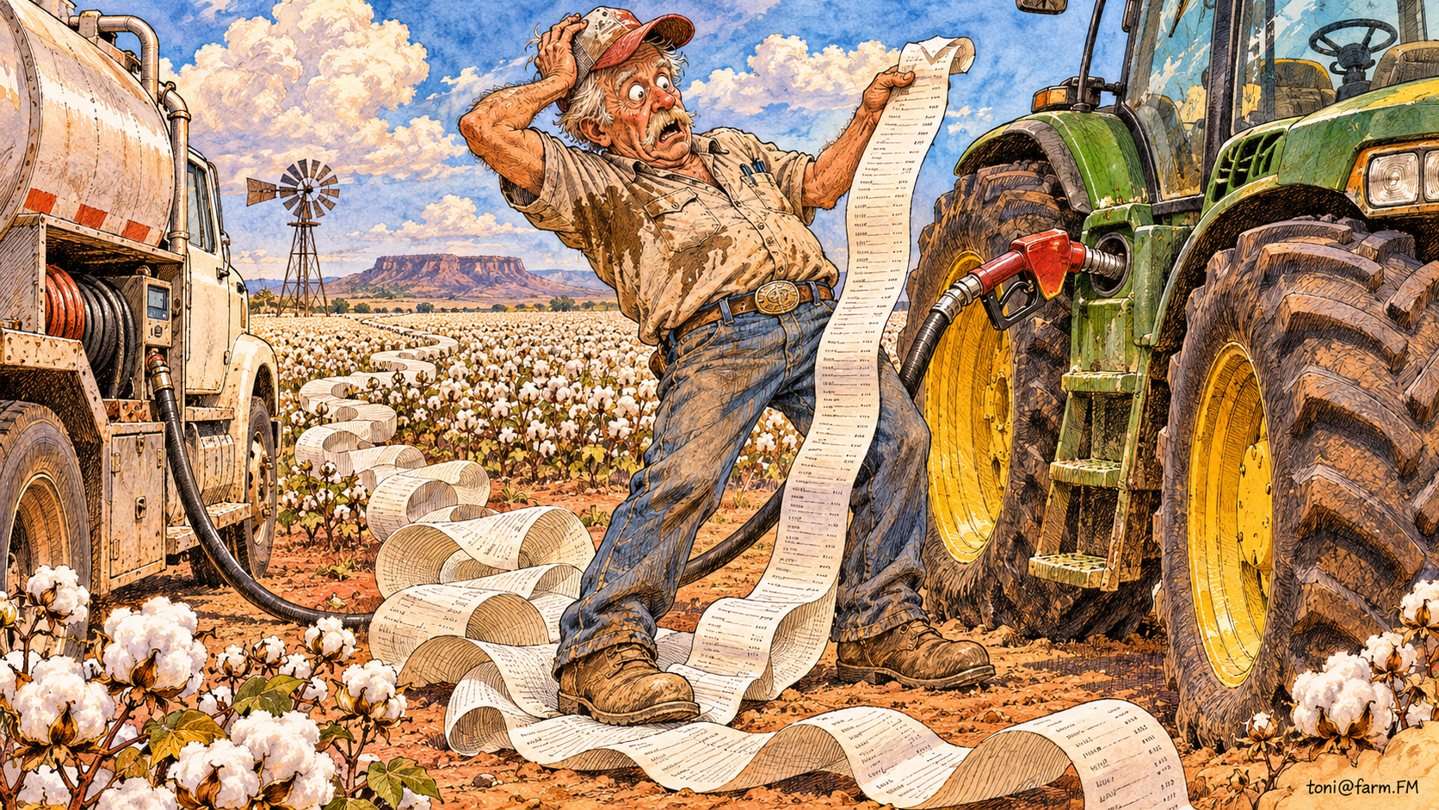
LEVELLAND, Texas — Clyde “Straight Row” Mercer added 200 gallons to his tractor and reported a sharp increase in consumer confidence among the people who sold him the diesel. Confidence at the other end of the hose remained flat.
Farm diesel costs have become the only economic indicator Mercer can follow without opening his phone. The needle moves, his bank account moves, and eventually the tractor moves. On a good day, all three do so in that order.
“I’d have put the money into something frivolous, but the tractor said it needed to get to work,” Mercer said. “That’s about the same talk I had with my son when he wanted a pickup, except the tractor showed up Monday.”
Farm Diesel Costs Reach the Turnrow
The U.S. Energy Information Administration’s weekly diesel price report put Gulf Coast on-highway diesel at $5.741 a gallon for the week of Nov. 9. That is a regional road-fuel benchmark. The farm’s delivered off-road price comes from its own supplier, who usually announces it with the sympathetic tone of a man calling about your dog.
Mercer’s evidence of a slowdown consisted of an unsigned replacement-recliner order, a fuel receipt and the old recliner, which now leaned far enough to qualify as a standing desk. His wife said the household could put off the furniture because nobody had a contract to deliver 40,000 pounds of recliner by Friday.
Neighbor and sorghum grower Ruth Harlan conducted her own consumer survey by asking three farmers whether a full tank made them feel richer. Two wanted to know if she meant their tanks or the supplier’s. The third asked if the survey paid mileage.
“I economized by sending my husband for parts instead of going myself,” Harlan said. “He bought the same bearing and came home with a smoker, so we’re trying a different model next quarter.”

What a Gallon Costs per Acre
Iowa State Extension’s machinery cost worksheet treats fuel as an operating cost and uses field capacity to translate hourly machinery costs into costs per acre. That gives Mercer a way to compare passes and see whether a job that sounds cheap actually is. At half a gallon an acre, a 50-cent price increase adds a quarter per acre. On 800 acres, that is $200 before anybody has lost a wrench.
Cal Reddick, who grows cotton west of town, said working in straight lines was already his principal fuel-saving measure.
“The government could save me real money by moving the far field closer,” Reddick said. “I’ve seen them redraw a congressional district in an afternoon, so I know they have a pencil.”
Mercer plans to track gallons and acres on each job and compare them with his own delivery invoices. He already writes down the hours, although he has quit writing down how many of them he spent thinking about the bill. His dealer offered him a loyalty card. Mercer asked what the reward was. The dealer said the next load would come on Thursday.
Farm.FM satire disclaimer. No fields were moved to improve this quarter’s fuel numbers. The receipt, however, reached the next county.