
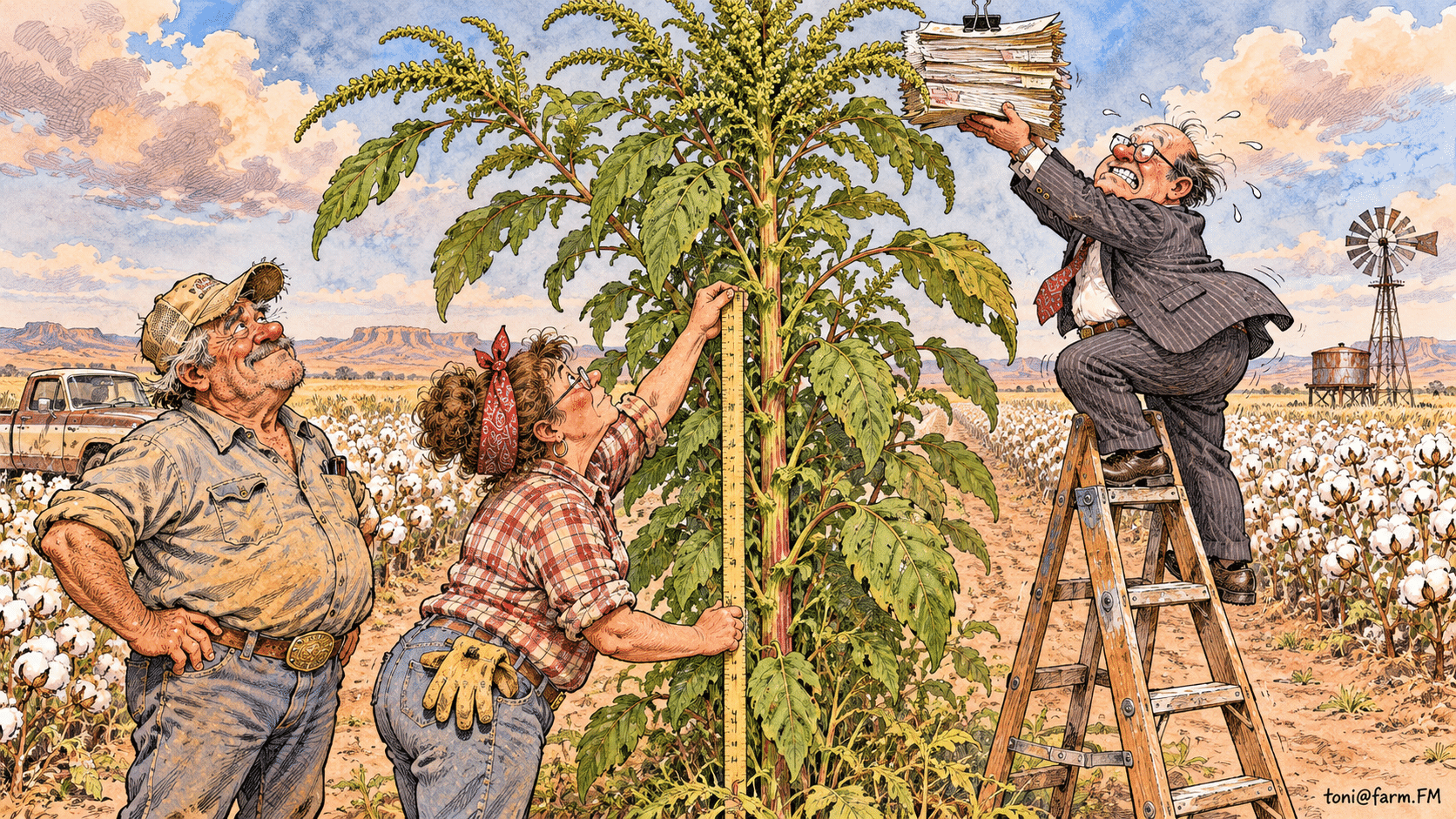
LEVELLAND, Texas — Palmer amaranth reached the top of Clyde “Straight Row” Mercer’s fence before the interest on his tractor loan cleared the second page of the statement. Mercer called the discovery proof that West Texas can still produce a world-beating crop if the grower has no intention of planting it and absolutely no buyer.
His wife, June, identified the plant after walking the cotton turnrow with a tape measure. Clyde had earlier called it a hybrid bred to withstand adversity. “You’re thinking of me,” she said. “That’s pigweed.”
Palmer amaranth beats the bank out of the ground
Under favorable conditions Palmer amaranth can grow rapidly, and its seed production makes escapes worth finding early. Lookalike pigweeds can complicate field identification. Variable leaf shapes make a glance from the pickup unreliable. Iowa State Extension’s Palmer amaranth identification and management guide explains distinguishing features and management considerations.
The bank sent a representative to see the plant after Clyde wrote “strong growth” on his annual operating statement. The representative asked whether the weed could be pledged as collateral. June offered to put him down for the next hundred plants, subject to removal before seed set. He said the bank preferred an asset that would stay put. Clyde showed him the tractor, which did exactly that whenever the dealer couldn’t get a sensor.
Clyde accused the weed of doing better on scarce moisture than his cotton. June pointed out that the weed also had lower overhead. It hadn’t purchased a machine to watch its other machines tell it where it was.

One scouting trip, two columns in the ledger
She also put a flag by the gate so the next person scouting could find the patch without mistaking Clyde’s coffee thermos for a survey marker. June scheduled another walk on the affected ground and marked where they found the first escapes. A sensible field plan starts with identifying the weed, checking patches again before seed production and talking to local Extension about crop-specific management. A flowering weed alongside the route you take every morning deserves the sort of attention usually reserved for a check engine light during harvest.
Back at the kitchen table, she separated the tractor payment into principal and interest, then added a third figure for what it cost them to leave a patch of pigweed until next week. The bank’s balance at least arrived on paper. The weed expected them to do their own paperwork, locate its relatives and remember every corner where it had previously made itself comfortable.
Clyde suggested hanging the plant beside the banker’s calendar when they renewed the note. June said he was welcome to take a picture. She had no intention of hauling another thriving enterprise downtown and letting the bank take credit for it.
Disclaimer: The Mercers and their loan negotiations are Farm.FM satire. Palmer amaranth is real and has declined every request for its borrowing history.