
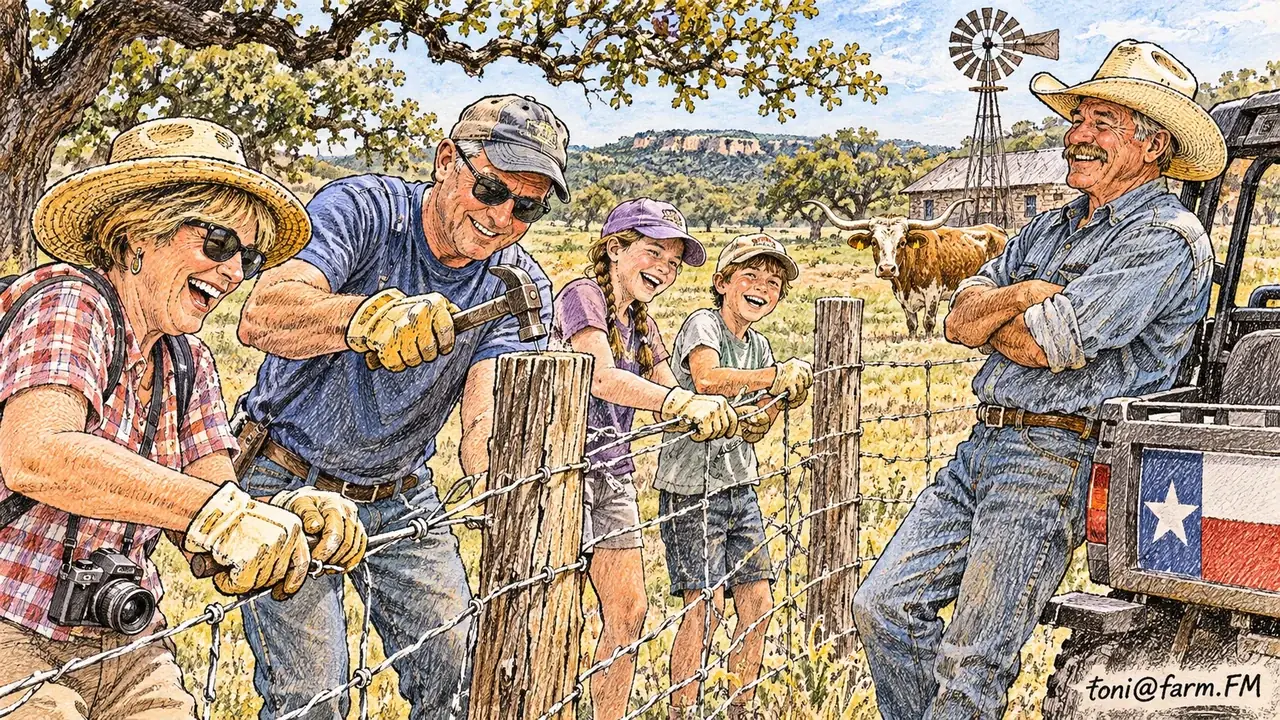
City Families Pay $400 to Fix Someone Else’s Fence
BANDERA, Texas (Farm.FM) — A Texas ranch has unveiled a luxury agritourism experience in which visiting families pay $400 to mend somebody else’s fence, discover fire ants and learn that the authentic smell of the countryside is not sold in candle shops.
Ranch owner Dusty Pruitt originally offered guests guided pasture walks. Then he watched a visitor photograph a broken fence and declare the scene “so rustic.”
“I’d been looking at that fence for three weeks,” Pruitt said. “If people want to appreciate it that badly, they can appreciate it with pliers.”
Ranch Agritourism Meets the Labor Shortage
The package includes a breakfast biscuit, safety briefing, a supervised demonstration of wire handling and the privilege of learning that a post-hole digger has no cruise-control setting.
The advertising department calls the experience “immersive rural wellness.” Pruitt calls it “Saturday.”
One family requested a discount because the fence was already partly standing. Another asked whether the experience included a certificate in heritage craftsmanship. Pruitt agreed to issue a certificate after the repair passed inspection by a cow with a history of finding weak places.
There’s a real business underneath the comedy. USDA reports that agritourism generated $1.26 billion for farms and ranches in 2022. That includes hospitality, recreation and entertainment, not an official federal plan to make tourists replace every leaning fencepost in America.
The Customers Demand Authenticity, Within Reason
A couple from Dallas wanted the full ranch experience but asked to skip the heat, dust, biting insects and any moment requiring physical effort.
“You’ve described a documentary,” Pruitt replied.
They eventually settled on watching a ranch hand demonstrate fence maintenance while seated beneath a shade tree. The couple rated the experience highly and posted that they had “reconnected with the land.” Pruitt noticed their shoes had not connected with much of it.
Practical operators do more than print rustic brochures. The USDA agritourism resource manual outlines business considerations, while Texas A&M’s risk-management guidance stresses safety, insurance and sensible planning. Guests must never be placed around hazardous equipment or livestock merely to create a memorable photograph.
Pruitt emphasizes that any visitor activity is optional, supervised and appropriate for the guest. A safe demonstration beats an injury every single time.
A New Definition of a Working Vacation
By Sunday, the guests had learned to recognize a sturdy fence, identify several types of cow manure and appreciate why actual ranchers prefer equipment that works over equipment that photographs well.
A marketing consultant suggested a premium add-on called “Mindful Mesquite Removal.” Pruitt asked whether customers were allowed to bring bulldozers.
The consultant said that would interfere with the mindfulness.
“Fine,” Pruitt replied. “They can meditate on why it keeps growing back.”
His newest package offers visitors a chance to watch him pay a feed invoice. Nobody has booked it. Apparently, authenticity has limits.
Editorial note: Dusty, the tour packages and quoted guests are satirical. USDA figures and extension safety guidance are real.