
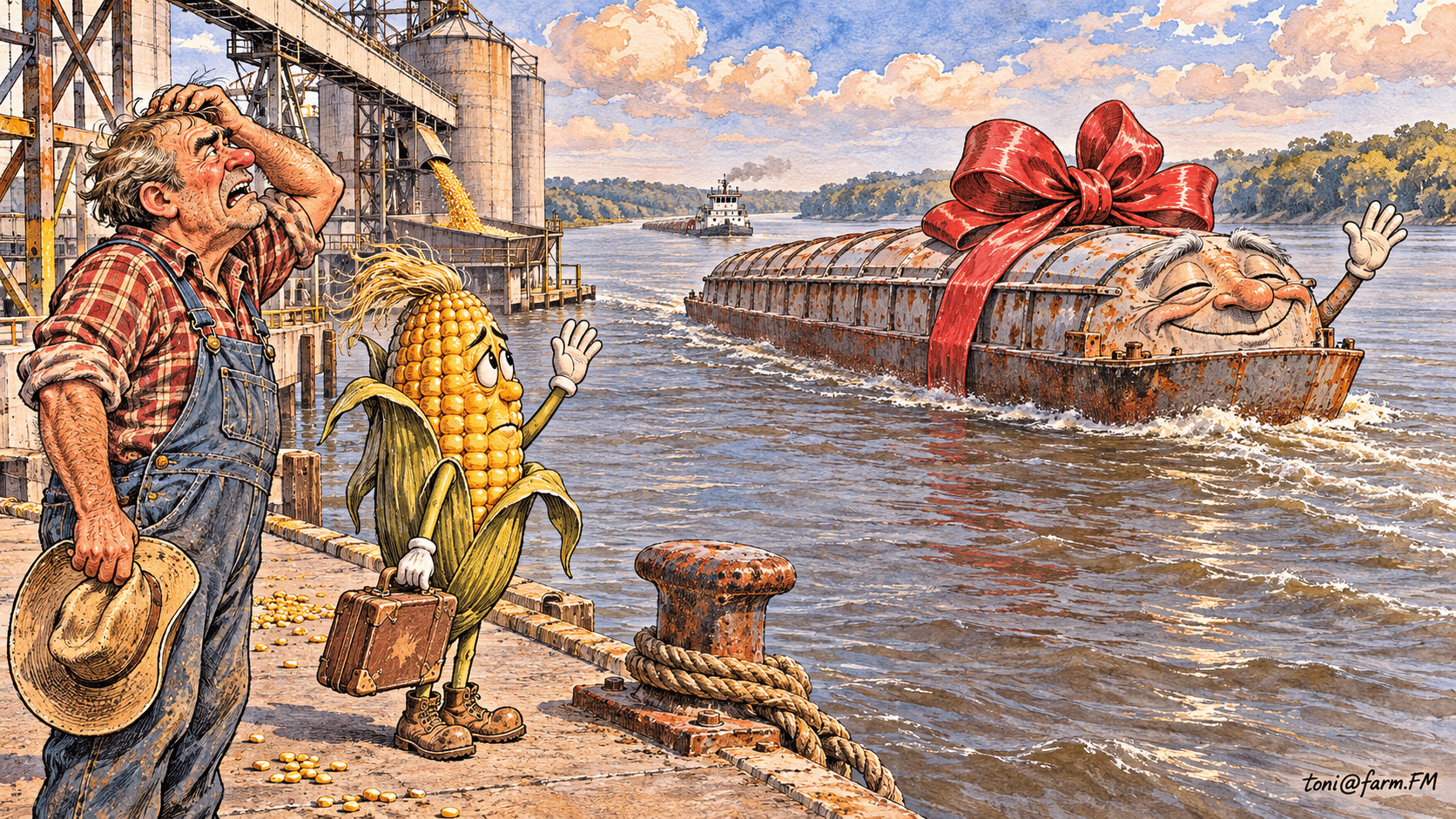
The grain barge fleet is shrinking, prompting farmer Dennis Voss to learn that growing the corn was only the agricultural portion of a journey that now appears to require advance reservations.
Voss said the crop had been ready to travel for weeks. It possessed good references, acceptable moisture and no unreasonable luggage.
“The elevator wants it,” he said. “The buyer wants it. Apparently the transportation would prefer something less bulky, like a software update.”
Grain Barge Fleet Approaches Retirement
CoBank’s research on the aging inland hopper barge fleet describes replacement lagging retirements. It reports a fleet approaching 17.6 years in average age, with about 410 new barges built annually against 500–1,000 retirements.
Voss reviewed those figures and recognized the family machinery strategy, except spread across a major national export route.
His wife, Beth, said there was one difference: their old tractor did not contain a substantial share of America’s grain trade. Dennis said that depended on how slowly it was moving.
The Corn Has Been Placed on Hold
The farmer imagined calling a grain travel desk and hearing that his shipment was important, followed by forty minutes of river noises.
A cheerful representative would offer priority boarding for an additional fee, explain that the barge had been overbooked and ask whether the corn would consider leaving one growing season earlier.
The corn would accept a middle seat if somebody could promise it a destination.
Voss’s marketing adviser, Amy Trent, said freight costs can pressure basis and farm returns. A strong export opportunity still requires the physical capacity to move a bulky commodity. A sales announcement does not tow a barge.

Dennis asked whether more trucks could solve it. Trent said alternatives have limits and costs. Moving large volumes off waterways is more complicated than giving the grain a different map.
Beth compared the situation to inviting sixty relatives for Thanksgiving and assuming the driveway would invent more cars.
The Farmer Discovers Another Industry to Monitor
Voss now follows barge capacity alongside crop conditions, local bids and the peculiar noise developing in his grain cart. He had hoped specialization would mean knowing fewer unrelated things. Agriculture has interpreted it as a challenge.
His household poll found nobody volunteering to build a shipyard. Beth offered to supervise if Dennis could first finish the shelves he promised in March.
The practical response is less dramatic: discuss delivery windows and freight-sensitive bids with buyers, understand storage constraints and avoid treating export demand as a guarantee of immediate local logistics.
Voss says he understands. The physical chain matters, and somebody must maintain it before the old links retire.
He has proposed a modest ceremony for departing barges. There will be coffee, a cake and absolutely no speeches about replacing them someday. The cake will be removed only after somebody produces a construction order.
The corn remains available to travel.
“It’s very flexible,” Dennis said. “It just insists on being transported in the physical world.”
Satirical disclaimer: No corn booked an actual middle seat. Our ceremonial human collaboration pairs two sentient beings—the world’s oldest tenured professor and a philosophy major turned dairy farmer—who remain available to argue about the underlying evidence.