
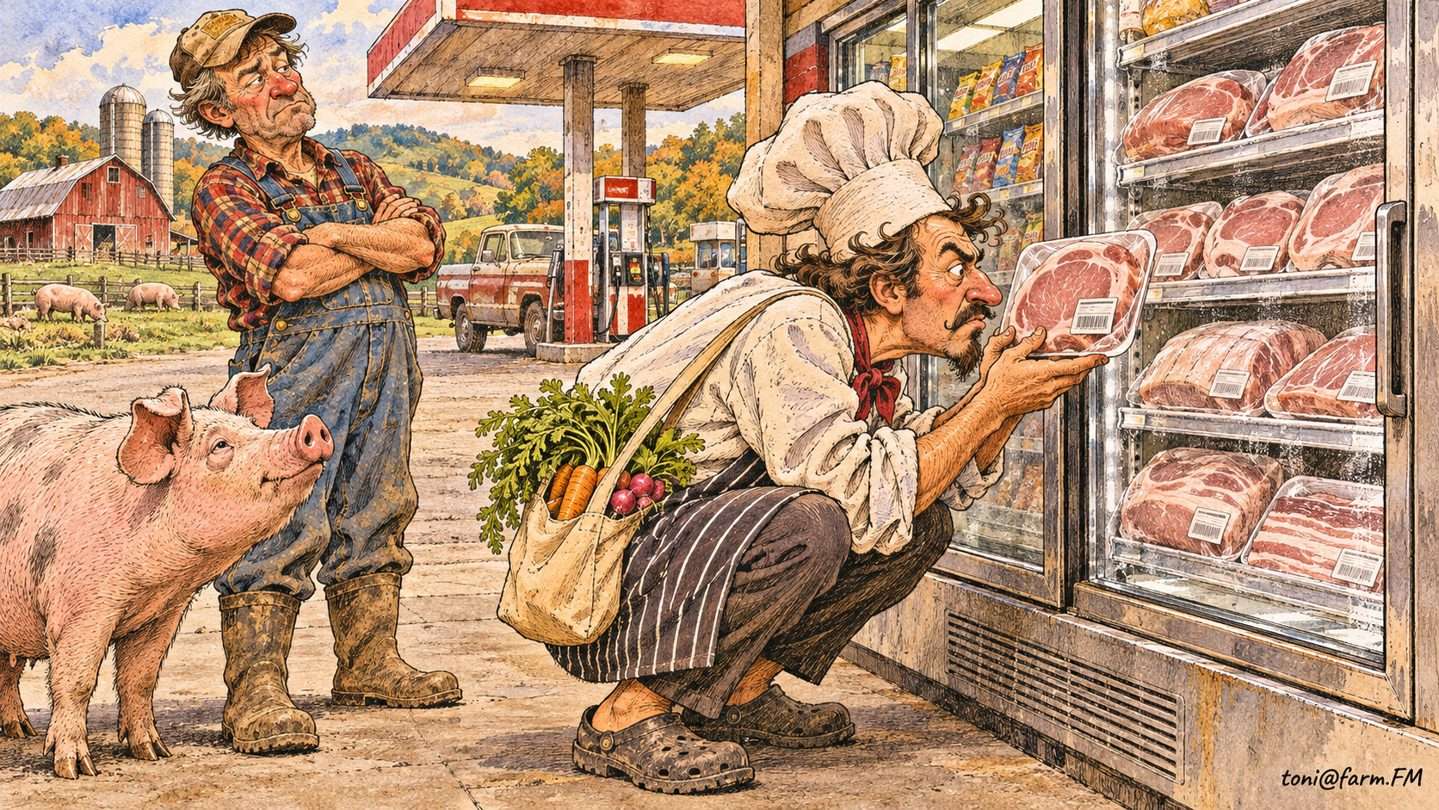
WICHITA FALLS, Texas — A restaurant claiming to source heritage pork from within a short walk of its dining room has clarified that the walk crossed a gas station parking lot. The chef pointed out that the route was local, the cooler was family-operated, and the fuel pumps made a dependable landmark for diners seeking a direct connection with their dinner.
“I asked which farm the pork came from,” said hog farmer Lucy Pate. “The waiter told me to turn left at the air machine. That’s the first time a provenance story came with a tire pressure recommendation.”
Farm-to-Table Pork Makes an Unscheduled Fuel Stop
The disclosure came when a customer asked about a breed mentioned on the menu. The server returned with the name of a truck stop loyalty program and the assurance that the chef had spoken directly with the man who restocked the cooler. The man offered to stand behind the sourcing claim provided nobody asked him to remember what had been in the cooler before eleven.
The restaurant maintained that the pork had a heritage. The chef produced a crinkled sleeve and a register slip, which became the first farm-to-table evidence package to include a discount for washing the car. The house sommelier recommended the item with a fountain drink from the same parcel of land.
The USDA rules governing labels on federally inspected meat products describe information required on those products. For diners curious about a restaurant’s specific farm or breed claim, asking for a supplier name offers a far more useful start than asking how many miles the chef drove.
Hog farmer Lester Pope has sold pork through more than one arrangement and said the restaurant could have called him directly. His number is on his delivery receipts. His wife insisted that he also put it on a sign after he spent most of one Saturday explaining to a customer that a receipt from a different man was not proof that Lester owed her bacon.
“When I say I know where my pork came from, I can point to the farm,” Pope said. “I don’t have to wait for somebody to move a diesel pump.”

The Tasting Menu Gets a New Map
The restaurant’s revised menu lists the dish as market pork. Until the inspection of the receipts, it was story-driven pork. The manager considered fuel-adjacent pork but was advised that some customers might take the adjective literally and ask for a refund before tasting it.
Pork producer Alma DeWitt suggested a more durable arrangement. A restaurant could name its supplier when it has a verified relationship and change the description when it buys elsewhere. The chef asked how to do that without changing the chalkboard every week. DeWitt suggested chalk.
“I’ll tell you what breed it is and how it was raised,” she said. “But if you want to describe what it dreamed about, you’re going to have to charge your own consulting fee.”
The restaurant has invited the public to meet its supplier. The supplier will be available Tuesday, when the lot tends to clear after the morning coffee rush.
Farm.FM satire disclaimer. The diner’s bill included a pairing recommendation and directions to Pump Four.