
The Hen Wants Credit for Today’s Work
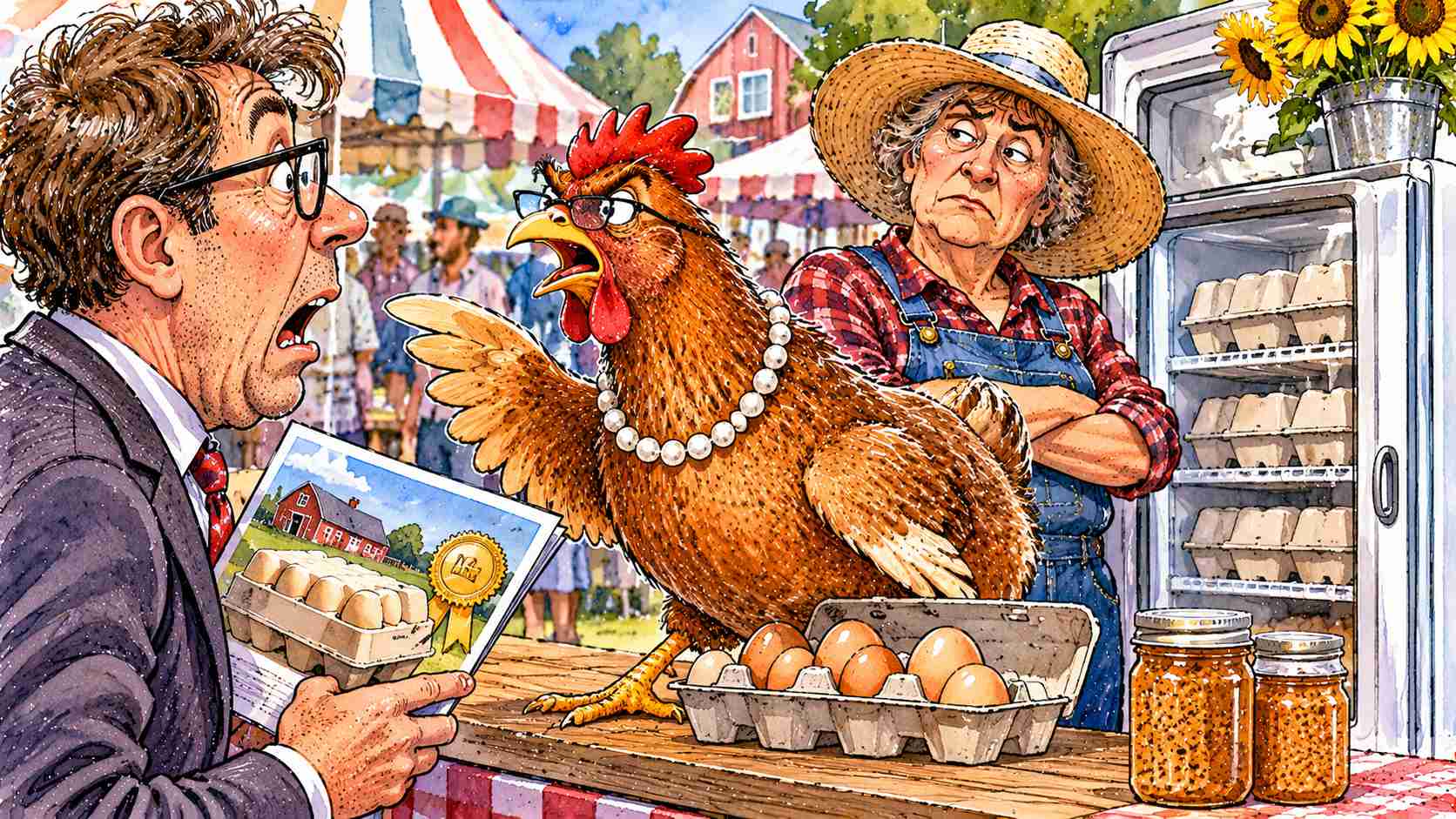
DES MOINES, Iowa (Farm.FM) — A heated farm fresh eggs shelf life debate has ended in a historic compromise after a laying hen demanded that consumers stop asking whether her eggs were fresh while ignoring the fact that she had produced them before breakfast. The dispute began when a shopper at a farmers market asked whether eggs collected that morning would still be “farm fresh” next Thursday. Hen representative Henrietta flew onto the display table and stared at the customer until he put down his phone. “She’s asking for the production date to be acknowledged,” explained owner Lois Mercer. “And possibly for somebody to stop calling her work cute.”
Farm Fresh Eggs Shelf Life Becomes a Branding Crisis
A marketing consultant proposed giving every carton a biography. Consumers could read the hen’s breed, hobbies, favorite grain and a handwritten statement about work-life balance. Mercer liked putting useful dates on cartons. She was less interested in arranging a podcast interview with a chicken. The consultant next suggested a premium label reading eggs with a story. Mercer replied that the story was straightforward: healthy hens, sound handling, clean cartons, careful storage and a customer who remembers to bring the eggs home. “Could we call them artisanal?” the consultant asked. “They come out one at a time,” Mercer said. “Doesn’t get much more artisanal than that.” Henrietta objected to the word laid. Her union preferred individually delivered.

The Actual Farm Fresh Eggs Shelf Life Guidance
Freshness is not a substitute for food safety. The FDA’s egg safety guidance advises keeping eggs refrigerated at 40°F or below and using them within three weeks for best quality. Proper handling, refrigeration and cooking matter more than a picturesque barn printed on the carton. Mercer repeated the point to the crowd. A customer asked whether a very happy hen made an egg last longer. Mercer said a refrigerated egg did not check the hen’s social media profile before deciding whether to spoil.

The Hen Demands Credit for Today’s Work
The market committee offered Henrietta a certificate reading Employee of the Month. She ate a corner and filed it under lunch. A second proposal involved printing the name of each hen beside each egg. Mercer pointed out that her flock had no system for signing receipts and that egg cartons were not individual birth certificates. The consultant offered blockchain tracking. Mercer asked if blockchain could prevent a customer from leaving eggs in a hot car while shopping for patio furniture. “That’s outside the platform,” he admitted. By closing time, Mercer had agreed to display collection information clearly, follow safe handling requirements and answer ordinary questions without promising that an egg would stay fresh through the next presidential administration. Henrietta accepted a modest compensation package of fresh feed, clean water and a private nesting box. She returned to work, where she promptly produced another egg. The consultant wanted to describe the event as a product launch. Mercer described it as Tuesday.
Disclaimer: Henrietta’s bargaining session and the market dialogue are satirical. FDA storage guidance is real; individual egg safety depends on handling and conditions. This story is entirely a human collaboration between two sentient beings: the world’s oldest tenured professor and a philosophy major turned dairy farmer.