
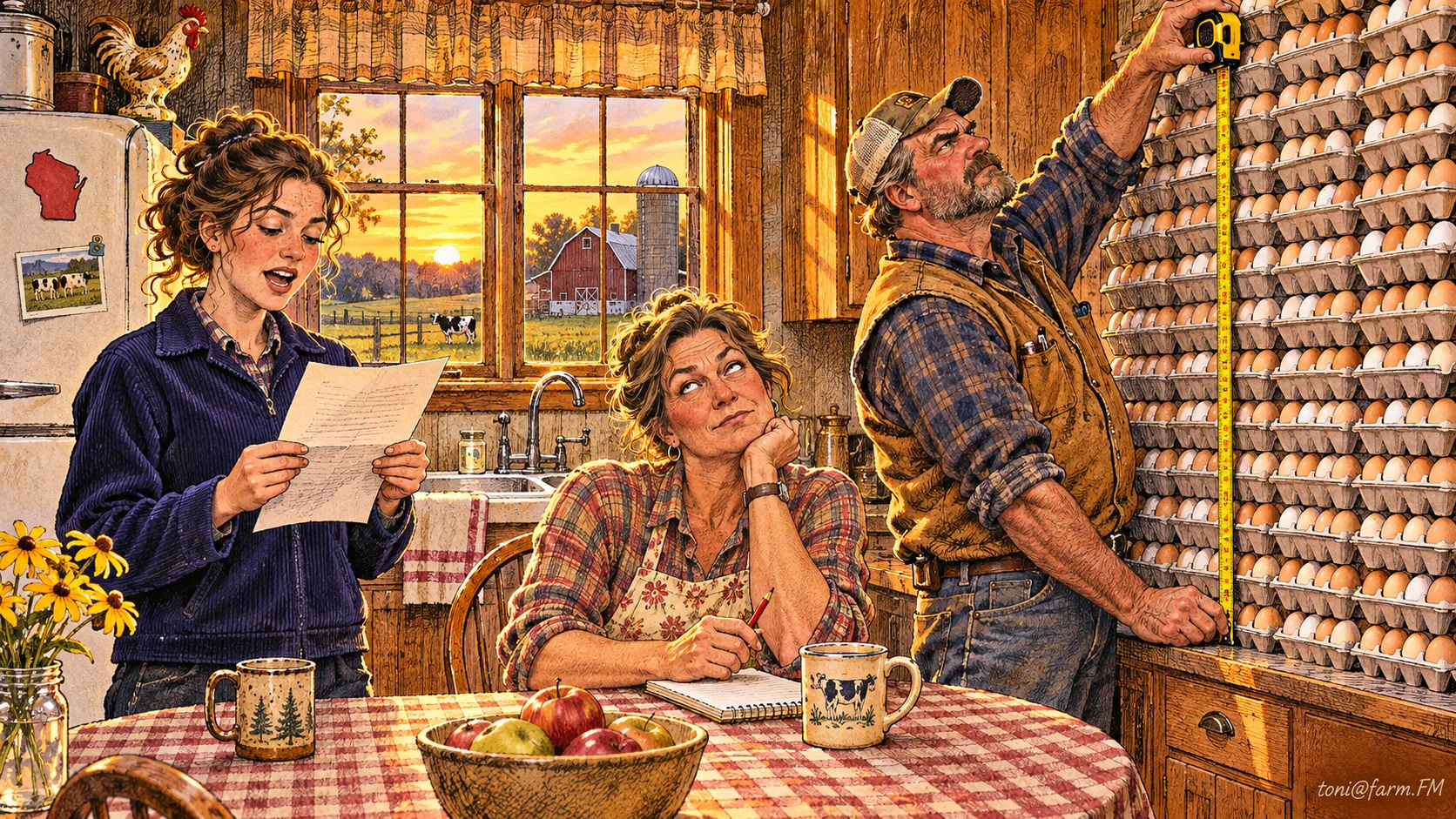
MONROE, Wisconsin — An agricultural scholarships essay on leadership was nearly revised to include 312 dozen eggs Tuesday after high school senior Delia Brant read the first page to her father. He said it was good but asked whether the committee understood how tall 312 cartons would be.
“They didn’t all happen at once,” Delia said.
Her father went to the pantry for a tape measure anyway. He said the committee might like a number it could picture. Her mother said the committee could probably picture a young woman who got up to gather eggs before school. Her father said it might picture her getting up even earlier if they stacked the cartons on end.
Agricultural Scholarships Ask for a Leadership Example
Delia had been using AgScholarships’ directory of agricultural scholarships for FFA and 4-H students to look up local awards and make a list of deadlines. Her father asked if there was a scholarship for showing up early. Delia said if there was, the hens had an excellent application. They were available at dawn, had recommendations from everybody who bought breakfast and could keep a meeting going until lunch.
The National FFA Organization’s scholarship program uses one application for multiple award opportunities for eligible students. Delia was also checking which local awards used their own forms. Her father said he’d be happy to tell the same story twice. Her mother said he was already on his third telling and nobody had even asked him for it.
The story Delia chose was about the week two families started showing up at the farm stand for eggs at the same time. The second family kept leaving empty-handed. Delia started taking reservations, set aside cartons by pickup time and told people when she was sold out. Her father asked what made that leadership. Delia said that before she did it, her father used to hide a dozen eggs under his coat for the neighbor and tell the people at the counter they were looking at his winter pocket.

The Hen Is Available as a Reference
The application asked for someone who could speak about Delia’s work. Her father suggested Mrs. Venn, her agriculture teacher, or the oldest hen. Delia said Mrs. Venn would be fine. The next morning her father was holding the truck door open for the hen anyway. He figured it never hurt to bring an alternate.
Delia took the keys and asked who was going to watch the flock while the hen was gone. Her father looked back toward the barn. It was the first argument he’d heard that morning for keeping a supervisor on-site.
Mrs. Venn agreed to write the recommendation. Delia gave her the deadline, a short account of what she’d done at the stand and a copy of her draft. Mrs. Venn circled the place where Delia said she had improved customer service. “Tell them about the woman who stopped having to bring her kids out twice,” she said. Delia did. Her father asked if the woman could describe how tall the eggs were.
The Agricultural Scholarships Essay Goes Out
Delia trimmed the essay to the word limit, read it out loud once more and sent it. Her father asked whether the committee would get back to them soon. Delia said she didn’t know. In the meantime he was welcome to cover the Saturday egg pickups.
He took the tape measure with him. By noon he had sold every carton, and the woman who used to make two trips had only made one. He told Delia he finally understood what she meant about leadership. He asked her to put him down as available on alternate Saturdays.
Farm.FM Disclaimer
The world’s oldest tenured professor and a philosophy major turned dairy farmer prepared this account together. The professor would like to see the hen’s letters of recommendation. The dairy farmer would like him to show up early enough to ask her himself.