
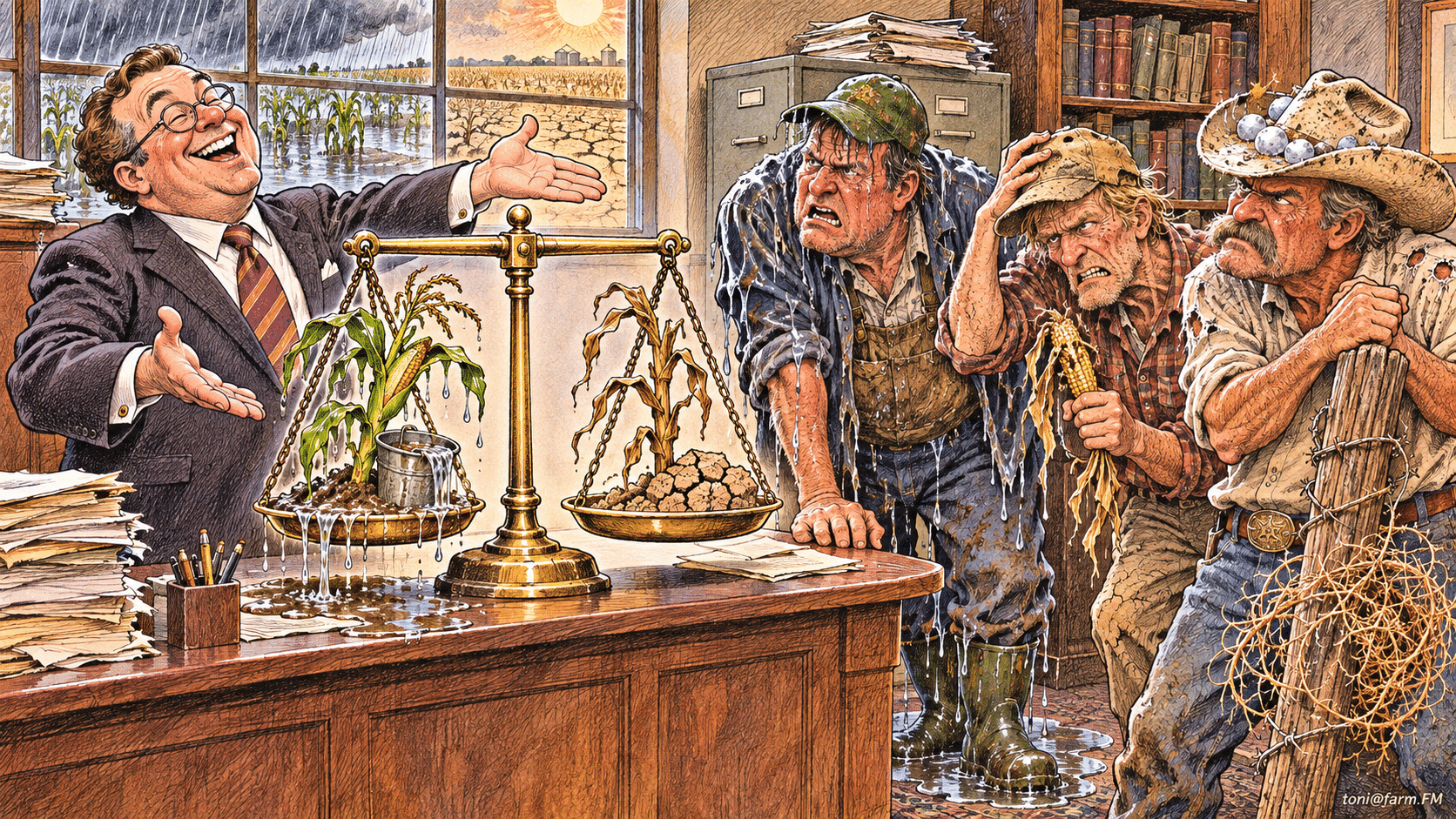
LEVELLAND, TEXAS — The nation’s average farm is enjoying excellent conditions after analysts combined an Iowa field with too much water, a North Dakota field with too little, and a Texas field whose weather apparently needs a designated driver.
The resulting agricultural outlook was described as balanced, reassuring everyone except the people growing the crops.
“One man’s drowning and another man’s thirsty,” said West Texas farmer Clyde “Straight Row” Mercer. “Apparently that means we can cancel the water meeting.”
The Average Farm Has Never Needed Boots
The regional contrast comes from AgWeb’s reporting on corn yields, sunlight and weather stress. In Fayette County, Iowa, Tim Burrack recorded seven rain events delivering at least two inches between June 1 and September 10. He described excessive moisture and inadequate sunshine.
North Dakota farmer Mike Appert reported a different problem: rainfall weakening after July 4 and punishing heat. One farm needed the clouds to leave. Another wanted them to bring something.
USDA’s Department of Comforting Arithmetic responded in the Farm.FM version of Washington by unveiling a composite producer named Average Frank. Frank grows corn in a place reached only by dividing two other places.
He has never repaired a tile line, watched a leaf curl or explained to his lender that the crop was excellent before reality got involved.
Iowa Requests Sunshine; North Dakota Requests Iowa’s Water
The proposed solution was interstate weather sharing. Iowa would send surplus rain north, North Dakota would send sunshine south, and Texas would supervise transportation because it already owns enough trailers to relocate a small civilization.
The plan collapsed when farmers asked who would pay for diesel.
An analyst suggested that Iowa’s saturated soil and North Dakota’s dry soil could be averaged into ideal moisture. Mercer offered to average the analyst’s lunch with an empty plate and see whether he remained satisfied.
“You can’t irrigate a field with somebody else’s decimal,” Mercer said.
The underlying science also resists convenient arithmetic. Purdue’s explanation of saturated soils and cloudy grain-fill weather notes that waterlogging restricts oxygen around roots, while persistent cloud cover can limit the light available to the crop. A wet field does not become healthy because another field is dry.

Texas Asks Whether Crazy Counts as a Growing Condition
Mercer, who raises cotton and grain sorghum near Levelland, said Texas deserved its own category: weather requiring adult supervision.
“Iowa has too much water. North Dakota has too little. Texas has a committee of weather events that refuse to recognize the chair.”
His wife suggested measuring conditions in units of how many times he changed his mind about going outside. The porch survey recorded three decisions before the coffee cooled, plus one appeal.
The national model initially classified that as optimism.
Mercer explained that crop management requires field conditions, growth stage and timing. A yearly rainfall total is limited comfort when the useful rain arrives after the crop needed it, much like a veterinarian calling back after the steer has become hamburger.
The Spreadsheet Declines to Co-Sign
Actual USDA agricultural statistics and state reports offer considerably more detail than the soothing average farmers hear repeated at meetings. Mercer recommends reading that detail before assuming a national number describes the ground beneath your boots.
He also recommends keeping field records and asking local advisers what the crop actually experienced. Neither practice makes a cloudy week sunny, but both outperform arguing with a national headline.
Average Frank, meanwhile, qualified for a perfect operating loan. He had average expenses, average yields and absolutely no physical address at which a banker could inspect the collateral.
Mercer asked whether Frank could make his next payment.
The department said Frank was a statistical construct.
“So is my projected profit,” Mercer replied. “Tell him we’ve already got something in common.”
Farm.FM disclaimer: This is weather-and-bureaucracy satire. Average Frank and the Department of Comforting Arithmetic belong to the joke; Texas weather continues operating without supervision.